Persona 5 Tactica represents a fascinating case study within Unity development. The franchise, known for its sleek and proportionate style, takes a radical turn towards chibi modeling. This change is not merely aesthetic; it responds to a technical need for visibility on the tactical battlefield. Analyzing how the team managed to maintain the visual identity of Persona 5 while optimizing performance for the strategy genre reveals a solid workflow between Photoshop, Blender, and the game engine.
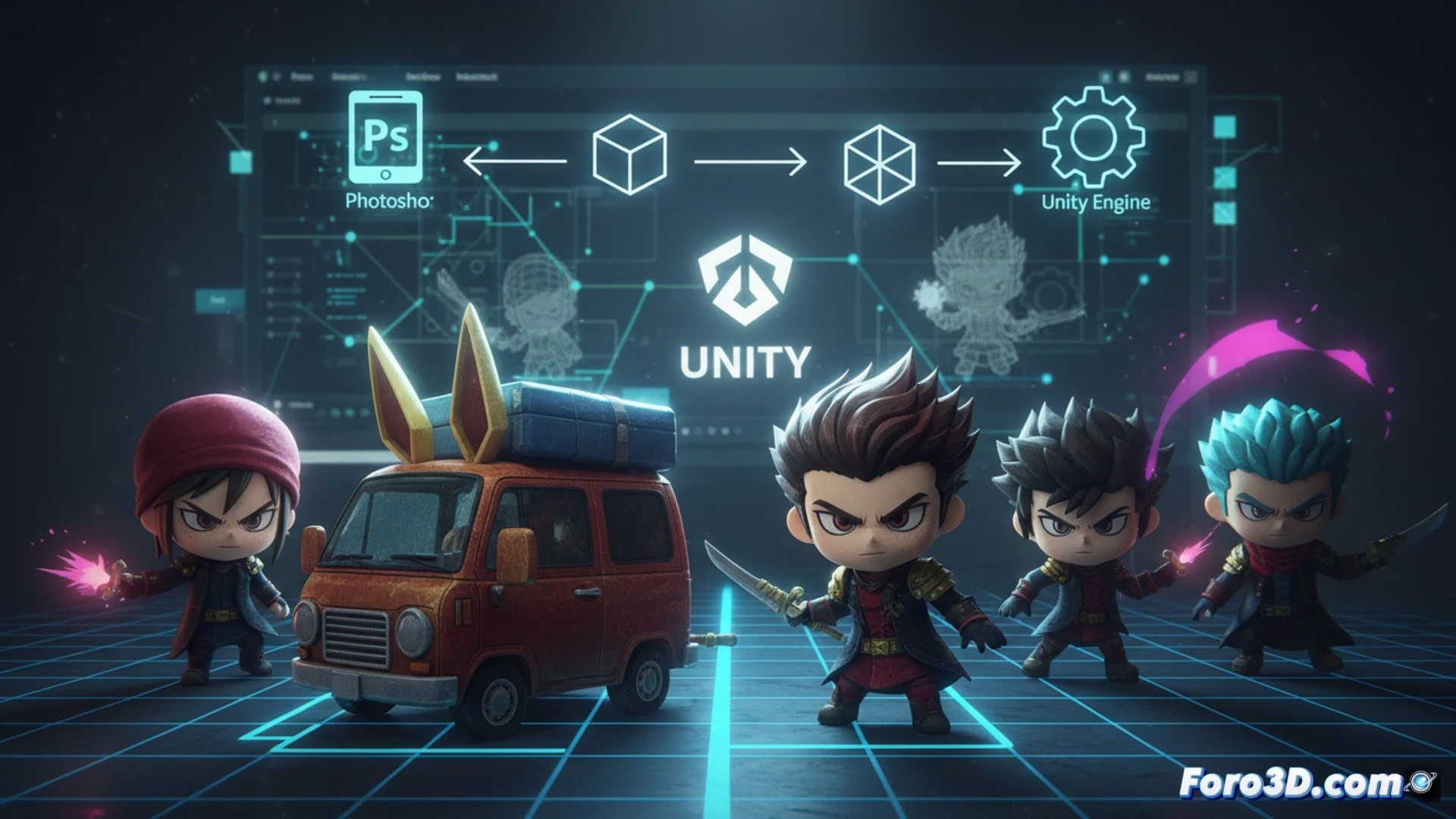
Workflow and Flat Shading Optimization 🎨
The technical key lies in stylized lighting. In Unity, the team likely avoided dynamic realistic lighting to embrace flat shading (cel shading) via Shader Graph or a custom shader. Models created in Blender benefited from simplified geometry; the rounded shapes of chibi require fewer polygons than a realistic model, allowing entire squads to be rendered without sacrificing frames. The comic aesthetic is reinforced with black outlines, implemented either through a second camera pass (post-process) or through an edge modifier in Blender exported as vertex color. For the dynamic UI, Photoshop was crucial for creating sprites with hard edges and flat colors that integrate seamlessly, avoiding textures with complex gradients that would break the cartoon illusion.
Lessons for Indie Developers 🛠️
Persona 5 Tactica demonstrates that technical limitation can be a creative advantage. For an indie studio, replicating this style in Unity is accessible: using Blender for low-poly models with expressive faces and Photoshop for a UI based on geometric shapes drastically reduces production time. The biggest challenge is not modeling, but visual cohesion. Every asset must respect the rule of flat shading; a texture with simulated lighting would ruin the comic aesthetic. If you're working on a tactical game, prioritize board readability over model detail, and remember that in chibi, a clear silhouette is your best design tool.
What specific optimization techniques in Unity were implemented in Persona 5 Tactica to maintain the chibi art style without sacrificing performance in scenes with multiple characters and visual effects?
(PS: game jams are like weddings: everyone is happy, no one sleeps, and you end up crying)