An active-duty soldier suffered an injury from excessive pressure during a virtual reality combat simulation. The incident, which occurred upon receiving a virtual impact, triggered a digital forensic investigation. The 3D expert analysis, using Siemens Simcenter, Maya, and SolidWorks, determined that the cause was a failure in the pneumatic actuator's relief valve, preventing the instantaneous decompression necessary to avoid physical harm.
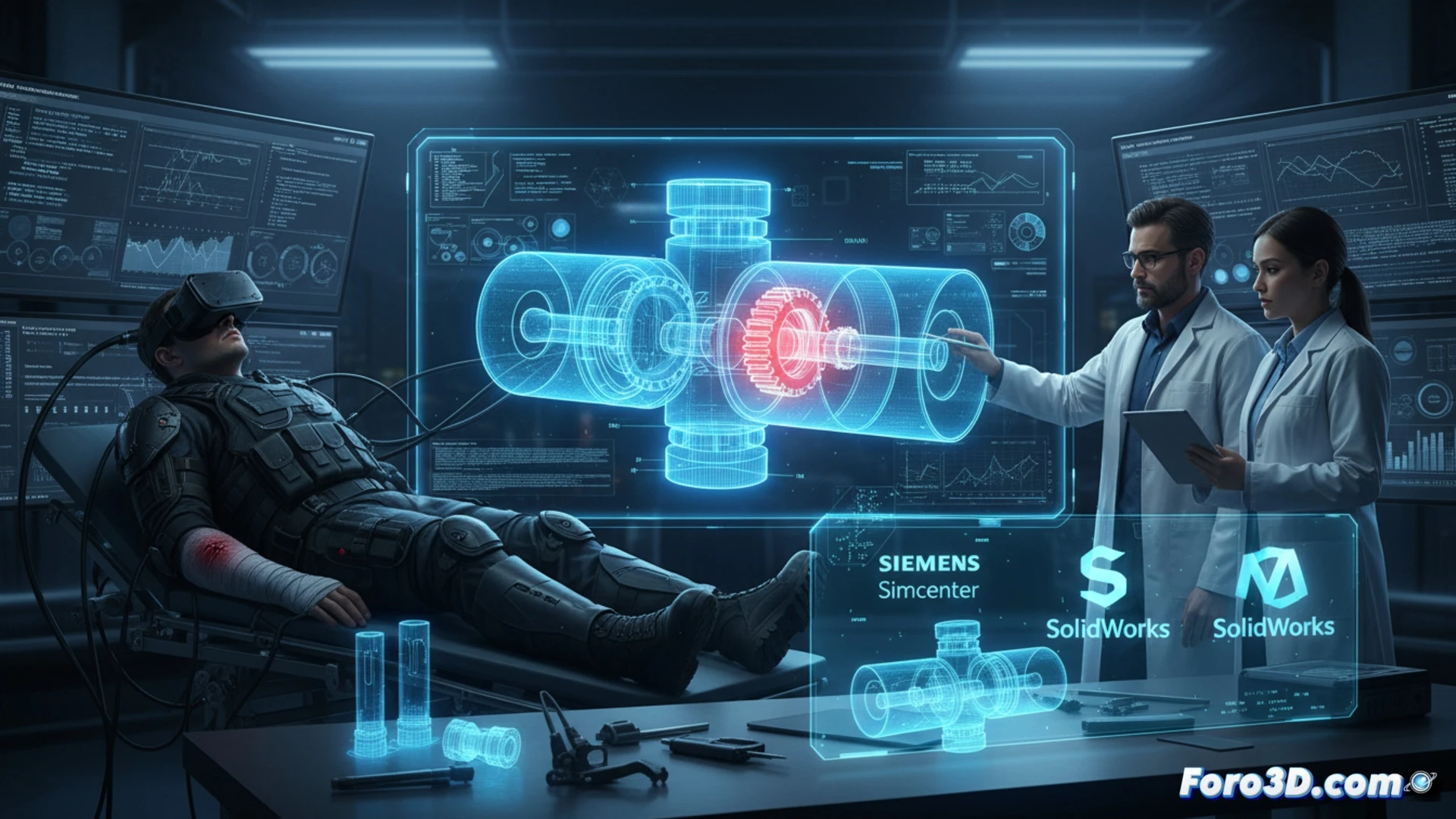
Failure Reconstruction: Simulation of the Failed Decompression 🛠️
The forensic team modeled the pneumatic actuator in SolidWorks to analyze its internal geometry. The dynamic simulation in Siemens Simcenter recreated the virtual impact scenario. The data revealed that the relief valve, designed to release pressure in milliseconds, did not respond. The technical animation in Maya visualized the trapped airflow, showing how residual pressure continued to exert force on the soldier's torso after the simulated event. This feedback failure transformed a safe tactile sensation into a compressive injury.
Towards Stricter Regulations for Soldier Protection ⚖️
This case exposes a critical vulnerability in immersive training systems. The soldier, as a member of a protected group, requires equipment with redundant safety mechanisms. The investigation demonstrates the need to implement real-time verification systems for haptic actuators. Regulations must mandate forced decompression certifications and periodic audits through 3D forensic analysis, ensuring that simulation technology never jeopardizes the integrity of those who protect us.
Considering the critical failure revealed by the 3D forensic analysis in the military haptic suit valve, how can virtual prototyping engineering prevent future pressure injuries in systems designed for the protection of vulnerable groups in simulation environments?
(PS: at Foro3D we protect vulnerable groups... and unsaved files) 🛡️