Last month, a prototype of a wide-wing electric cargo aircraft suffered a catastrophic failure in its wing structure during a turning maneuver. The forensic investigation team deployed active thermography and laser scanning to analyze the failure. The results identified an area of lack of adhesion, known as disbond, between the carbon fiber spar and the wing skin, a critical defect in composite materials that compromises structural integrity under dynamic loads.
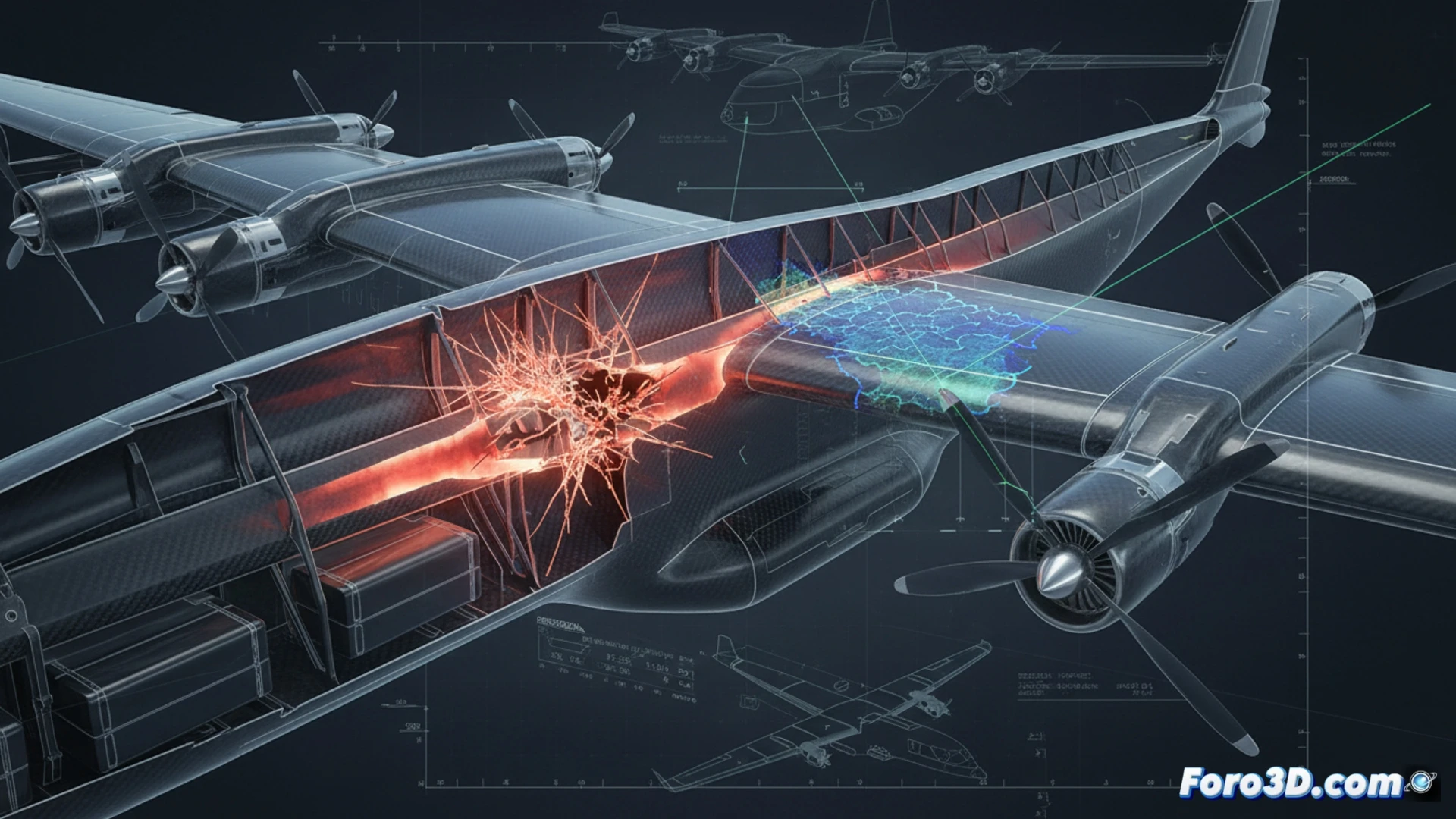
Forensic analysis with digital twins and active thermography 🛩️
The investigation process combined Siemens Simcenter to simulate the composite's behavior under fatigue, while Pix4Dmapper and PolyWorks generated a precise point cloud of the fractured wing. Active thermography detected thermal variations that revealed hidden delamination, and laser scanning confirmed the deformed geometry. By importing this data into the digital twin, engineers recreated the turning maneuver that exceeded the adhesive's residual strength. This workflow demonstrates how 3D simulation not only identifies failures but also allows recreating the load conditions that led to the disbond.
Lessons for fatigue simulation in composites 🔬
This incident underscores the need to integrate non-destructive testing with predictive fatigue models. The lack of adhesion is a silent defect that is not detected in conventional visual inspections. Thanks to 3D forensic analysis, it was determined that the disbond originated from deficient adhesive curing during manufacturing. For the aerospace industry, this case reinforces the value of digital twins updated with thermography and scanning data, enabling the prediction of the service life of composite structures before an in-flight failure occurs.
As an engineer specialized in fatigue simulation, what parameters or boundary conditions in the finite element model could have gone unnoticed and caused the disbond not to be detected during the virtual design phases of the electric aircraft wing?
(PS: Material fatigue is like yours after 10 hours of simulation.)