The recent assault on a data custody vault has tested the limits of digital and physical forensic analysis. The attackers managed to access an electromagnetically shielded bunker using high-precision thermal drilling through the multi-layer armor. The expert team has turned to 3D technologies to determine whether the criminals possessed the internal cooling system blueprints, a crucial detail for the prosecution.
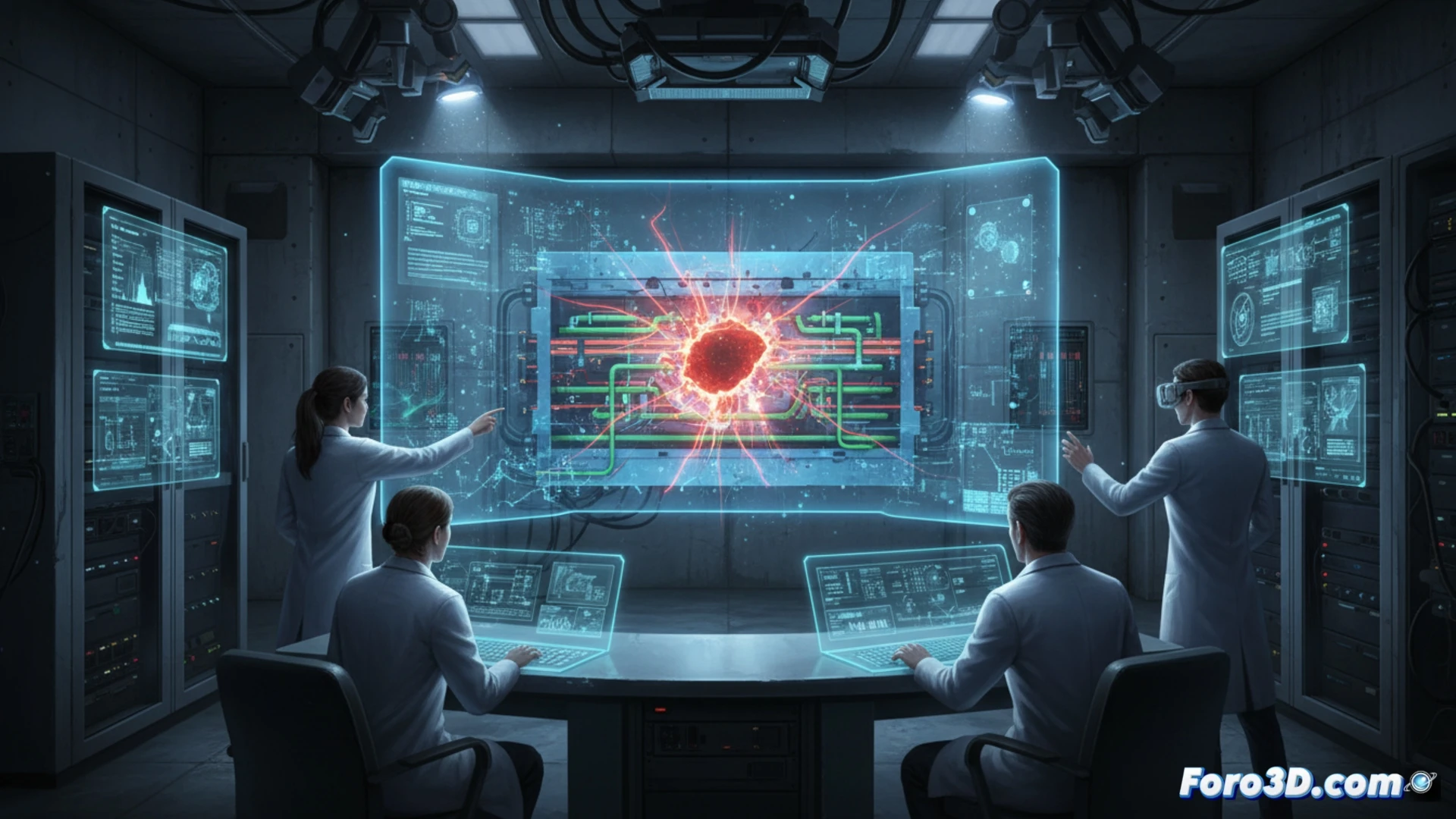
Reconstruction of the Attack Sequence with Trimble RealWorks and Abaqus 🔍
The forensic process began with LIDAR scanning of the scene using Trimble RealWorks, generating a millimeter-precise point cloud of the bunker. This data allowed for accurate mapping of the thermal entry points and residual heat marks on the steel and carbon fiber layers. Subsequently, the models were imported into Abaqus to simulate the thermal penetration. The software recreated the cooling rate and metal expansion, comparing the results with the actual damage patterns. The discrepancy between the simulated drilling path and the optimal cooling route suggests that the attackers did not have access to the internal blueprints, but rather operated with a general knowledge of the armor.
Collaborative Visualization and Damage Modeling: The Role of Omniverse and SolidWorks 🛠️
For hypothesis validation, the team integrated the Abaqus models into NVIDIA Omniverse, allowing investigators and forensic experts to visualize the attack sequence in real-time and from multiple angles. Concurrently, SolidWorks was used to reconstruct the original state of the multi-layer armor and model the deformations caused by extreme heat. This methodology not only confirms the feasibility of the attack but also establishes a new standard in the forensic pipeline: the fusion of physical simulation and digital twins to determine the attackers' level of prior intelligence.
Is it possible to determine the exact sequence of thermal penetration in a data custody bunker by analyzing the deformation marks on the materials and the armor's behavior during the assault?
(PS: In the forensic pipeline, the most important thing is not to mix the evidence with the reference models... or you'll end up with a ghost at the scene.)