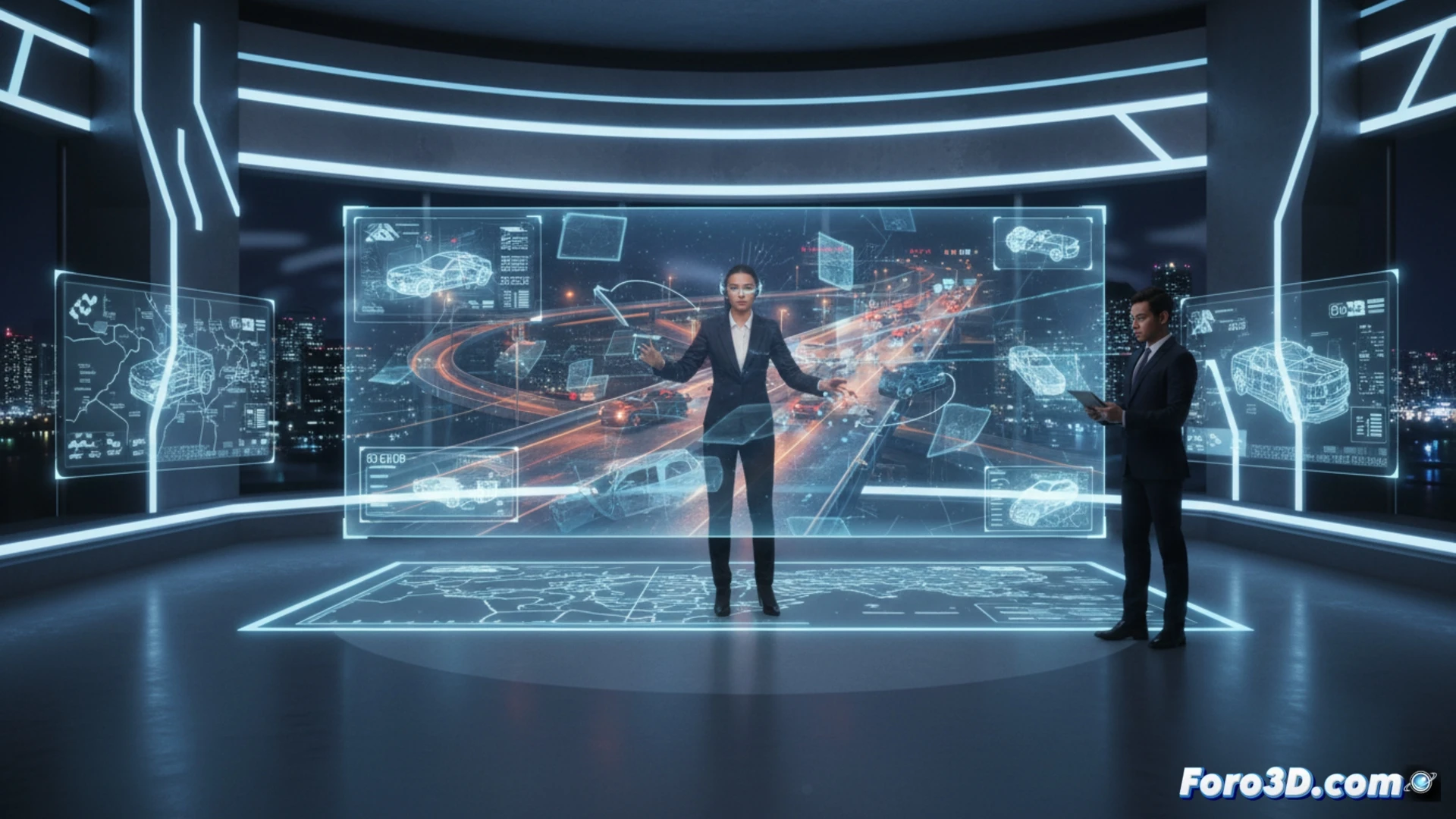
3D technology provides journalists with tools to reconstruct complex scenes and present information visually. A clear example is the recreation of a traffic accident for the evening news: instead of flat drawings, a three-dimensional model of the intersection and the vehicles involved is generated. This allows the viewer to understand the dynamics of the event without relying on confusing descriptions.
Key programs for the digital journalist 🖥️
To create these reconstructions, you don't need an animation studio. Blender is the most widely used free option: it allows you to model scenes, texture, and animate. To capture real data, use Meshroom with photogrammetry: you take photos of a location and the software generates a 3D mesh. If you need something quick, SketchUp works for building models or street plans. With these programs, a journalist can document and visualize news events with technical precision.
The day my 3D printer wanted to be editor-in-chief 🖨️
Of course, once you set up the 3D scene, your boss will ask you to add an explosion effect with particles and make the car have chrome rims. Then, the editor will tell you the model takes 40 minutes to render and the news airs in five minutes. In the end, you pull out your phone, record a shot of the computer screen, and broadcast it as if it were live. 3D helps, but the chaos remains analog.