Hairdressing is a trade that combines art and technique, but behind every cut or dye lie silent occupational hazards. Forced postures, chemical exposure, and repetitive movements turn these professionals into a high-risk group for public health. From Foro3D.com, we propose a visual analysis through an interactive 3D infographic that maps the most affected body areas and the chemical agents involved, offering an educational tool for prevention in occupational health.
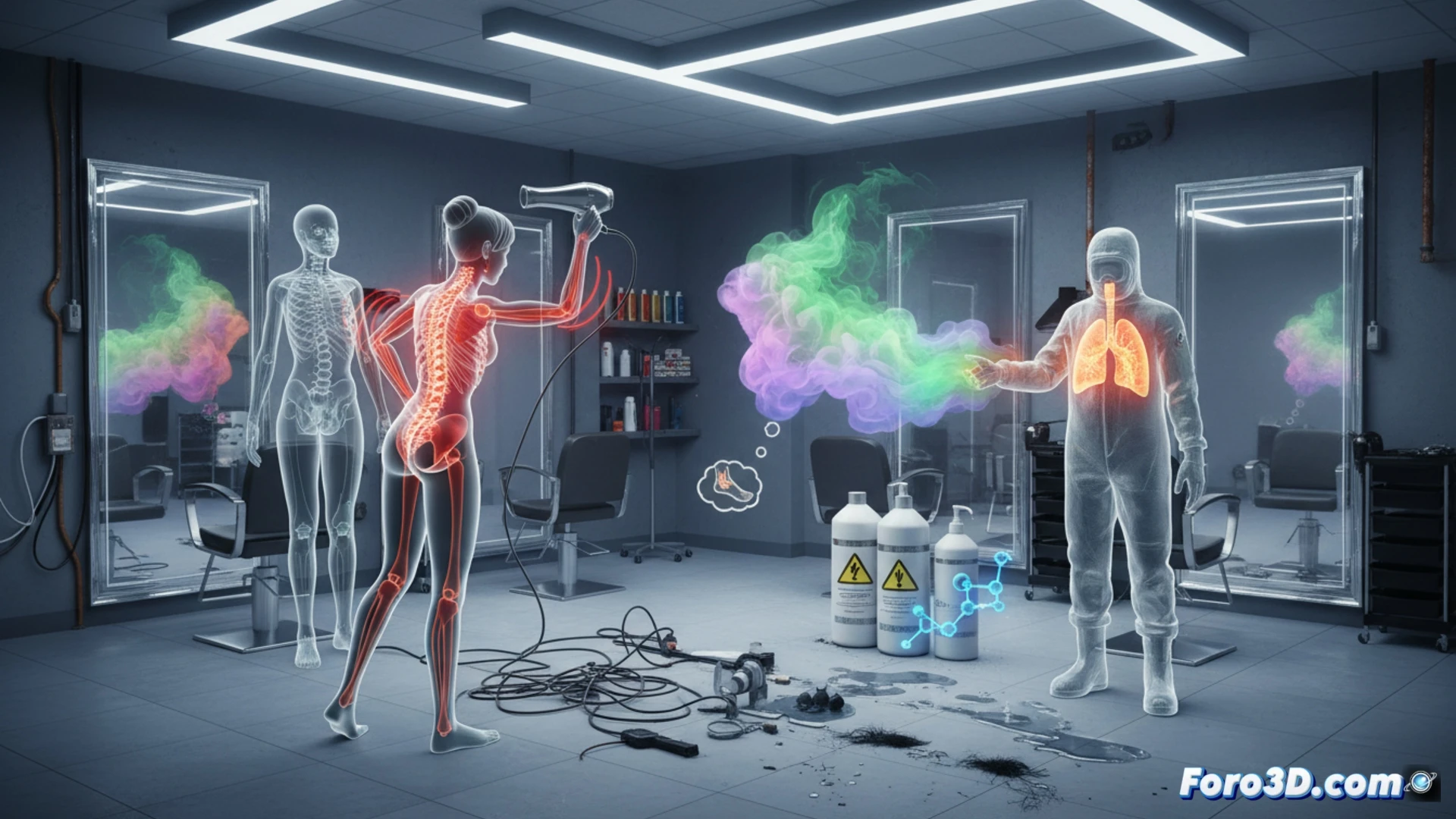
3D heat map and epidemiological data on musculoskeletal disorders 🦴
Our 3D infographic places the hairdresser in a virtual environment where a dynamic heat map highlights the areas with the highest incidence of disorders: cervical (neck pain from constant bending), shoulders and arms (tendinitis from prolonged elevation), and lower back (low back pain from standing without support). Integrated statistical data show that more than 60% of hairdressers report pain in these areas after five years in the trade. Simultaneously, the 3D model allows rotating and zooming in on the figure to observe the progression of contact dermatitis on hands and forearms, linked to the handling of dyes and bleaches. Chemical particles are represented as semi-transparent point clouds floating around the mannequin, simulating the inhalation of hairsprays and aerosols, a key factor in occupational asthma.
Designing prevention: animated ergonomics against invisible wear 🛠️
The infographic not only diagnoses but also educates. Through animations of ergonomic recommendations, the 3D model shows smooth transitions between incorrect and correct postures: adjusting the chair height, using anti-fatigue mats to reduce lower back strain, and active breaks with wrist and neck stretches. Proper ventilation of the work area and the use of nitrile gloves as a chemical barrier are also visualized. This interactive approach transforms abstract data into a visual experience that any professional can apply, bridging the gap between visual epidemiology and daily practice in the salon.
How can the 3D visualization of the dispersion of volatile chemical compounds in a hairdressing salon environment help identify high-risk areas for workers' respiratory health?
(PS: at Foro3D we know that the only epidemic affecting us is the lack of polygons)