A study by Shiga University of Medicine presents data that invites a rethink of crosswalks. Of 556 traffic accident fatalities over a decade, 94 pedestrians died while crossing the street. 70% were over 65 years old. Most accidents occurred at night, on narrow roads without crosswalks. But the key finding is that 65% of pedestrians came from the right side, the farthest from the sidewalk, precisely where no one looks.
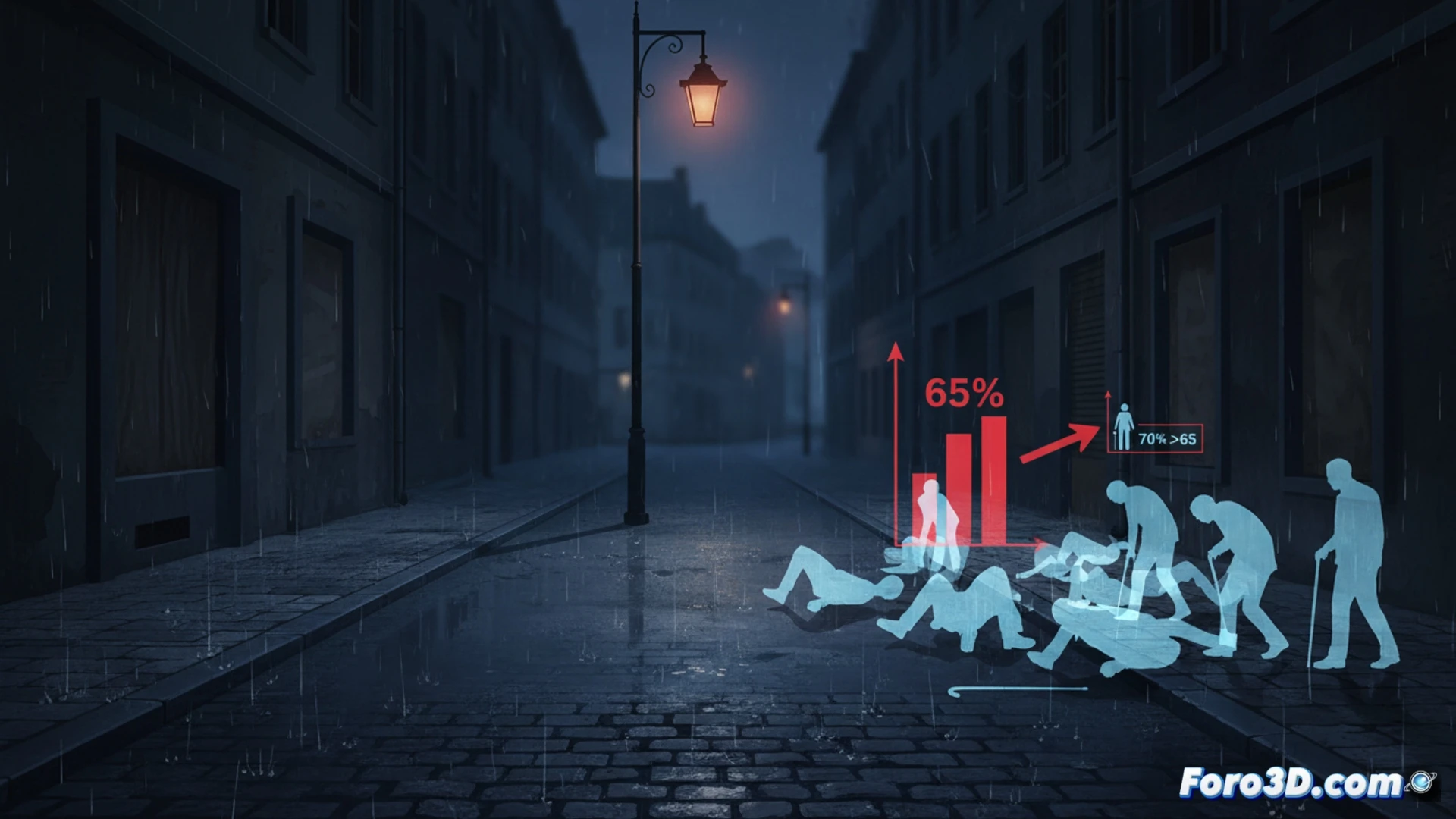
Design biases: why sensors don't look to the right 🚗
Professor Kazuhiro Ichisugi points to a shared perception problem. Drivers monitor the left side more because it is closest to the sidewalk, leaving the right side as a blind spot. This human bias also carries over into current technology. Many driver assistance systems prioritize pedestrian detection on the driver's side, assuming the risk is lower on the other side. However, elderly pedestrians cross confidently upon seeing distant traffic, without calculating the approach speed. The result is a lethal combination of confidence and inattention that no sensor calibrated for the predictable can anticipate.
The pedestrian paradox: crossing while looking at the horizon 🚶
It turns out that the elderly pedestrian, when crossing, looks straight ahead as if contemplating a landscape. They see a distant car on the right and think: I have plenty of time. What they don't see is that the driver is busy monitoring the left side, perhaps thinking about dinner. So while one trusts the distance and the other their rearview mirror, both ignore that the danger is right where no one is looking. Next time you cross, remember: the safest side is the one everyone looks at the least. Traffic ironies.