The profession of pattern maker, essential in the fashion chain, involves physical and ergonomic risks that are often normalized: cuts from cutters and scissors, forced postures over the table, chronic eye strain, and falls due to fabric scraps accumulation. However, the 3D textile industry offers a viable alternative that transforms this risk profile by moving work from the physical plane to the virtual environment.
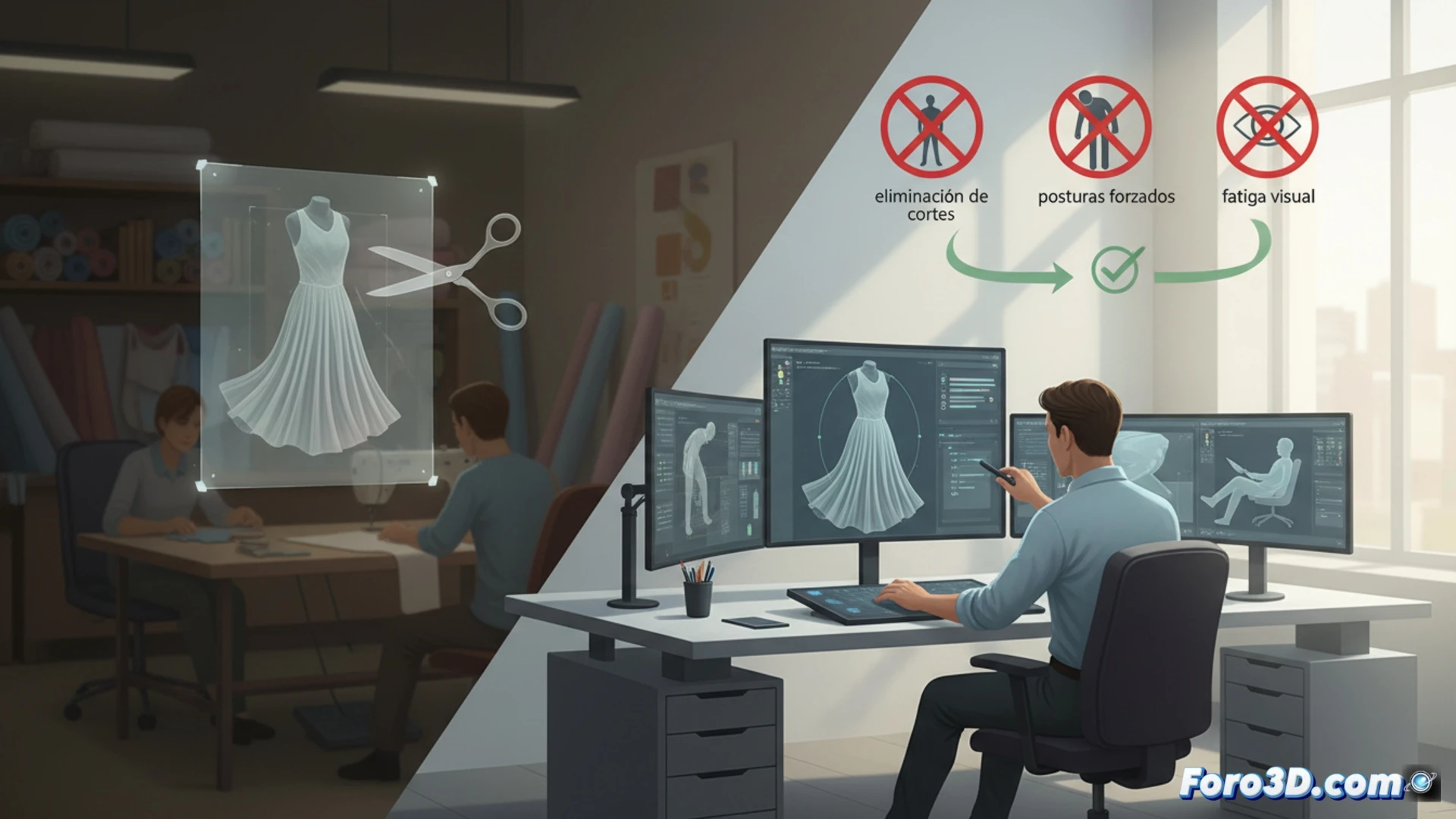
Pattern digitization and biomechanical risk mitigation 🖥️
The adoption of software such as Clo3D or Marvelous Designer eliminates the need to handle cutting tools for tracing or cutting physical patterns, reducing the risk of lacerations to zero. Additionally, by working with avatars and virtual fabrics, the pattern maker can adjust the workstation to a neutral posture (monitors at eye level, chair with lumbar support), combating the neck and lower back contractures typical of leaning over the table. Eye strain, previously aggravated by direct light on white patterns, is now managed with blue light filters and high-resolution screens that allow zooming without straining the eyes.
A clean workshop, a sustainable and safe craft 🧵
Beyond ergonomics, 3D pattern making eliminates the main cause of falls: fabric and paper scraps scattered on the floor. By working in a virtual environment, the physical space remains clear and organized. This change not only protects the professional's health but also optimizes workflow, allowing the pattern maker to focus on fit precision and creativity without the stress of managing traditional workshop hazards.
How can 3D pattern design eliminate chronic ergonomic risks of the workshop, such as those derived from forced postures or repetitive handling of heavy fabrics, and what concrete metrics demonstrate this in reducing work-related absences?
(PS: Designing fashion in 3D has the advantage that you never have to sew a button.)