Hitoshi Iwaaki's work, Parasyte (Kiseijuu), emerged in the 1990s as a visual treatise on the loss of autonomy. Its mechanical transformations of faces and bodies not only terrify but also lay the foundation for an aesthetic language that contemporary digital art has adopted to represent technological alienation. We analyze how its narrative techniques resonate today in visual activism.
Organic modeling techniques and the aesthetics of invasion 🧬
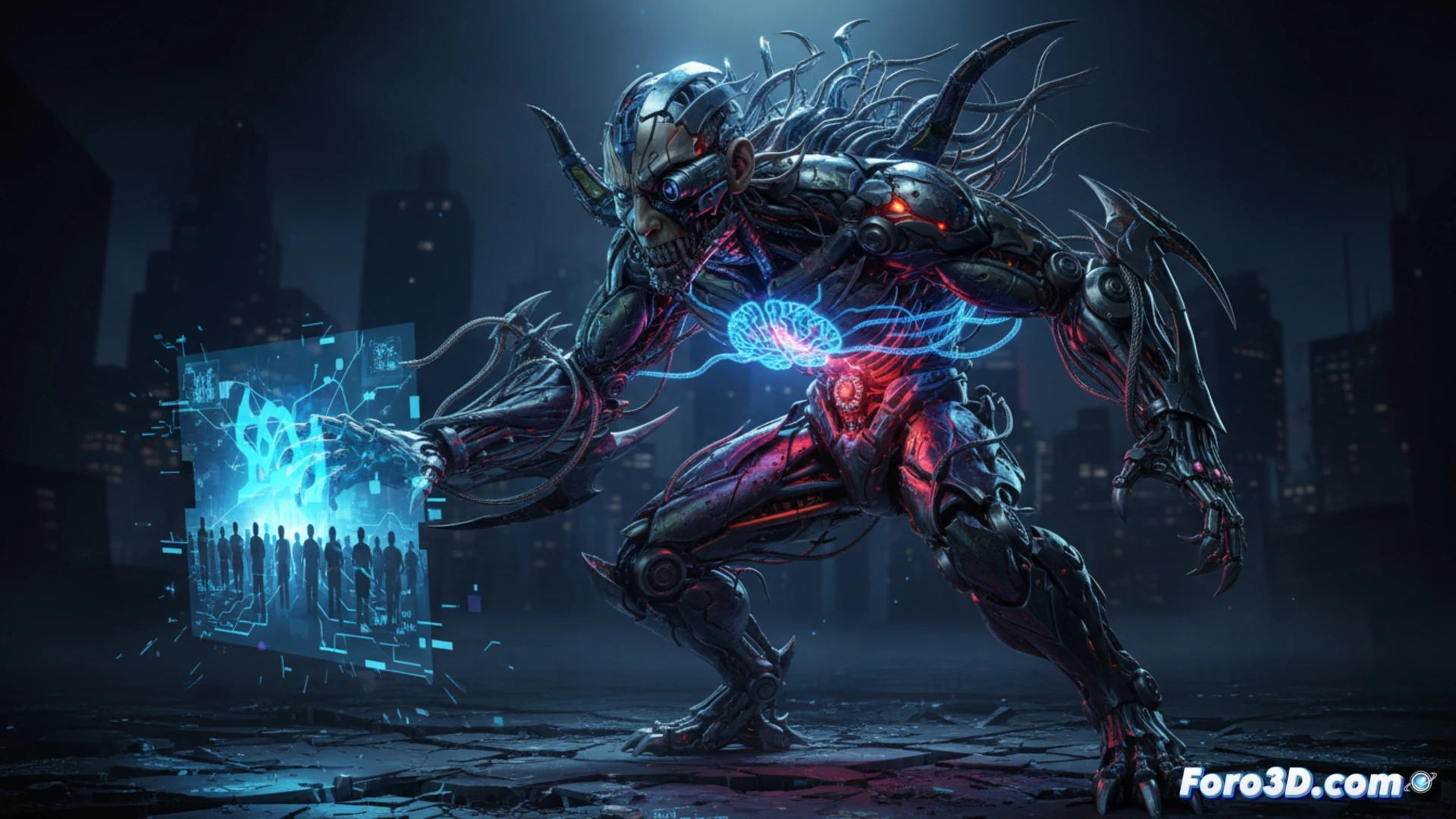
Iwaaki's style is characterized by a visual cleanliness that contrasts with the rawness of the mutations. Heads splitting open into tentacles or limbs reconfiguring into biomechanical weapons offer a manual for contemporary 3D modeling. Digital artists replicate these fluid transitions between the human and the mechanical to symbolize how technological interfaces reconfigure our identity. Shinichi's narrative, where the parasite inhabits the right hand, is translated into 3D animations showing the hand as a symbol of lost agency, a node of resistance against external control. This technique allows visualizing the internal struggle against surveillance and social homogenization.
Bodily resistance in the era of algorithmic control 🛡️
Iwaaki's work transcends mere entertainment by offering a framework for visual activism. The mechanical transformations act as metaphors for social pressure to adapt to alien systems. Today, digital creators use these deformations to denounce algorithmic control, showing faces that distort like data feeds. Parasyte reminds us that resistance begins in the body, and 3D art is the tool to reclaim that autonomy.
How would you translate the aesthetic of body horror from Parasyte into an interactive 3D piece that critiques the loss of autonomy in the digital age
(PS: at Foro3D we believe all art is political, especially when the computer freezes)