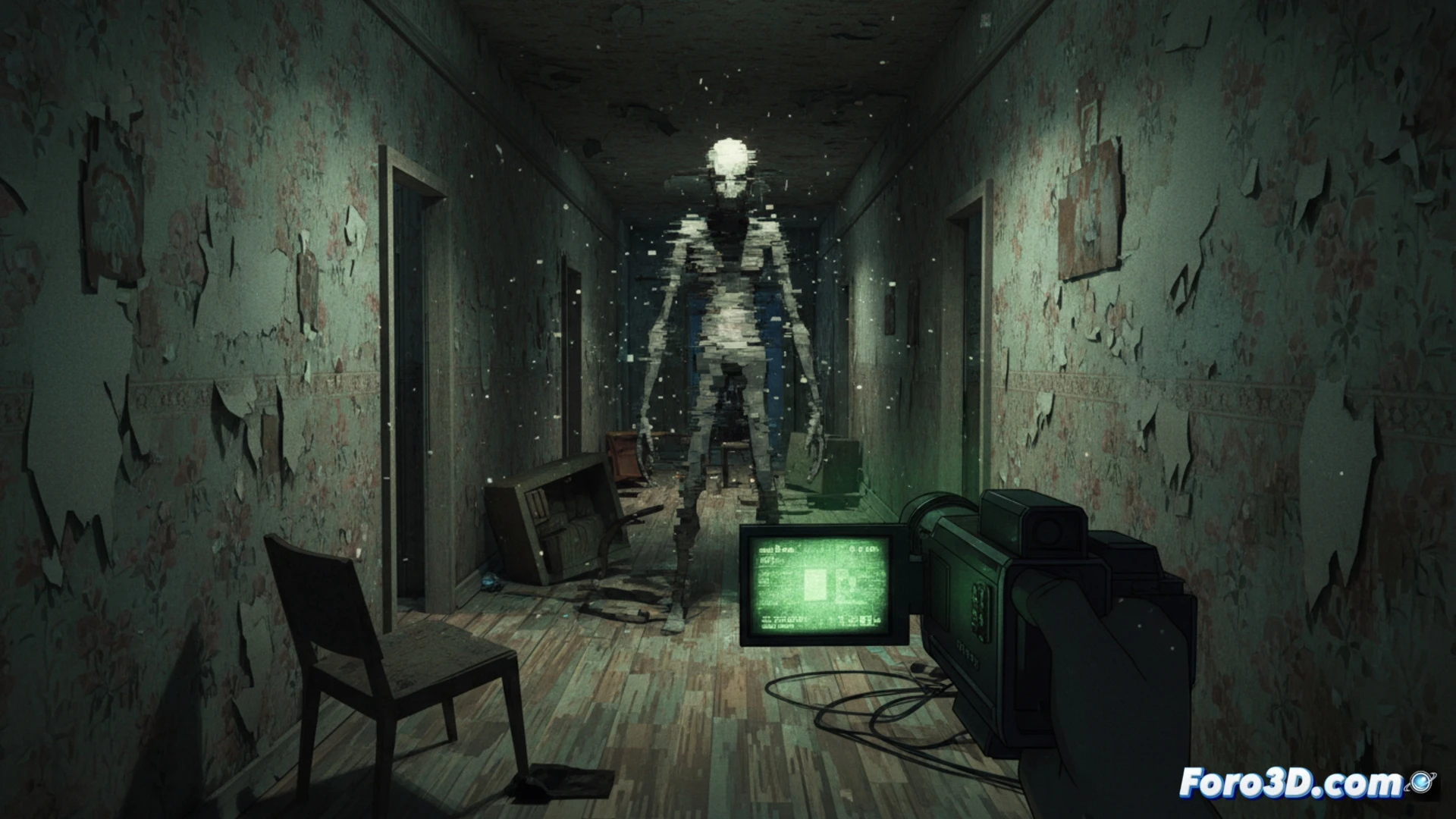
Chilla's Art is back with Parasocial, a title that proves psychological horror doesn't need photorealistic graphics to terrify. The indie studio bets on an aesthetic of old digital cameras, using Unity as the main engine and Blender for 3D modeling. The result is a claustrophobic experience that exploits nostalgia and visual discomfort to immerse the player in an oppressive atmosphere.
Technical decisions in Unity and Blender for a retro aesthetic 🎮
To achieve the look of a 2000s camcorder, the developers apply a custom post-process in Unity that simulates low resolution, chromatic aberration, and analog noise. The use of bilinear interpolation filters on materials avoids modern sharpness, while lighting remains flat and without dynamic shadows to mimic the video compression of the era. In Blender, models are built with simple geometry and 256x256 pixel textures, exported as uncompressed PNGs to preserve artificial grain. The final result is rendered at a scaled 640x480 resolution, forcing the engine to display every polygonal imperfection as a narrative resource.
Why low fidelity enhances psychological fear 🧠
The decision to use a degraded aesthetic is not arbitrary. By limiting visual information, the player's brain fills in the gaps with their own fears, an effect amplified by the feeling of watching a real recording. This approach, accessible to any indie developer with Unity and Blender, proves that discomfort does not stem from cutting-edge technology, but from artistic coherence. Parasocial reminds us that sometimes, less resolution means more terror.
How Chilla's Art achieves that low resolution and the visual style of Unity and Blender enhance the feeling of unease and parasocial connection in Parasocial, rather than detracting from player immersion
(PS: a game developer is someone who spends 1000 hours making a game that people complete in 2)