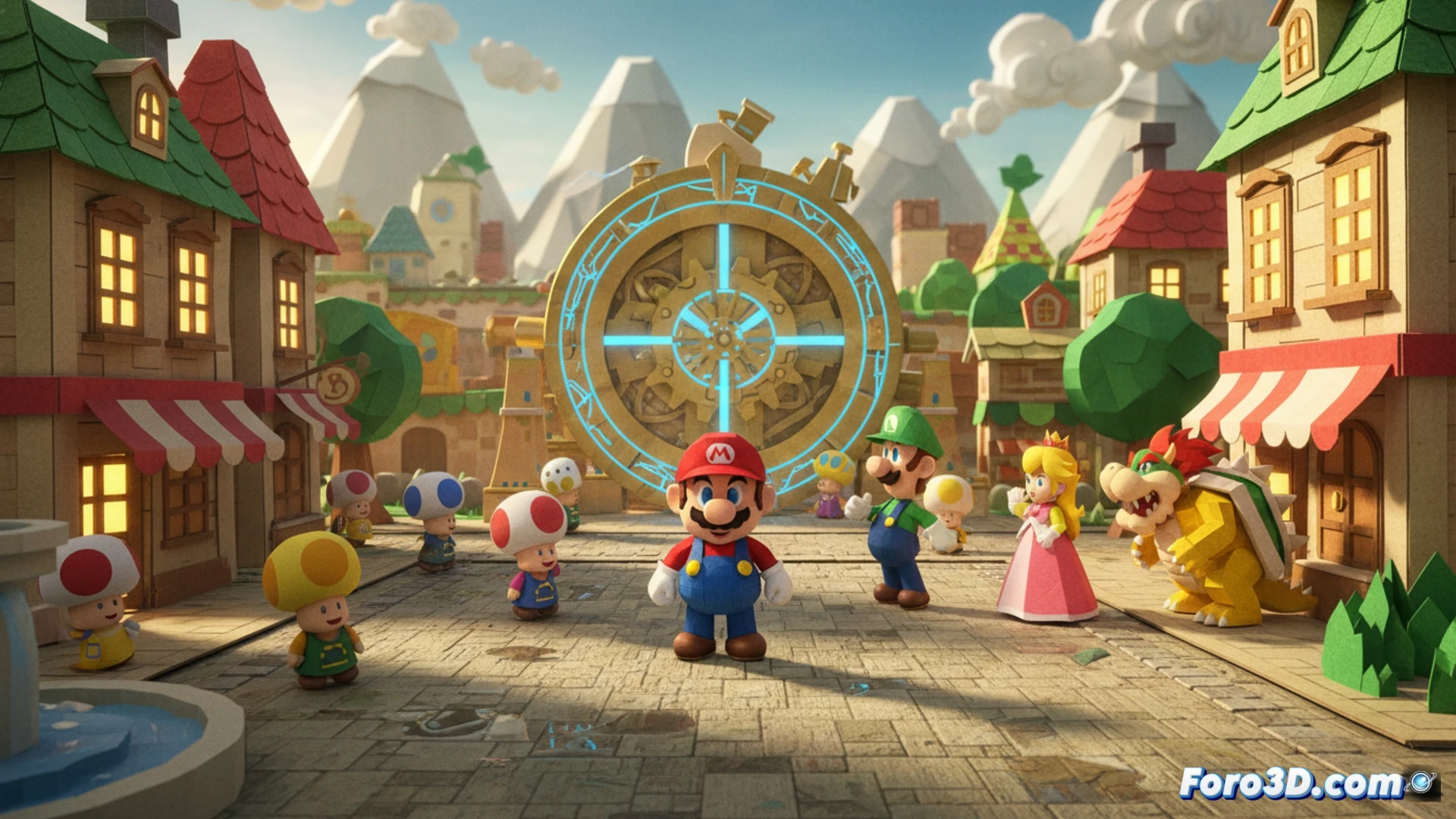
The remake of Paper Mario: The Thousand-Year Door is now in the hands of Switch players, and with it, a new opportunity to debate whether Nintendo's proprietary engine can handle the craft aesthetic. The title maintains its paper essence, but now boasts dynamic reflections and shadows that attempt to give volume to a world that, by definition, should be flat. It's not easy.
Proprietary engine and Maya: the digital craftsmanship behind the papier-mâché 🛠️
The development team has used Nintendo's internal tools alongside Maya to retouch every paper texture and every fold of the characters. The proprietary engine handles the new lighting effects and dynamic shadows, which in theory should make Mario look truly cut out. In practice, the result is a game that runs at a stable 60 fps, although some backgrounds still have that school-project feel that we love so much. There are no technical miracles, just craftsmanship.
Dynamic shadows for a hero who is still made of cardboard ✂️
Let no one be fooled: no matter how many dynamic shadows they add, Mario is still thinner than a sheet of graph paper. The reflections in the water are now prettier, but the plumber is still a cutout with legs. It's like putting a gold frame on a child's elementary school drawing: it looks better, but it's still a drawing. And hey, no complaints, because at least this time you don't have to blow on the console to advance the screen.