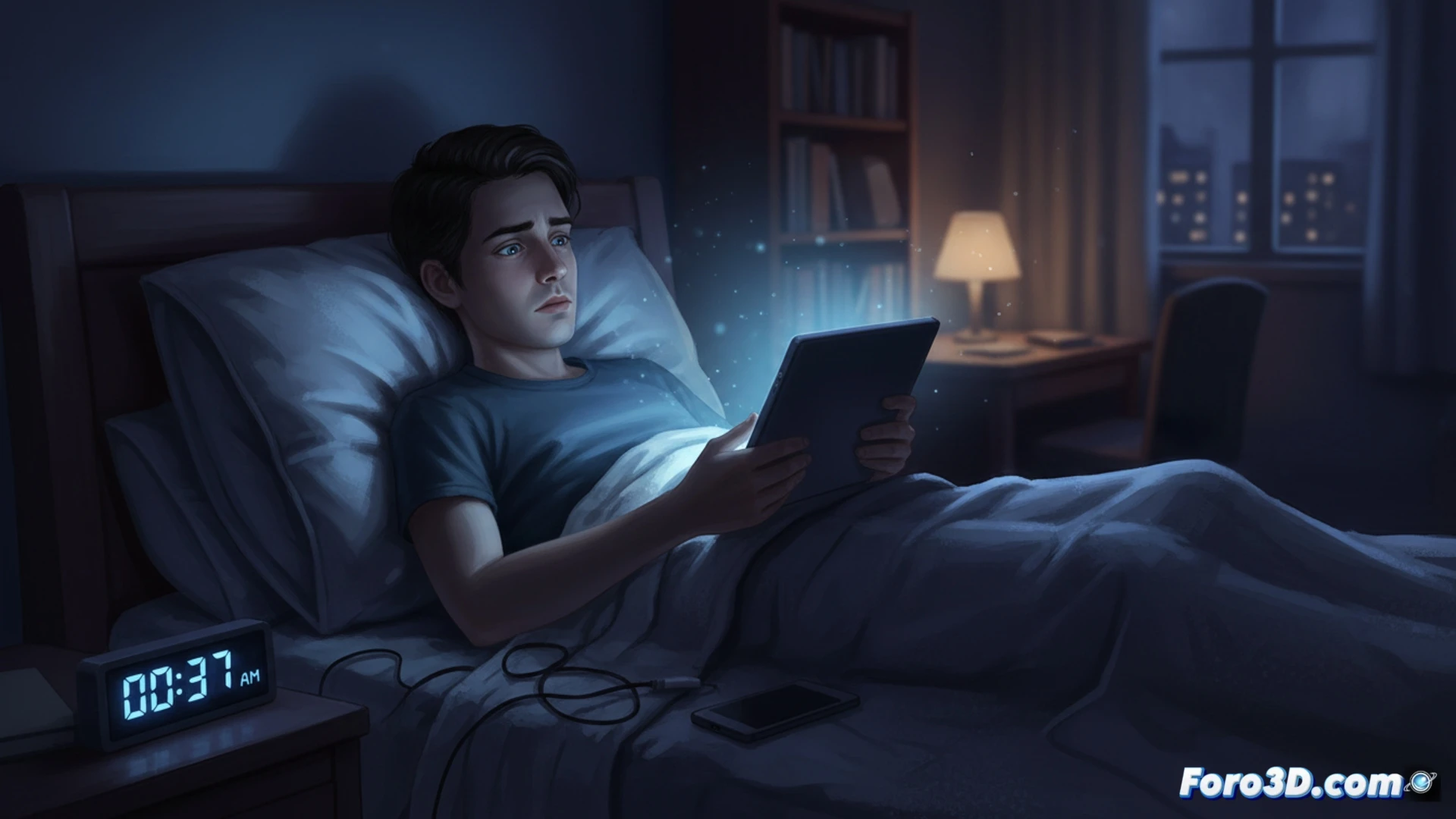
The habit of using your mobile phone or laptop until late hours comes at a cost. According to recent studies, screen exposure between 11:00 PM and 1:00 AM can reduce melatonin production by up to 23%. This decrease directly affects the circadian rhythm, altering sleep quality and, in the long term, the user's health.
The science of misalignment: blue light and circadian rhythm 🌙
Blue light emitted by screens inhibits the production of melatonin, the hormone that regulates sleep. The human eye interprets this light as a daytime signal, shifting the biological clock. To mitigate this, some devices integrate night modes that filter this wavelength. However, effectiveness is partial if brightness is not reduced and screen time before sleep is not limited.
The developer who doesn't sleep programs better, or not 💻
That romantic idea of coding in the early hours with a cup of coffee is a classic. But it turns out your brain, with 23% less melatonin, works like an overheating server: it makes errors. So, if your code fails tomorrow because of a semicolon, don't blame the compiler. Blame that late-night LoL game that left you sleepless and craving pizza.