The World Health Organization has once again focused on a habit that many consider harmless: checking your mobile phone before sleeping. Exposure to blue light from screens at night reduces the production of melatonin, the hormone that regulates sleep. This imbalance not only causes insomnia but is also linked to concentration problems, chronic fatigue, and an increased risk of metabolic disorders. The problem is global and affects all ages.
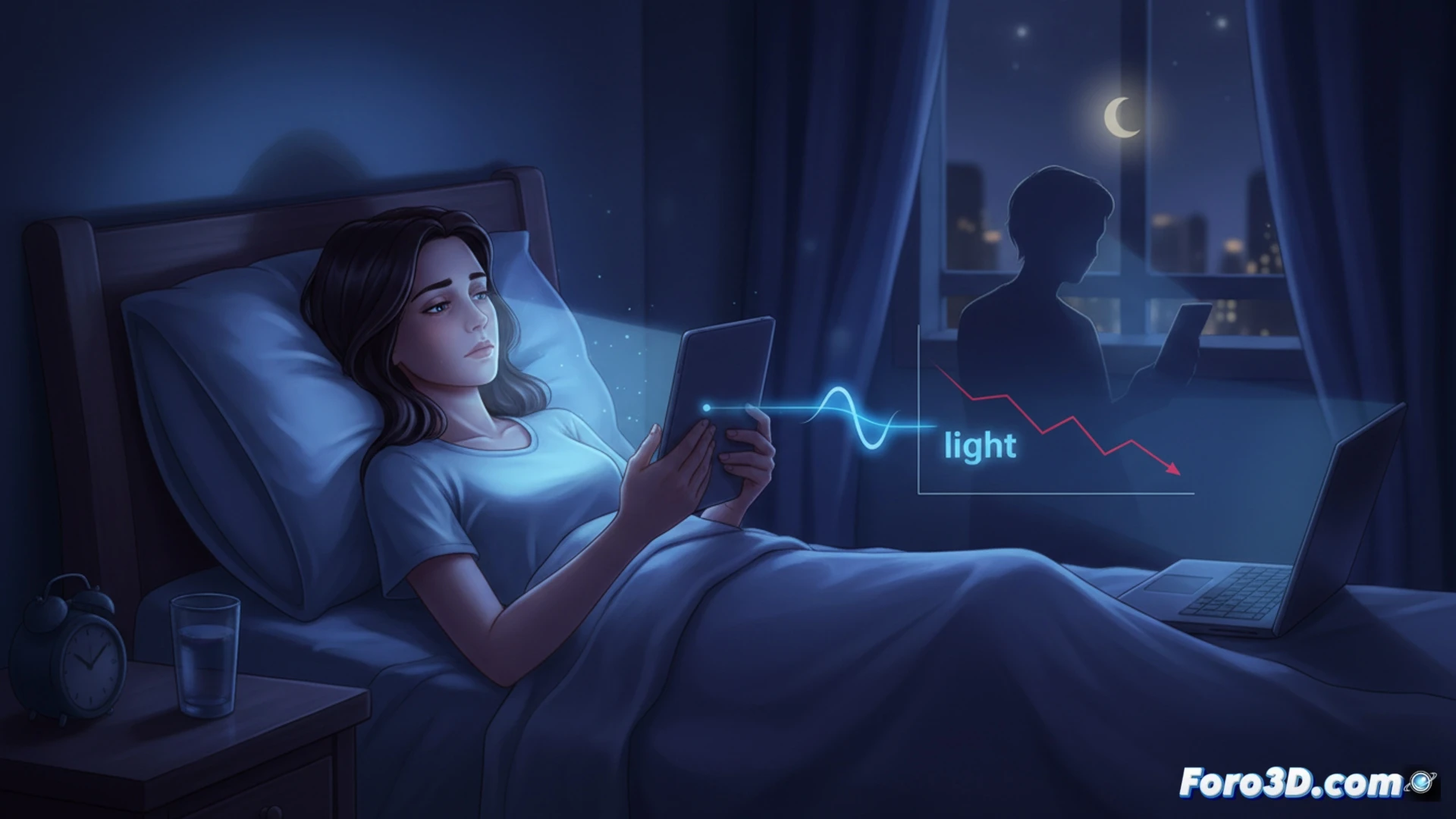
How blue light interferes with the circadian cycle 🌙
Artificial light from devices emits a wavelength close to 480 nanometers, which tricks the pineal gland. It interprets that it is still daytime and suppresses melatonin synthesis. On a technical level, current OLED and AMOLED panels, although offering better contrast, still emit high peaks of blue light. Software filters reduce color temperature but do not completely eliminate the light stimulus. The most effective solution remains turning off devices at least one hour before going to bed.
The mobile phone also knows you should sleep, but it doesn't care 📱
Wellness apps remind you that it's time to put down the phone, but right after they suggest you activate night mode to keep watching videos. It's like a liquor store clerk recommending you not to drink while pouring you a glass. The irony is that we use technology to measure our sleep, while the same technology steals it from us. In the end, the only one sleeping well is the charger.