The design of the Hyperloop requires maintaining a near-perfect vacuum inside a very long tube, turning any geometric imperfection into a critical failure point. When thermal stress is combined with a pre-existing ovalization of the section, the risk of buckling skyrockets. This article analyzes how this phenomenon was simulated in Nastran, using 3D scanning data from RealityCapture and point cloud analysis from CloudCompare to validate the numerical model.
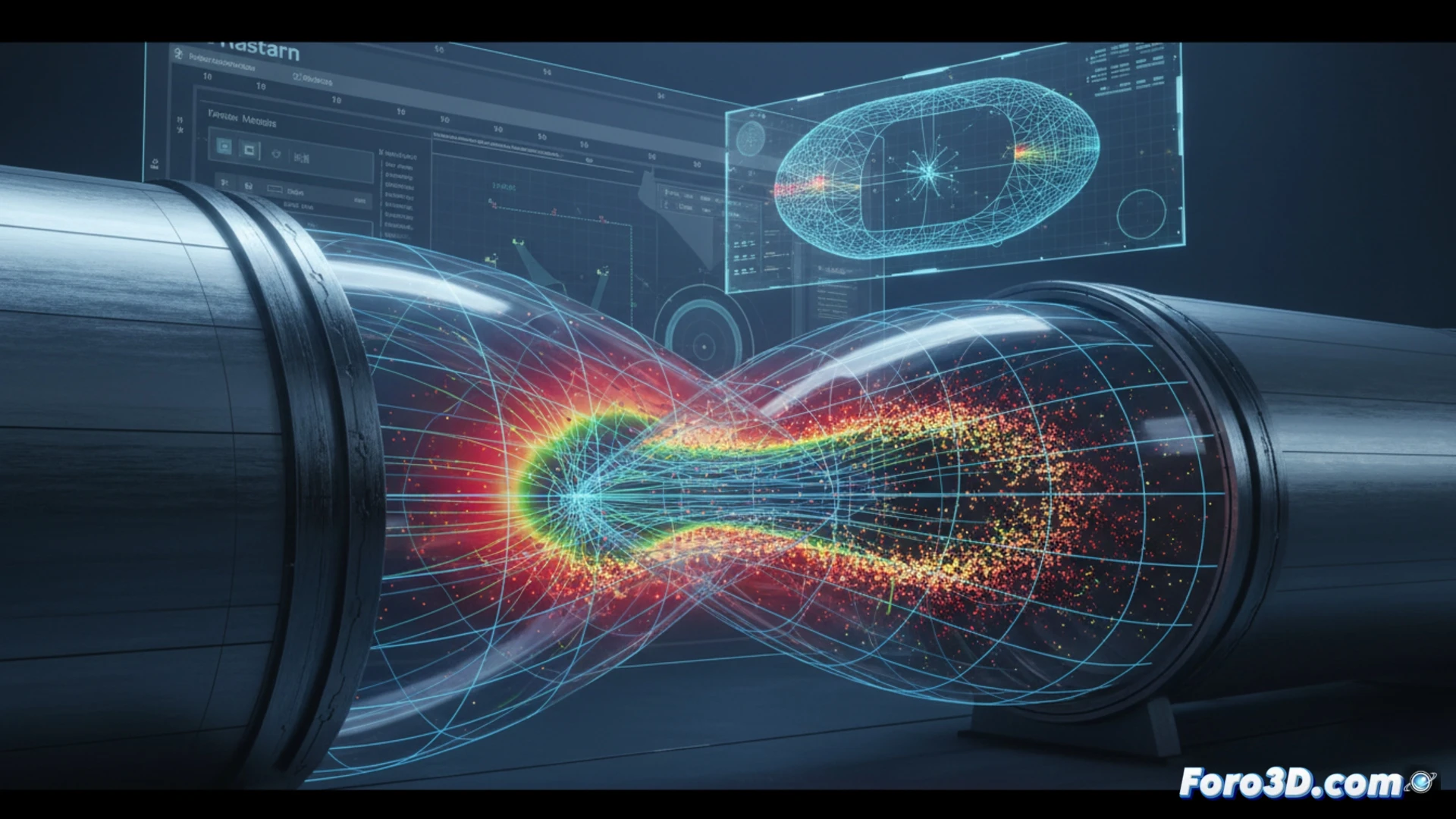
Nonlinear Simulation in Nastran and Validation by Point Clouds 🔬
To address the problem, a finite element model was built in Nastran incorporating the initial ovalization of the tube as a geometric imperfection. Differential thermal loads and external vacuum pressure were applied to induce buckling. Material nonlinearity and contact between the deformed walls were key to capturing the collapse. Subsequently, RealityCapture was used to generate a high-fidelity mesh from photographs of the actual deformed prototype. CloudCompare allowed comparing this mesh with the simulation results, calculating millimeter-scale deviations and validating that the ovalization failure mode predicted by Nastran matched the real deformation observed.
Lessons for Engineering in Extreme Conditions ⚙️
The combination of advanced simulation and validation with real data demonstrates that ignoring initial geometric imperfections in a vacuum and variable temperature environment is a costly mistake. For fatigue engineers, this case underscores that ovalization not only reduces stiffness but also acts as a thermal stress concentrator that accelerates buckling. Integrating tools like RealityCapture and CloudCompare into the Nastran workflow allows closing the loop between numerical prediction and physical reality, an essential step to ensure structural safety in extreme infrastructure projects like the Hyperloop.
How would you approach the numerical simulation of thermal buckling in a Hyperloop tube considering the interaction between stresses induced by the temperature gradient and the differential pressure of the near-perfect vacuum, and what experimental validation methodology would you propose to contrast these results?
(PS: Material fatigue is like yours after 10 hours of simulation.)