The pambazo is a classic of Mexican cuisine distinguished by its preparation process. The bread, typically a telera or bolillo, is dipped in a guajillo chili sauce before being filled with potato and chorizo. This technique gives it a soft texture on the outside and a deep flavor that combines spiciness with saltiness, creating a direct and unpretentious gastronomic experience.
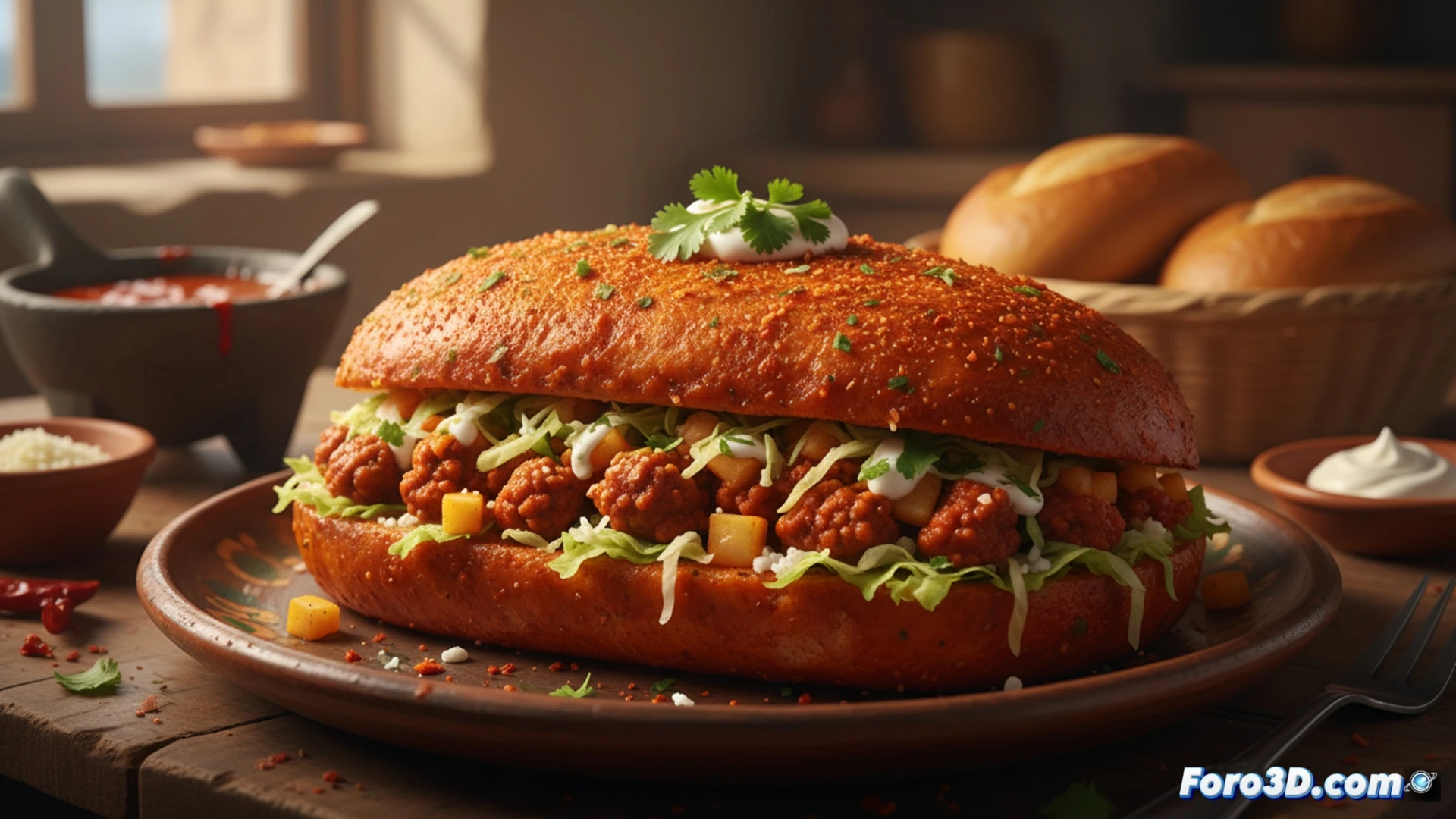
The engineering of texture: how controlled absorption defines the pambazo 🛠️
The technical secret of the pambazo lies in the balance of bread hydration. The guajillo sauce must have just the right viscosity to soak the crust without breaking down the inner crumb. This requires temperature and immersion time control similar to impregnation processes in the food industry. The bread acts like a sponge that retains flavor while maintaining its structure, a challenge that cooks solve with practice and knowledge of the exact saturation point.
When your lunch looks like a fluid physics experiment 🧪
Eating a pambazo is like participating in a materials stress test. You pick up the bread, which has already absorbed enough sauce to be suspicious, and trust that it won't fall apart in your hand. The first bite is a gamble: everything might hold together, or you might end up with the filling on your plate and the sauce on your shirt. It's Murphy's law applied to gastronomy, but with chorizo and potato.