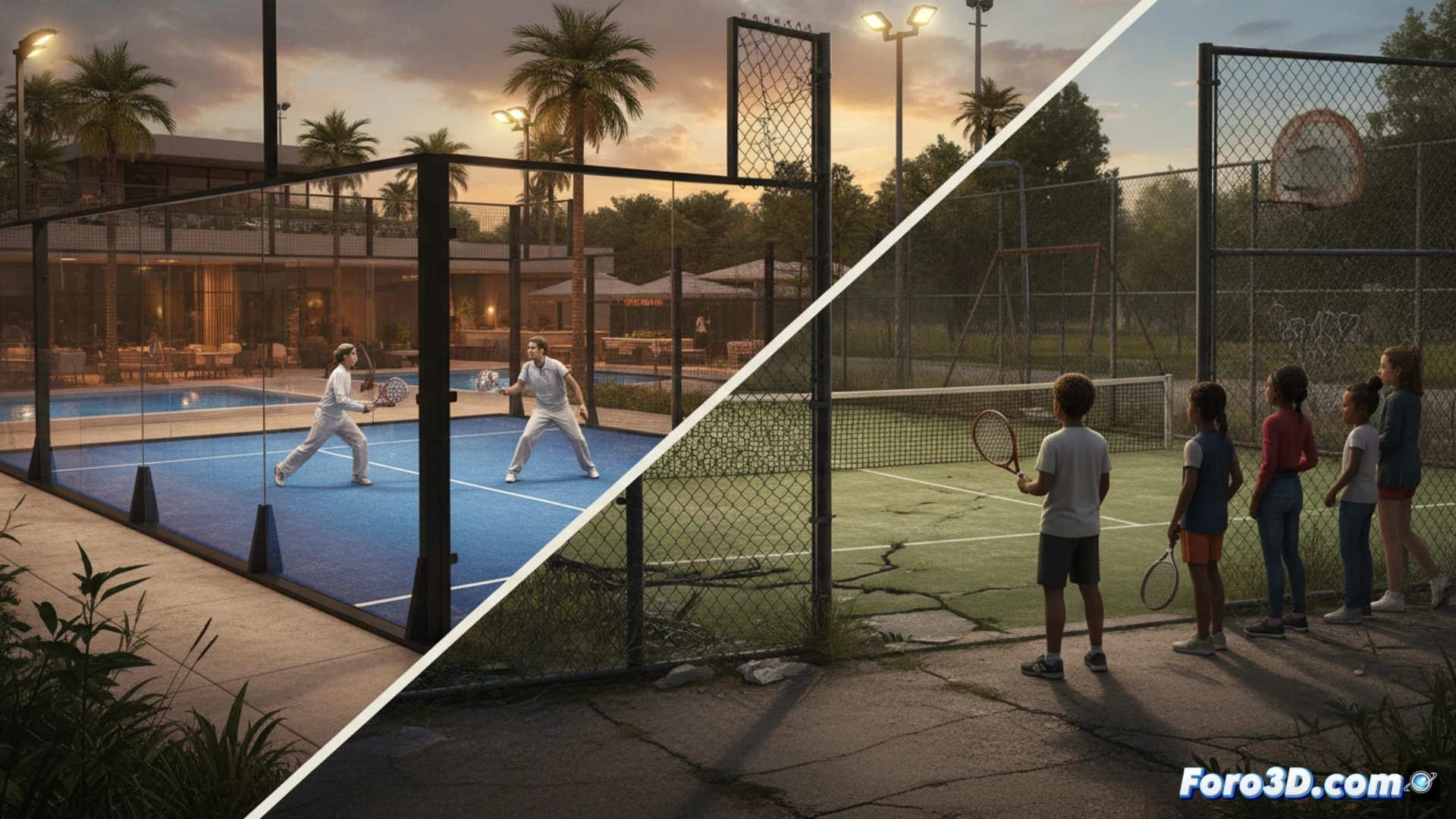
The padel boom has transformed vacant lots and industrial estates into glass courts. But this real estate business reveals a paradox: while private courts with 50-euro fees proliferate, affordable public parks and sports centers languish. Leisure becomes a privilege for those who can pay, excluding entire neighborhoods from sporting activity.
Algorithms of the Ground: How Technology Decides Who Plays 🏙️
Urban development relies on profitability analysis software that prioritizes return over social need. These systems evaluate population density, purchasing power, and pedestrian flow, but ignore variables such as equal access. The result: land is allocated to private clubs instead of public sports spaces. To correct this, algorithms should be forced to include an equity coefficient that reserves a percentage of each new facility for free use or social rates.
Padel for the Rich, Shade for the Rest 🌳
Next time you see a gleaming padel court, ask yourself if there's a playground behind it that was never built. Because it turns out a 200-square-meter court generates more profit than a bench with trees. You know, market logic: if you can't pay 15 euros an hour, you can always play handball on the street asphalt. Free and with the same risk of injury.