Scientists at the University of Oxford have achieved a breakthrough in neuroscience by implanting structured human brain tissue into the brains of mice. Using stem cells, 3D printing, and microfluidics, they created layers of cortical tissue that integrated with the host, reduced lesions in trauma models, and established functional neuronal communication.
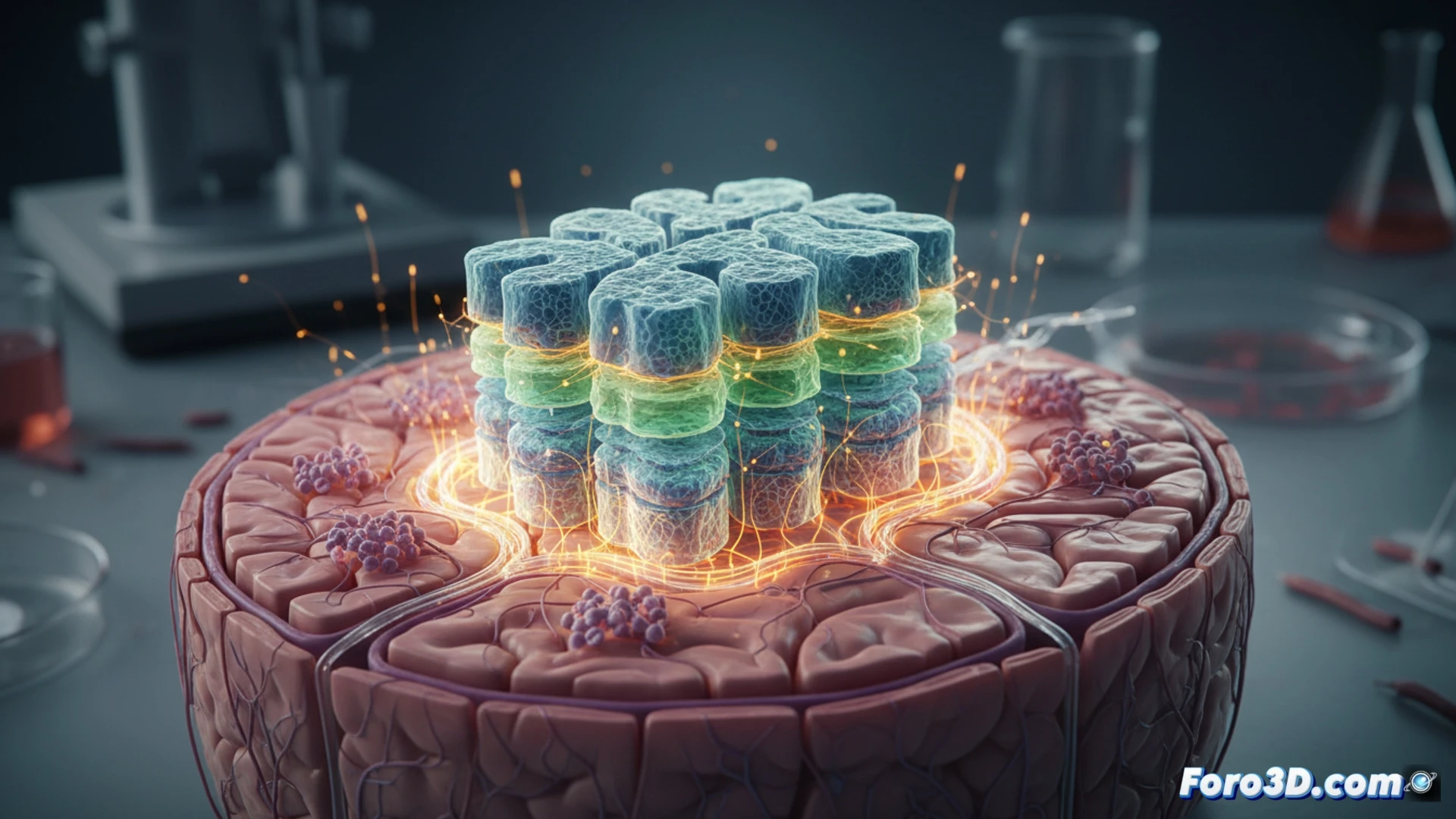
How a layered brain is made with microfluidics 🧠
The team from the Oxford Martin Programme on 3D Printing for Brain Repair combined human stem cells with a microfluidic technique to deposit layers of cortical tissue. These 3D-printed structures were implanted into mice with brain injuries. The tissue not only survived but established synaptic connections with the host's neurons, reducing the size of the lesions. The researchers highlight that the cells showed electrical activity synchronized with the host brain.
Mice with replacement neurons: the end of excuses 🐭
Now laboratory mice have one more reason to complain: not only are they injected with substances and made to run mazes, but they also have human tissue implanted to make them think better. Soon we'll see them demanding copyright for using their spare neurons. Of course, if one day these rodents start philosophizing, we'll know who to blame.