Oxenfree II: Lost Signals demonstrates that visual style does not depend on AAA budgets, but on intelligent technical hybridization. The team used Unity as a central hub to combine pictorial 2D environments rendered in Photoshop with 3D character models created in Maya. The result is an analog distortion aesthetic that defines the game's identity, achieved through layers of effects in After Effects that simulate radio interference and real-time glitch art.
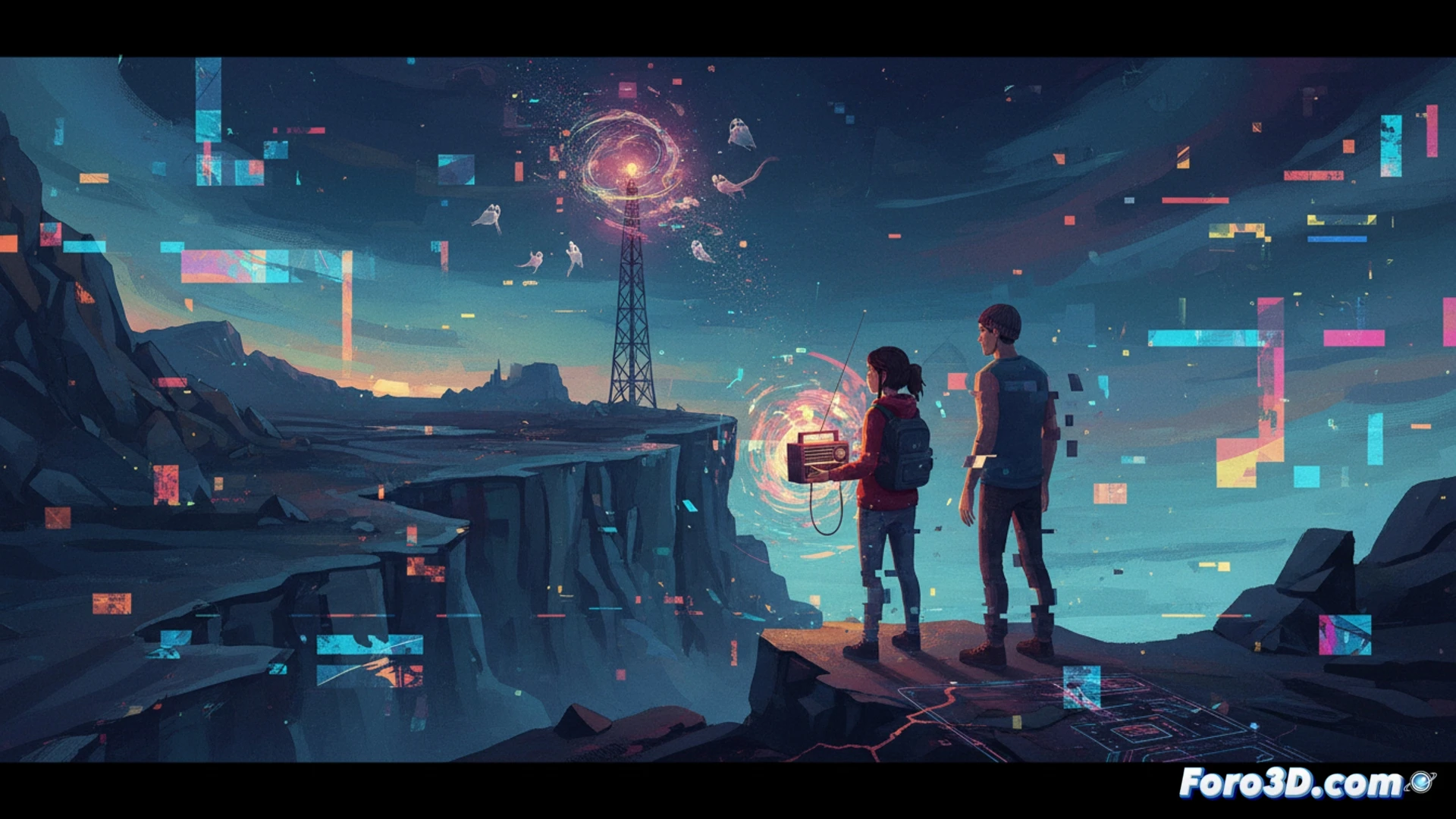
Technical Pipeline: Integration of 2D and 3D Assets in Unity 🎮
For indie developers, the Oxenfree II workflow is a case study. The scenes were painted as flat textures in Photoshop, exported as high-resolution sprites. The characters, modeled in Maya with a low-poly rig, were imported into Unity as 3D GameObjects. The technical key was the use of custom shaders in the engine to apply pixel displacement and chromatic aberration effects, synchronized with the audio. This allows the 3D characters to appear to inhabit a 2D world without breaking the illusion. The main tip: use Unity's Timeline system to choreograph the distortion effects with the dialogue, replicating the sensation of radio interference.
Lessons for Indies: Glitch as an Artistic Signature 🖌️
Oxenfree II demonstrates that limiting yourself to a single technique can be a poor creative decision. By mixing digital painting with 3D modeling and analog post-processing, the game creates a visual identity that no default engine could offer. For an indie studio, investing time in After Effects to design distortion assets (such as interference textures and noise frames) is more effective than seeking expensive plugins. The lesson is clear: your visual style should be born from the tools you master, not from those the market imposes.
What specific shader techniques in Unity allowed Night School Studio to integrate 2D and 3D assets to generate the characteristic glitch art of Oxenfree II without sacrificing cross-platform performance?
(PS: 90% of development time is polishing, the other 90% is fixing bugs)