Osteopathy is based on manual contact and understanding the body in three dimensions. 3D technology offers tools to visualize, plan, and practice without touching a real patient. For example, an osteopath can print an exact replica of a scoliotic spine from a CT scan, allowing them to study vertebral rotation and plan the manipulation before applying it.
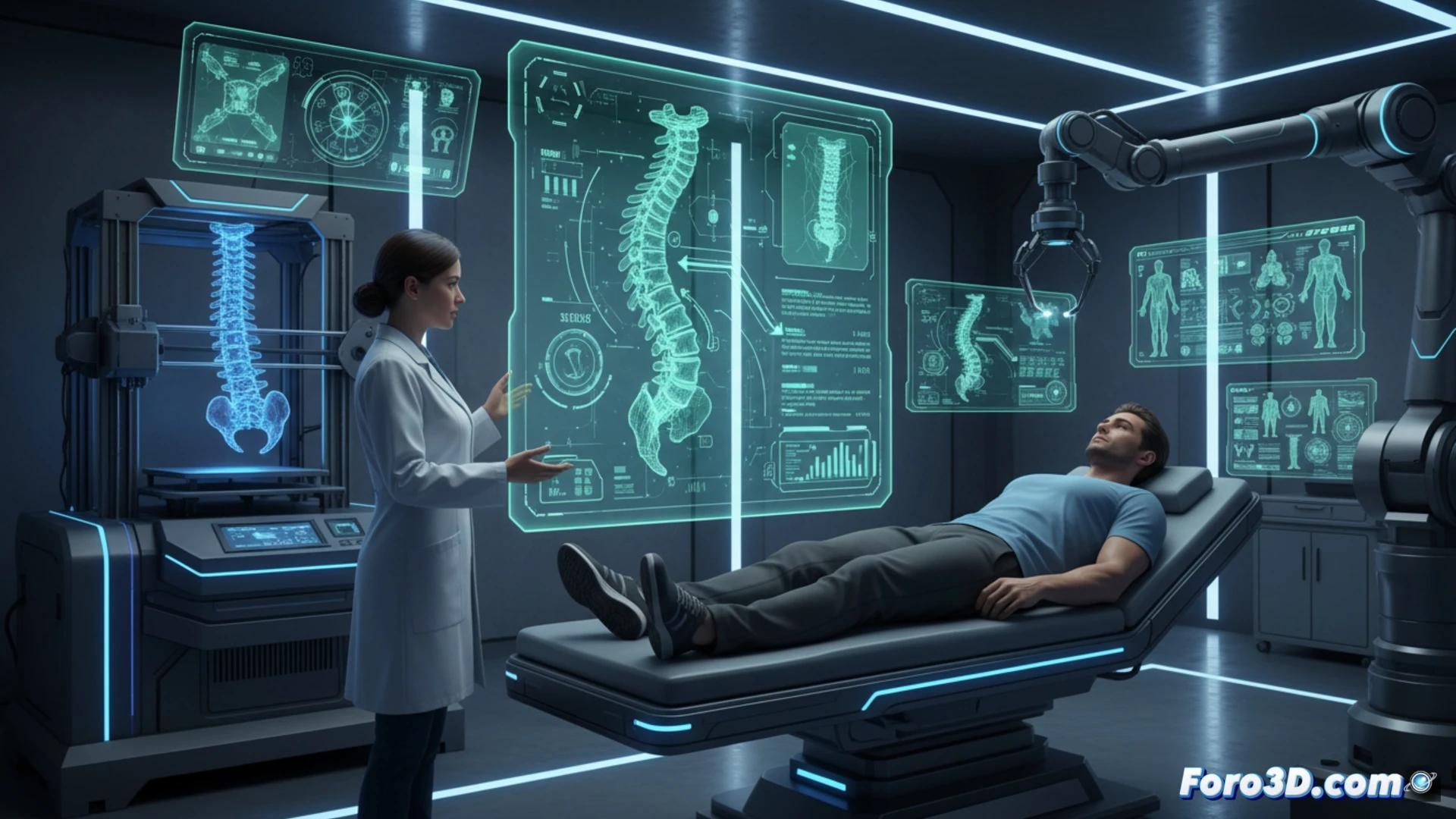
Anatomical Modeling: Software and Workflow 🛠️
To create these replicas, you need three basic programs. First, a medical image segmentation software like 3D Slicer or InVesalius, which converts DICOM files into 3D models. Then, an editing program like Blender or Meshmixer to clean the mesh and add reference points. Finally, a slicer like PrusaSlicer or Cura to prepare the print. With an FDM printer and PLA filament, you can obtain sturdy pieces to palpate and mark areas of somatic dysfunction with a marker.
3D Osteopath: When the Patient Doesn't Complain About the Price 😂
Of course, printing vertebrae has an additional advantage: they will never tell you your hands are cold or ask you to adjust their neck because they saw a video on TikTok. However, do not try to apply a thrust technique to your printed model, or you will end up with 12 PLA fragments scattered around the office. And if someone asks, you can reply that it's your new test patient, the only one who doesn't cancel the appointment at the last minute.