Osamu Tezuka, known as the god of manga, not only drew stories; he built the foundations of the modern anime industry. With Mushi Production and works like Astro Boy, he introduced cinematic techniques such as close-ups and visual dynamism. His simple style hides deep, philosophical, and dark themes, balancing entertainment and reflection.
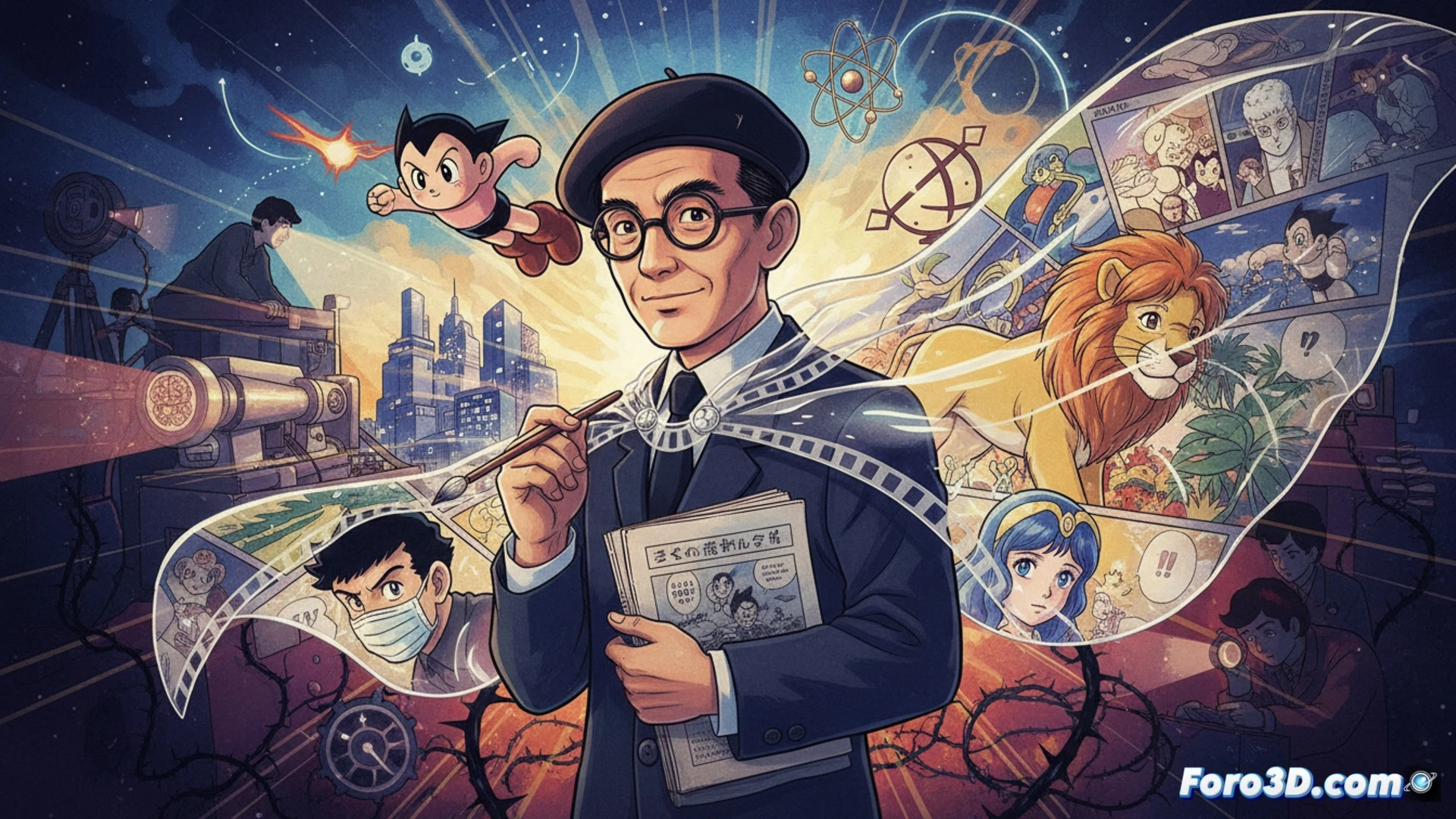
Cinematic techniques applied to animation 🎬
Tezuka applied resources from classic cinema to his panels and animations: angle changes, tight framing, and camera movements. This broke with the traditional rigidity of manga and anime. In Astro Boy, for example, he used detailed backgrounds and fluid actions to convey complex emotions. His technical approach prioritized visual narrative over realism, ensuring each scene advanced the plot without wasting resources.
The genius who worked as if there were no tomorrow ✍️
Tezuka produced over 700 manga and hundreds of anime episodes. Legend has it that he slept few hours and drew until his fingers bled. Sure, at that pace, anyone can be a god... or end up in the hospital. But hey, at least he left works like Black Jack and Kimba so we can complain about current deadlines.