The Strait of Hormuz, a critical chokepoint through which 20% of global oil and gas transits, was blocked by the conflict. Aviation fuel skyrocketed, and airlines such as Lufthansa canceled flights. However, against all odds, European electricity markets remained calm. How is it possible that a region so dependent on imported gas avoided an energy apocalypse? The answer lies in a cocktail of reactors, rainfall, and solar panels that broke the historical transmission link between expensive gas and the electricity bill.
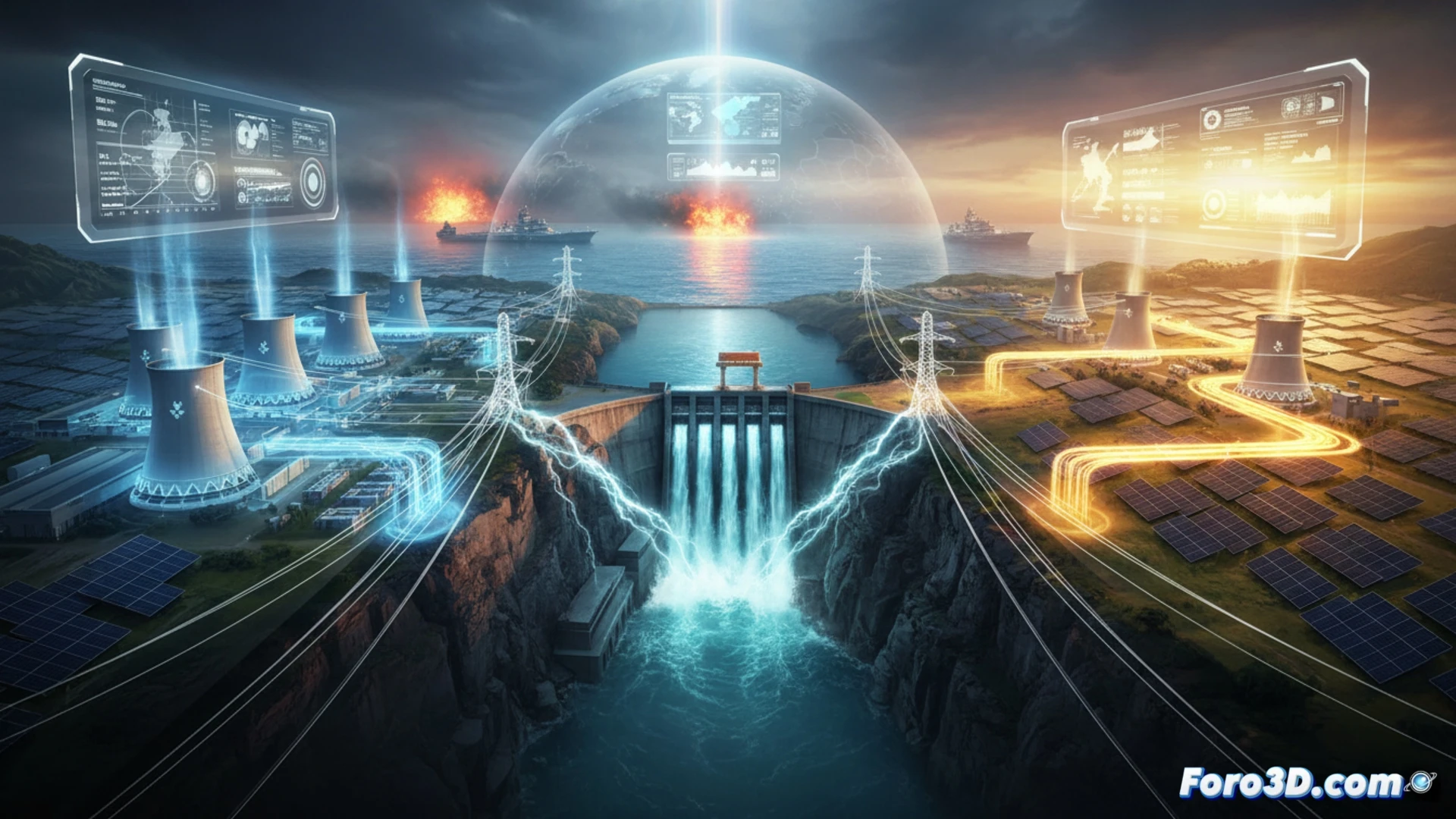
3D Visualization of Routes and Energy Flows in the Hormuz Crisis 🌍
To understand the phenomenon, it is necessary to visualize the geography of risk in 3D. The Strait of Hormuz acts as a funnel where crude oil flows from Saudi Arabia, Iraq, and the Emirates converge towards the Indian Ocean. A disruption simulation shows how 20% of global supply disappears from maritime routes, raising the price of liquefied gas at European ports. However, when overlaying EU electricity generation data, a deterrent effect is observed: French nuclear power went from historic lows in 2022 to injecting a stable 45 to 55 GW. Added to this is the reactivation of hydroelectric power after torrential rains, the bloc's fourth-largest source, and the solar record pushing short-term prices even into negative territory. The geopolitical risk map is deactivated when electricity stops depending on gas.
The False Mirage of Oil and the Lesson of Batteries ⚡
Many analysts, such as Javier Blas, point out that the world continues to look at oil when electricity is the true economic pulse. The blockade in Hormuz hit air transport and crude oil markets, but the European power grid was shielded thanks to batteries, nuclear reactors, and renewables. This cocktail broke the transmission belt that previously linked expensive gas with the electricity bill. The lesson is clear: in a scenario of a broken global supply chain, energy diversification is not an option, but a geopolitical shield that can be visualized in real-time with simulations of flows and dependencies.
How could the accelerated decarbonization of the European power grid, driven by renewable energy and massive storage, redefine the continent's strategic vulnerability in the face of a prolonged blockade of the Strait of Hormuz?
(PS: at Foro3D we know that a chip travels more than a backpacker on a gap year)