Traditional goldsmithing demands hours of manual work, precision, and a steady hand. 3D technology allows artisans to digitize their designs, test shapes, and avoid costly mistakes before touching the metal. A clear example: creating a ring with complex filigree in 3D to verify its structure and then printing it in wax for casting.
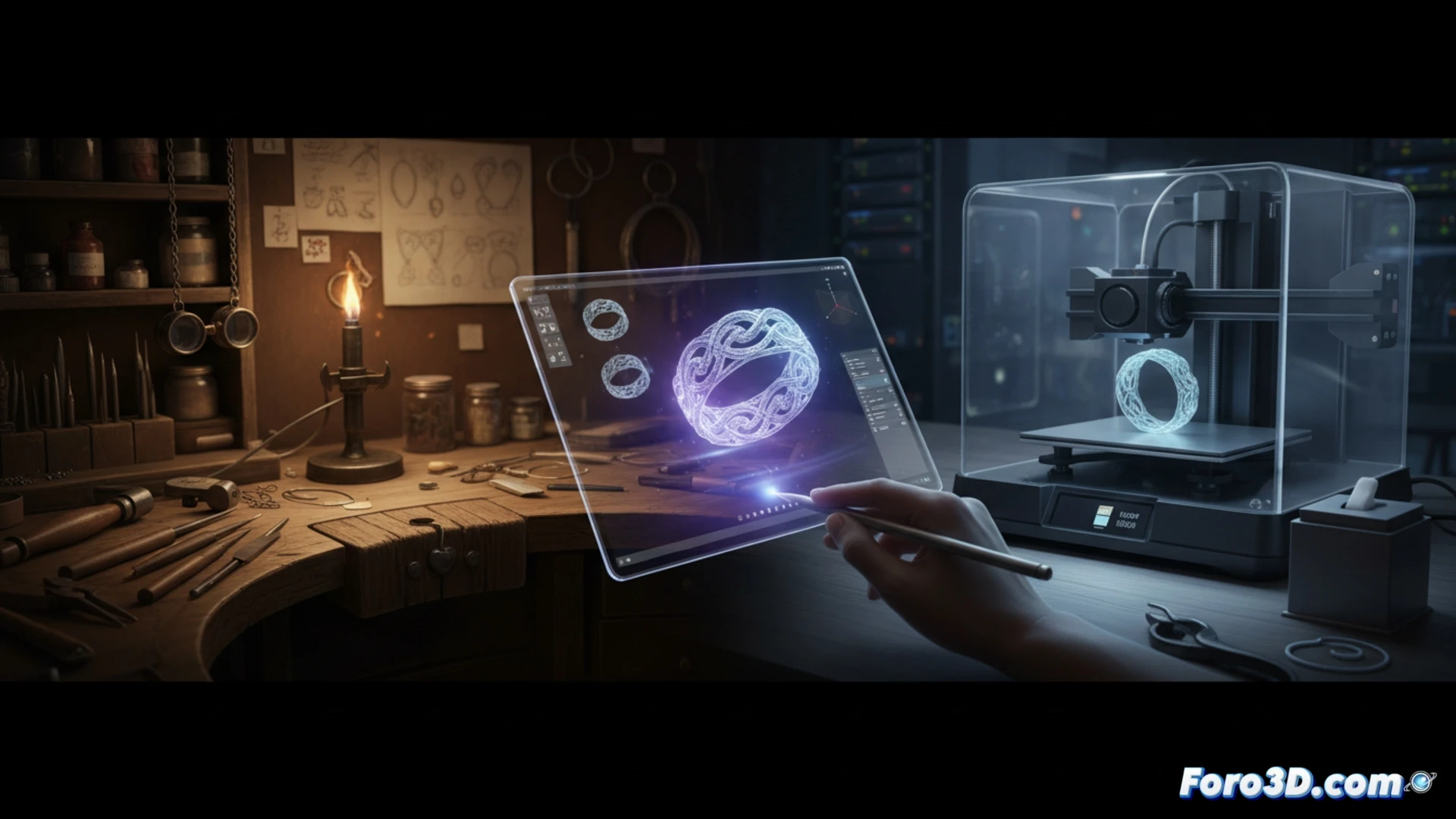
3D workflow for a modern jeweler 💍
The process begins in modeling software like Rhino 3D or Blender, ideal for organic and geometric shapes. Then ZBrush is used for fine details. The file is exported to Chitubox or PreForm to prepare the print in wax resin. Once printed, it is cast in metal using the lost wax technique. Programs like MatrixGold are specifically designed for jewelry, with parametric tools that adjust sizes and weights instantly.
Fewer hammer blows and more mouse clicks 🖱️
Before, if you made a mistake while chiseling a detail, you had to start from scratch or pray to Saint Eligius. Now, with a click you undo the error, and on top of that, the client asks for a last-minute change without giving you a heart attack. The only downside: your wife no longer believes you spend hours sweating in the workshop, but rather that you're playing Minecraft.