The recent release of Vampire: The Masquerade - Justice for VR demonstrates that it is possible to create a high-level immersive experience without a AAA graphics engine. This title, developed in Unity, uses a stylized approach to represent a dark, gothic Venice. For indie developers, the project is a perfect case study on how to balance VR performance, level design for stealth, and striking visual effects with accessible tools like Blender and Substance Painter. 🎮
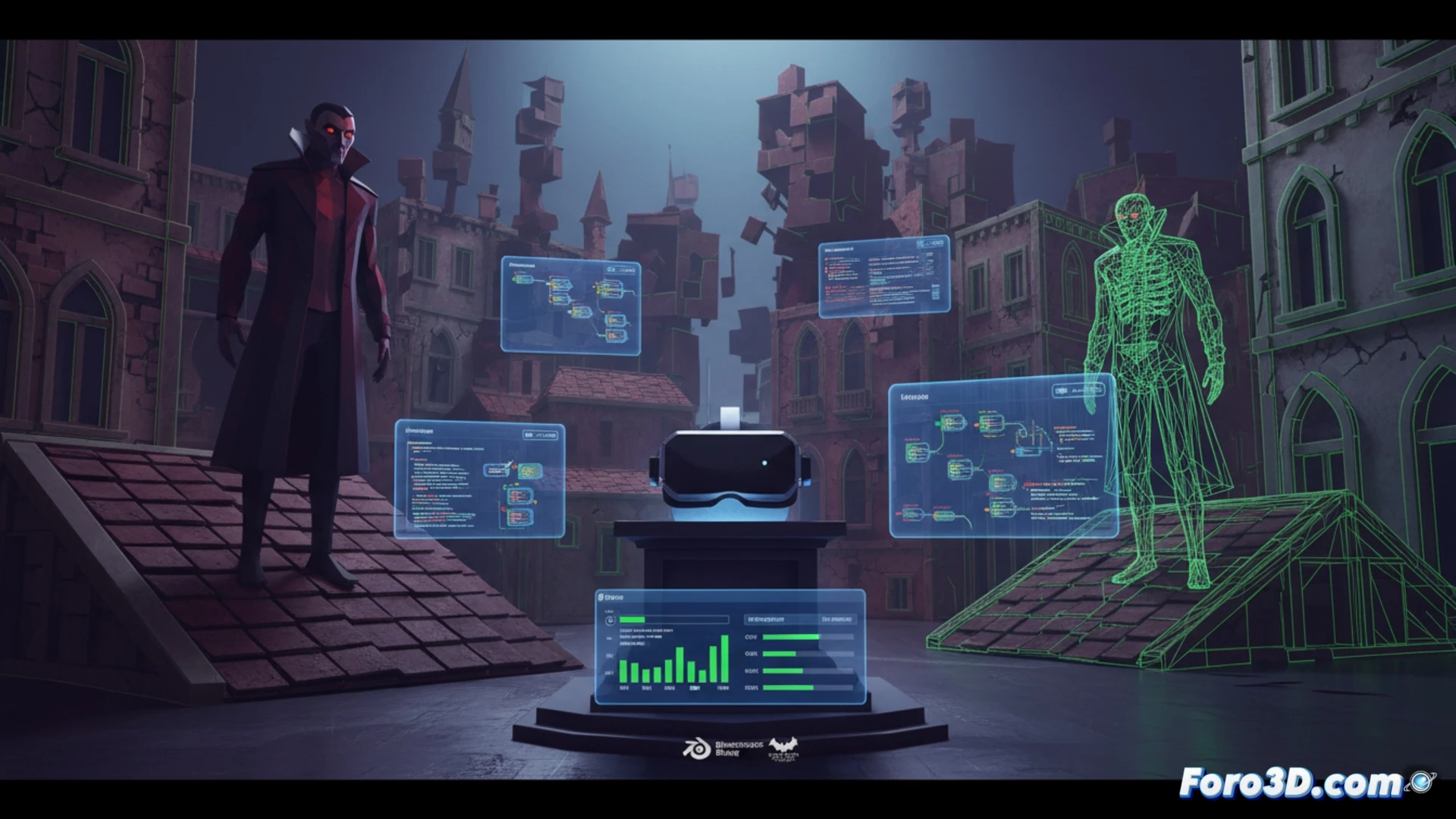
Rendering and Modeling: From Blender to Unity VR 🔧
The key to VR performance lies in optimizing draw calls and using LODs (Level of Detail). In this title, the architectural models of Venice created in Blender were likely simplified with modular geometry to reduce pixel fill. When texturing in Substance Painter, channel masks (R, G, B) were prioritized to combine roughness, metalness, and ambient occlusion information into a single texture, saving GPU memory. For the gothic lighting, baked lighting in Unity was used, combined with dynamic shadows only for the character and interactive objects—a technique that maintains visual mystery without sacrificing the 90 FPS required in VR.
Level Design for Stealth and Supernatural Abilities 🕵️
First-person level design for VR must prioritize user comfort. Justice uses visual points of interest (light beacons, dim neon) to guide the player without needing an intrusive minimap. When implementing abilities like blood vision, developers likely used lightweight post-processing shaders in Unity, activated only during the ability to avoid overloading constant rendering. For indies, the advice is clear: use lighting contrast as a gameplay mechanic, not just decoration. Shadows should be allies of stealth, not mere graphical embellishments.
Which specific optimization techniques for Unity, such as occlusion culling, dynamic level of detail, or foveated rendering, were key to maintaining visual smoothness in Vampire: The Masquerade - Justice without sacrificing narrative immersion in dark, detail-rich environments?
(PS: shaders are like mayonnaise: if they break, you start all over again)