The launch of the modern ports of Persona 3 Portable and Persona 4 Golden represented a significant technical challenge for Atlus. Adapting titles originally designed for portable hardware (PSP and PS Vita) to current platforms required deep reverse engineering and optimization work. Beyond a simple repackaging, the development team had to address low-resolution texture scaling, user interface modernization, and frame rate stabilization, all using development tools like Visual Studio to recompile and debug the legacy code.
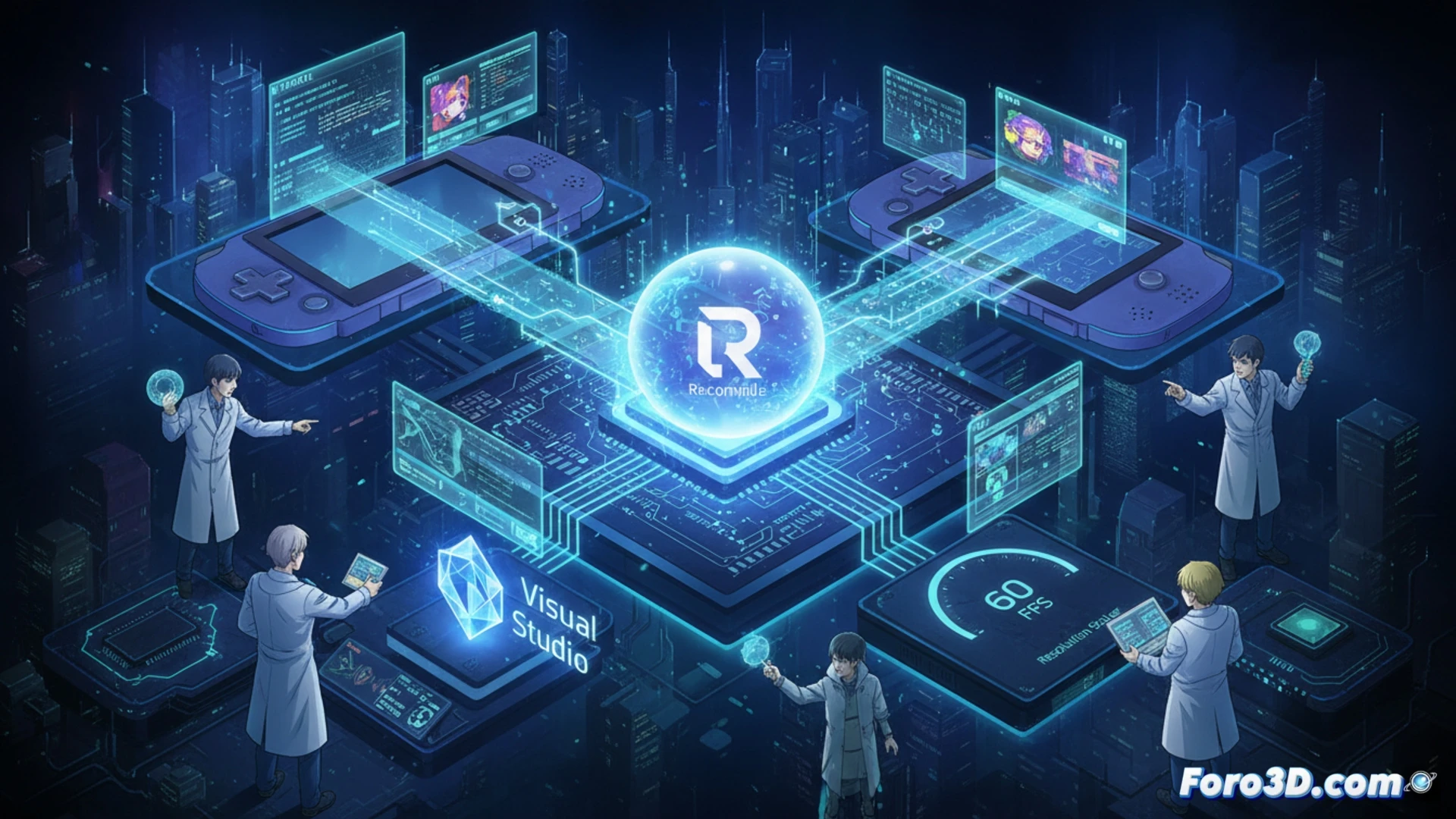
Texture scaling and interface modernization 🎨
The main graphical challenge lay in the original textures, designed for 480x272 pixel (PSP) and 960x544 pixel (PS Vita) screens. To achieve a sharp image on 1080p monitors, developers implemented a scaling system based on artificial intelligence and enhanced bilinear filters. However, the most complex solution was the manual reconstruction of user interface (UI) assets. Menus and buttons, anchored to fixed resolutions, required a complete restructuring of the C++ code to support dynamic and responsive rendering, eliminating the forced scaling that distorted texts. This involved modifying the rendering pipelines directly in Atlus's proprietary engine.
The art of optimizing without breaking the essence ⚙️
From a development perspective, these ports demonstrate that optimization is not just about raw power, but about precision engineering. Maintaining smooth 60 FPS on modern hardware required disabling legacy frame locks and readjusting the game engine's timers, a delicate process that could break animation logic or events. The use of Visual Studio was crucial for profiling the code and detecting bottlenecks in memory management. In conclusion, these ports are an excellent case study on how to preserve the original gameplay by applying modern development techniques without betraying the artistic vision of the product.
How did the developers manage to balance the visual fidelity of the Persona 3 Portable and Persona 4 Golden ports with stable performance on modern and portable hardware like the Nintendo Switch?
(PS: game jams are like weddings: everyone is happy, no one sleeps, and you end up crying)