The Samsung Odyssey OLED G9 G95SD arrives on the market with a proposition that transcends gaming: a 49-inch ultra-wide screen with Dual QHD resolution and an anti-glare coating designed to preserve the absolute blacks of OLED even under intense ambient light. For the 3D professional, this is not a luxury, but a technical necessity in real work environments.
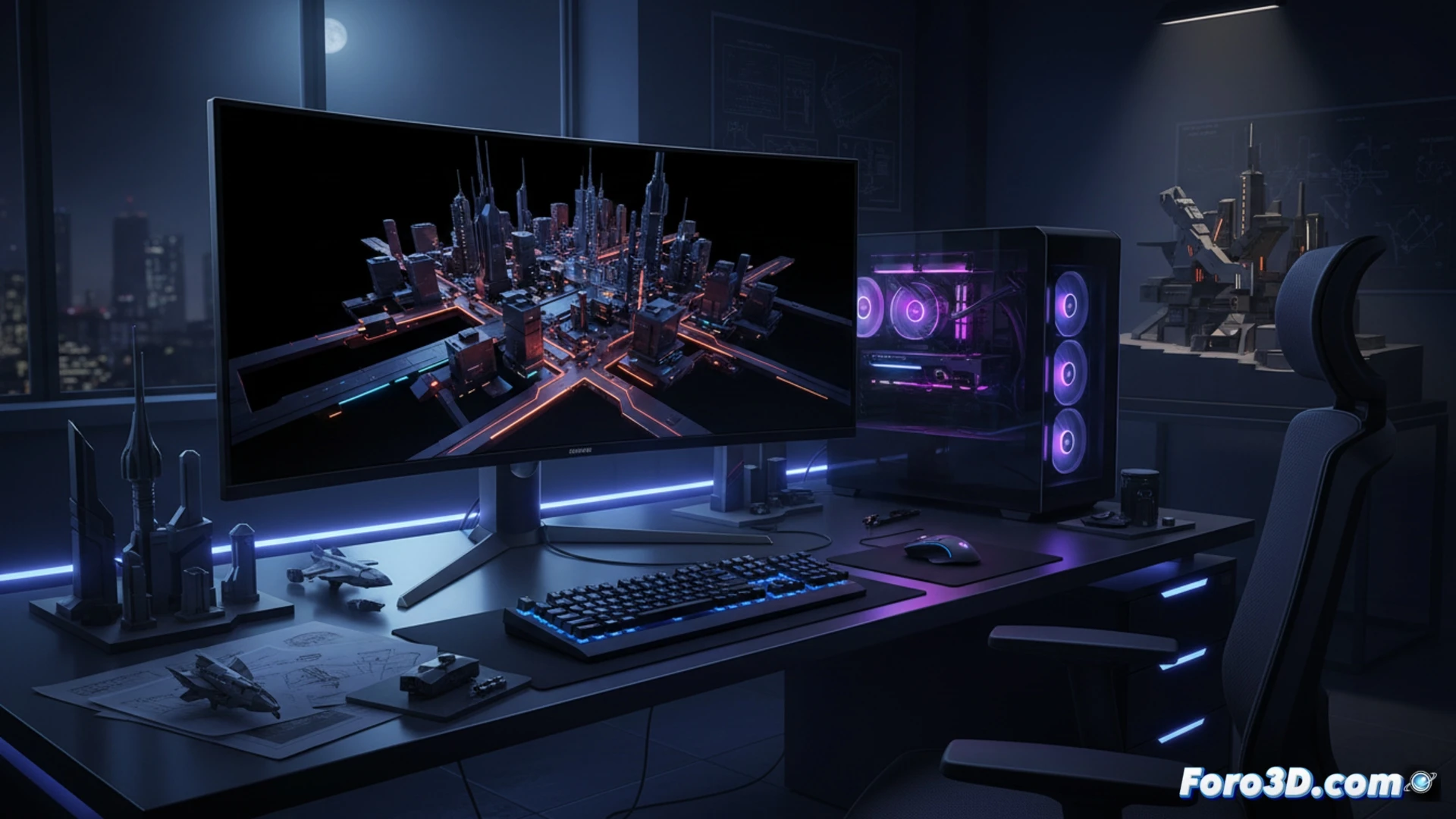
Maintaining color accuracy under any lighting 🎨
The main virtue of OLED is its ability to turn off individual pixels to achieve perfect black, which translates into infinite contrast. However, in a studio or workroom with windows or ceiling lights, surface reflections turn that black into a washed-out gray, ruining the perception of shadows and depth in a model. The G95SD's anti-glare technology tackles this problem at its root. Unlike a traditional matte finish that diffuses light, this advanced treatment absorbs direct ambient light. For a modeler, this means that the dark areas of an asset in Blender or Maya will be seen with the correct density without having to close blinds. In rendering, color fidelity in shadows and gradients remains stable, eliminating the need to adjust the monitor's exposure to compensate for the environment. This reduces eye strain and speeds up reviews, as what you see on the screen is closer to the final result.
Real productivity or over-engineering? 🔍
If you work in controlled environments with adjustable lighting, any high-end OLED monitor will suffice. But if your workflow requires mobility between stations or you work in open-plan offices with variable lighting, this anti-glare panel makes a tangible difference. The 32:9 aspect ratio allows you to have a viewport, a material inspector, and a visual reference without overlapping. The investment is justified when the time lost adjusting the work environment or reinterpreting colors due to reflections translates into lost billable hours. It's not a monitor for everyone, but for the 3D professional who prioritizes visual consistency, it's a precision tool.
It is possible to leverage the deep black technology and lack of reflections of the Odyssey OLED G9 to improve depth perception and immersion in 3D modeling environments, or is its advantage limited exclusively to HDR content viewing in video games?
(PS: RAM is never enough, like coffees on a Monday morning)