A 59,000-year-old Neanderthal molar, discovered in Chagyrskaya Cave (Siberia), has revolutionized dental archaeology. Published in PLOS One, the fossil shows an intentional perforation from the crown to the pulp, made with stone tools. This finding surpasses the previous record of primitive dentistry by 40,000 years and constitutes the first evidence of surgery in a hominid other than Homo sapiens, opening new questions about Neanderthal cognition. 🦷
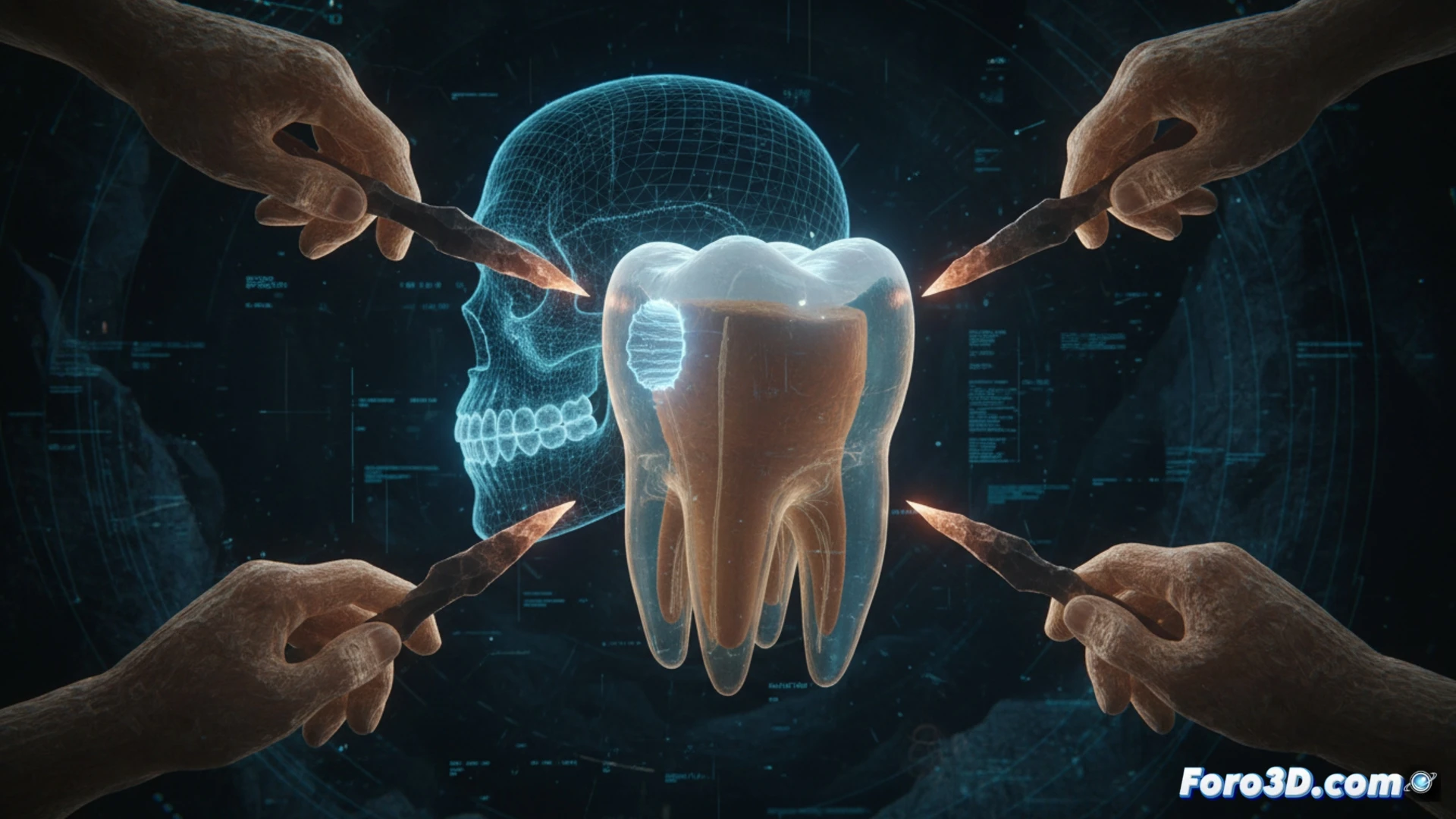
Photogrammetry and microscopy: the digital analysis of the molar 🔬
The research team applied scanning electron microscopy and micro-computed tomography to document internal wear. The images revealed concentric striations generated by a thin stone instrument, rotated manually between the fingers, similar to a primitive drill. Using digital photogrammetry, a 3D model of the tooth has been generated, allowing visualization of the access channel to the pulp cavity and marks from wooden toothpicks, likely used to relieve pain. This virtual reconstruction not only preserves the fossil but also allows simulating the surgical gesture and comparing Neanderthal dental anatomy with modern humans.
Implications for digital archaeology and Neanderthal cognition 🧠
This case demonstrates that Neanderthals possessed fine manual dexterity and planning capacity to perform complex medical procedures. Digital archaeology, through interactive models and 3D animations, allows us today to recreate that prehistoric moment: an individual relieving their pain with a calculated perforation. The presence of cavities in another tooth from the same cave suggests that these practices were not isolated, but part of transmitted knowledge. 3D technology thus becomes a key tool for reinterpreting the intelligence of our extinct relatives.
How photogrammetry and micro-computed tomography techniques were integrated to generate the three-dimensional model of the Neanderthal molar and confirm the evidence of the first known dental surgery.
(PS: and remember: if you can't find a bone, you can always model it yourself)