The release of Octopath Traveler II not only solidified a franchise but also established a new technical standard for the HD-2D aesthetic. Developed in Unreal Engine 4, the title achieves a precise symbiosis between classic pixel art and modern volumetric lighting. This analysis breaks down the workflow behind this visual evolution, from sprite creation to cinematic post-processing, offering a technical roadmap for indie developers looking to emulate this technique.
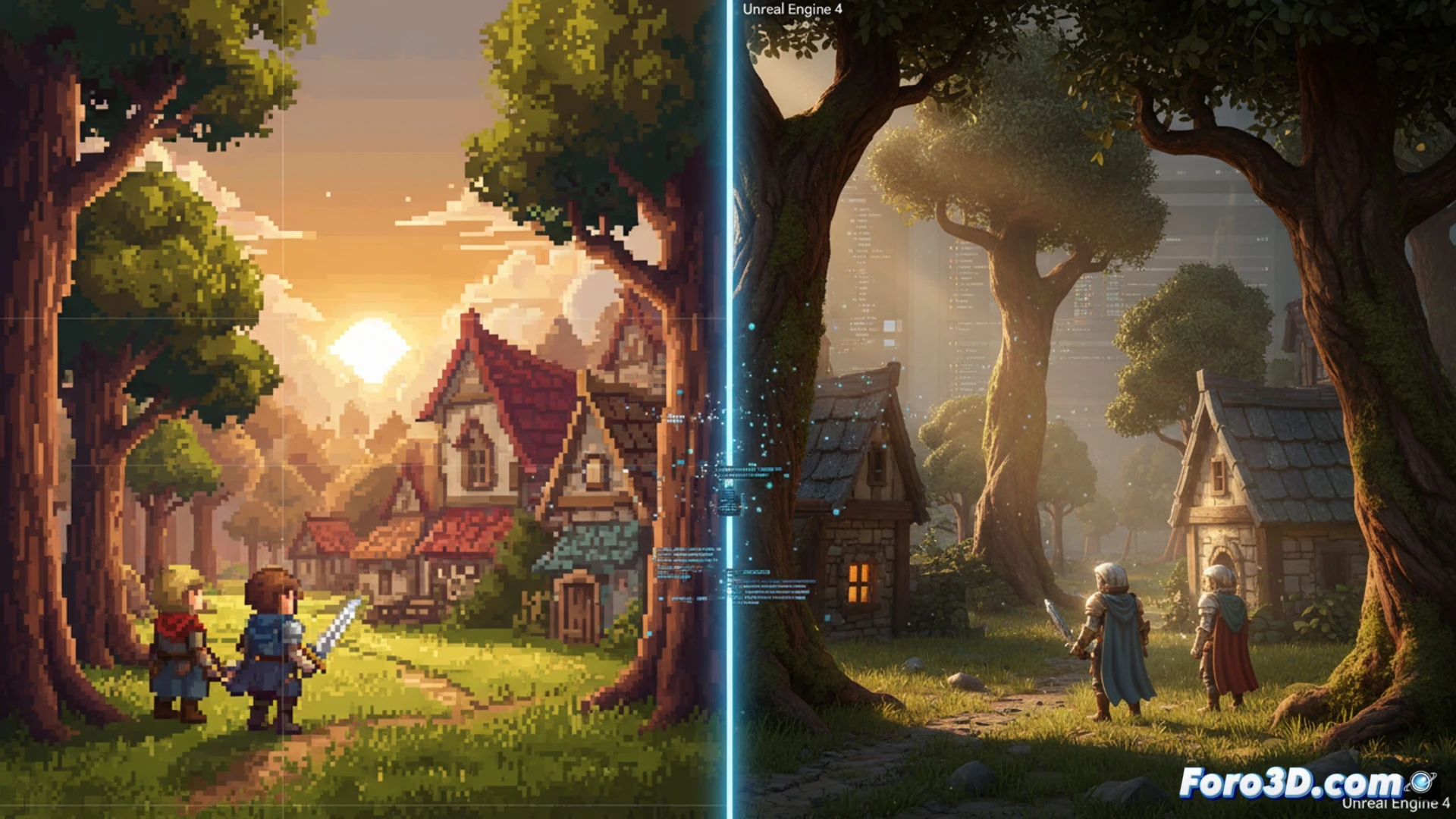
Technical Workflow: From Aseprite to Dynamic Lighting in UE4 🎨
The production pipeline is divided into three key phases. First, character and enemy sprites are drawn in Aseprite at a 16-bit resolution, maintaining a limited palette to preserve retro consistency. These sprites are exported as flat textures. Second, backgrounds are painted in Photoshop, where depth layers and forced perspective are applied, mimicking dioramas. The magic happens in Unreal Engine 4: the engine receives these assets and applies dynamic light post-processing. Directional lights are used to simulate the day-night cycle and depth of field (DOF) effects that blur the background, emulating a cinematic lens. Volumetric lighting, combined with soft shadows, brings the 2D sprites to life, creating the illusion that they inhabit a real three-dimensional space.
The Evolution of HD-2D as a Development Language 🚀
More than a visual trick, the HD-2D of Octopath Traveler II represents an efficient solution for studios with limited resources. By separating art creation (sprites and backgrounds) from the rendering engine, it allows artists to work in pure 2D while programmers exploit the power of UE4 for complex effects. This technique reduces the production cost of full 3D animations but demands rigorous lighting control to prevent sprites from looking flat. The result is an aesthetic that honors the past while embracing present-day tools, demonstrating that innovation does not always require high-density polygons, but rather an intelligent integration of disciplines.
As a developer, which technical aspects of the Unreal Engine 4 do you find most challenging when replicating the aesthetic and limitations of 16-bit with modern lighting and volumetric effects in Octopath Traveler II?
(PS: a game developer is someone who spends 1000 hours making a game that people complete in 2)