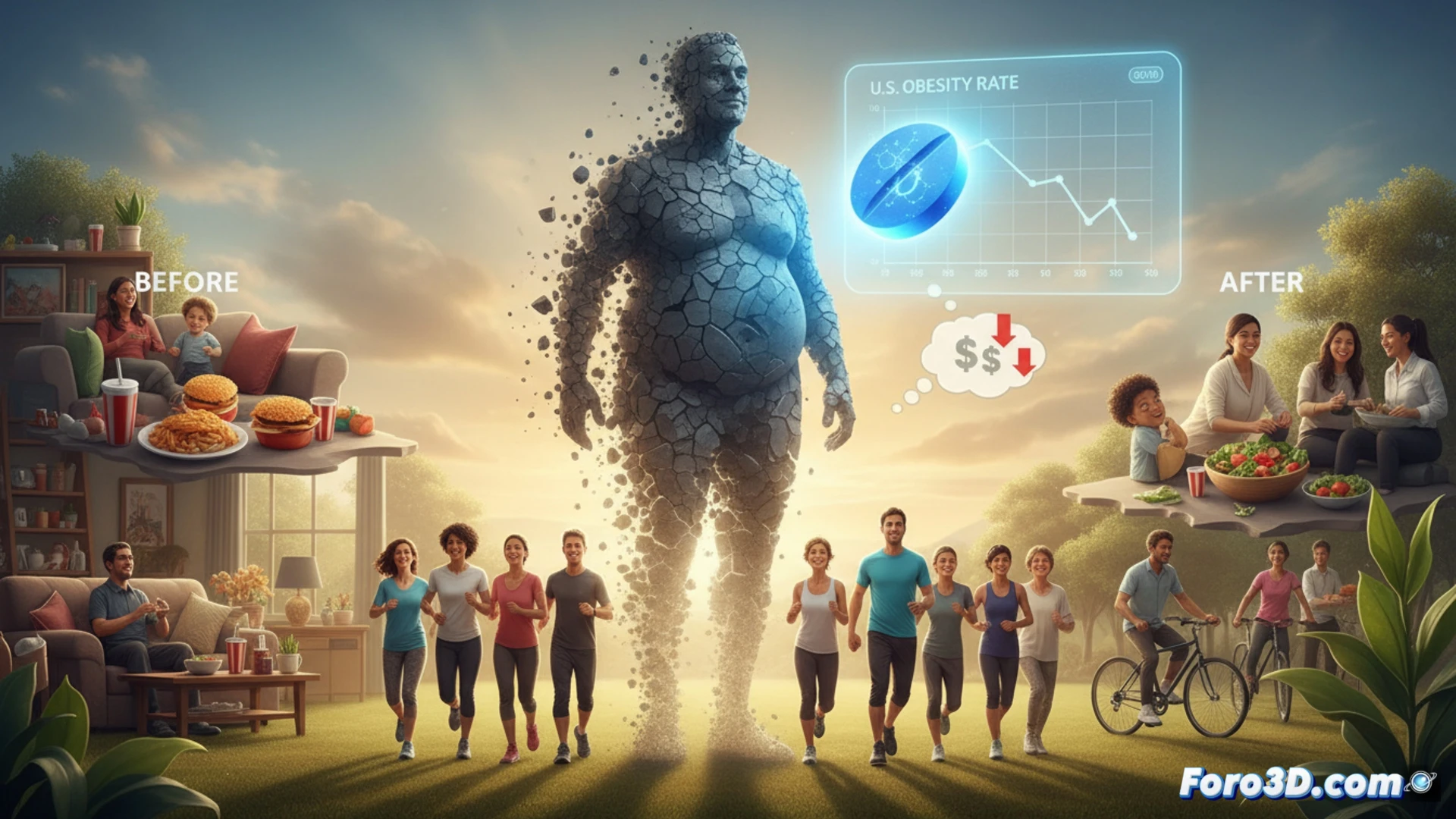
For the first time in a decade, the obesity rate in the United States has declined. An analysis of 300 million medical records reveals a direct correlation with the rise of drugs like Ozempic. These medications, designed for diabetes, have proven effective for weight loss. However, their high cost limits access for the majority. The conclusion is simple: if prices came down, more people could benefit and the downward trend would accelerate. A change in habits remains ideal, but reality dictates otherwise.
The weight loss algorithm: how GLP-1 agonists work 💉
The technology behind these drugs is based on mimicking the GLP-1 hormone, which regulates appetite and satiety. When administered weekly, the compound slows gastric emptying and sends fullness signals to the brain. Pharmaceutical development has achieved a prolonged half-life, allowing for stable dosing. On a technical level, the challenge was to avoid rapid enzymatic degradation. The result is a powerful tool, but not without side effects such as nausea or vomiting. Its production remains costly, which drives up the final price.
The fitness industry's wet dream: losing weight with an injection 🏋️
While fitness gurus sell sweat and sacrifice, science has launched a chemical shortcut. Now, instead of counting calories, you can count the days until the next injection. Gyms are trembling: if people lose weight without stepping on a treadmill, what will happen to annual subscriptions? The irony is that Ozempic takes away your hunger, but also your desire to go to the supermarket. In the end, the only one losing is your wallet.