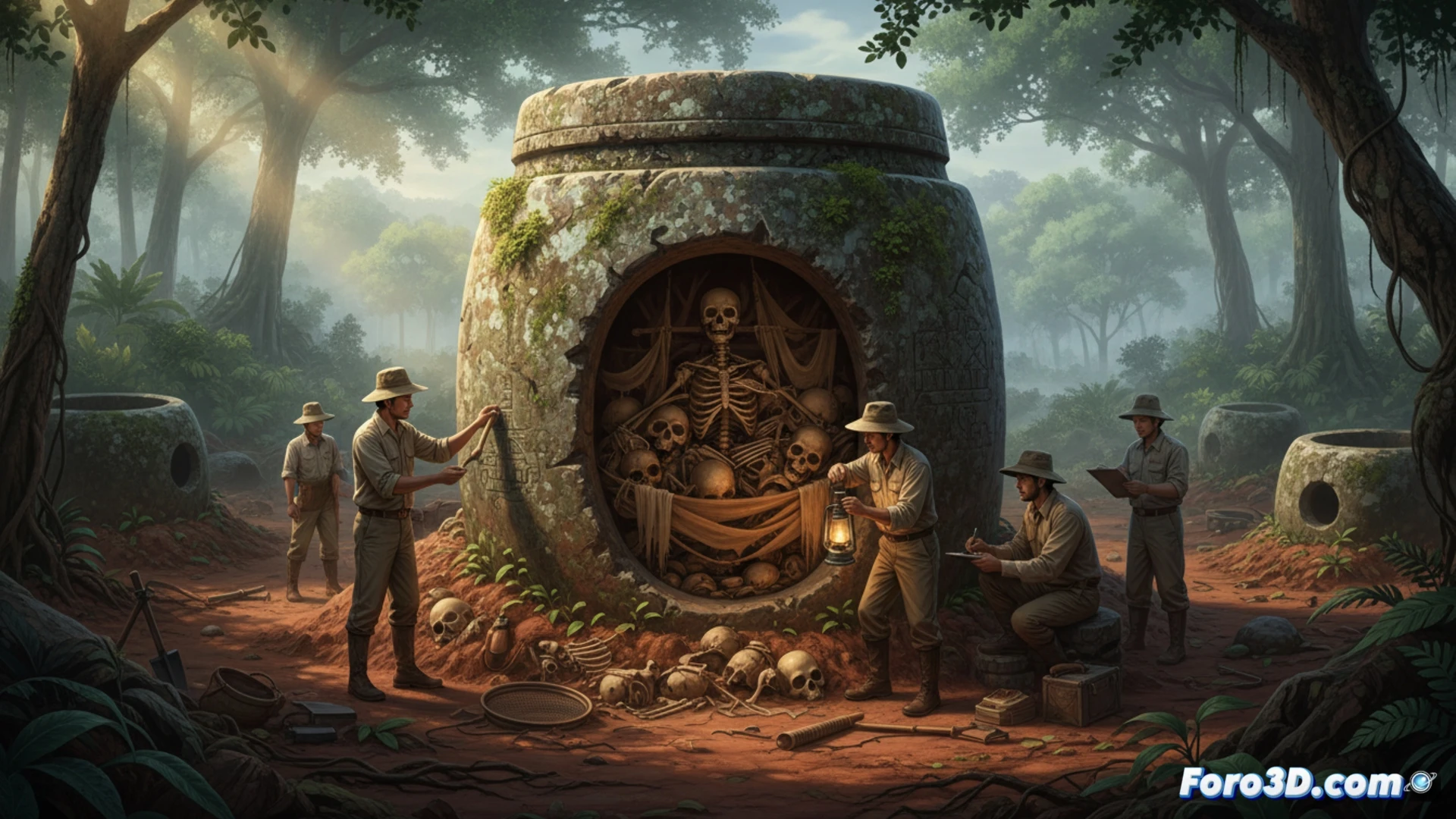
A team of archaeologists has discovered in Laos the remains of at least 37 individuals inside a two-meter-wide stone jar. The finding, published in the journal Antiquity, dates back over a thousand years and suggests that the Plain of Jars functioned as a funerary complex for ancestor worship.
Dating technology and analysis of skeletal remains 🧬
The researchers used radiocarbon dating techniques and ancient DNA analysis to examine the remains. The results indicate that the jar was reused over generations, accumulating bodies from different periods. This multigenerational burial process supports the theory that the thousands of jars scattered across northern Laos had a common funerary purpose, not storage or cooking rituals as previously speculated.
The most exclusive jar of prehistory 😂
Imagine having a jar so big it doesn't fit in your kitchen, but it does fit 37 relatives. Archaeologists believe it was a burial site, though anyone might think it was the first bone recycling container. At least, now we know that our ancestors not only made pottery but also had a very efficient funerary space-saving plan.