Pogonip clouds, also known as ice fog, are an extreme weather phenomenon that occurs in intensely cold regions such as Alaska or Siberia. They are composed of microscopic ice needles suspended in the air, capable of reducing visibility to nearly zero meters. Unlike common fog, these crystalline particles do not evaporate but instead accumulate on surfaces, creating a real hazard for aviation and ground navigation.
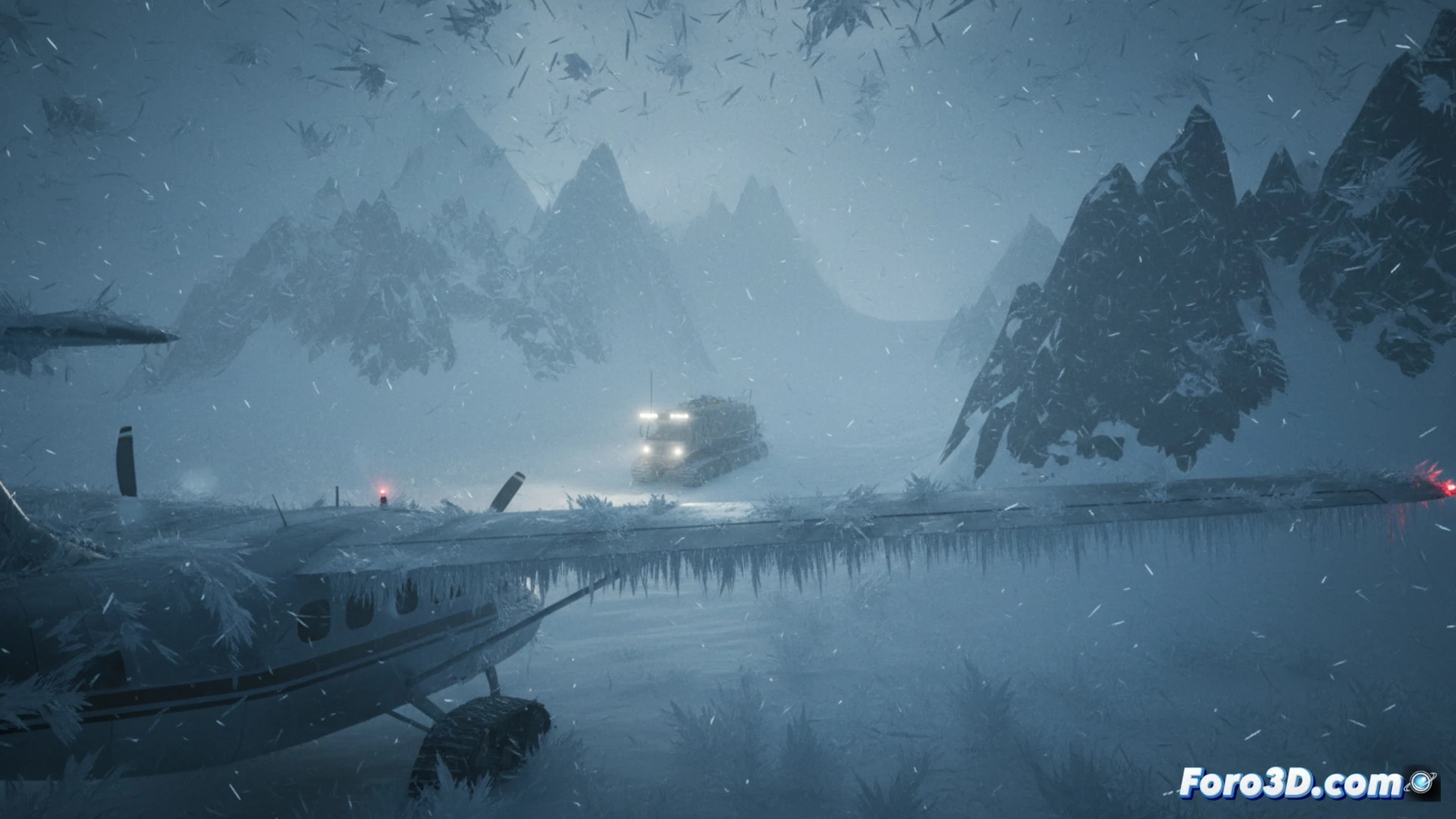
Multiscale Simulation with VGSTUDIO MAX and COMSOL ❄️
To understand the dynamics of these structures at the microscale, scientists turn to advanced visualization tools. Volume Graphics VGSTUDIO MAX processes computed tomography data from ice samples, reconstructing in 3D the network of needles and internal pores. COMSOL Multiphysics, in its bio-electromagnetism module, simulates how these particles interact with radio waves or electric fields, vital information for airport radar systems. Meanwhile, Materialise Mimics segments medical or geological images, classifying each crystal according to its density and orientation, facilitating the study of thermal conductivity in cryogenic materials.
Visible Ice, Invisible Data 🔬
Beyond meteorology, modeling Pogonip clouds offers a perfect metaphor for the power of scientific visualization. What appears to the naked eye as a dangerous white blanket becomes, in a 3D environment, a map of variables: particle size, wind vectors, and freezing points. This ability to make the invisible visible not only saves lives in aviation but also redefines how we understand the limits of cold on Earth and on other planets with frozen atmospheres.
In the 3D modeling of Pogonip clouds for scientific visualization, how can the phase transition from supercooled water droplets to microscopic ice crystals be accurately simulated without compromising real-time computational performance?
(PS: Modeling manta rays is easy; the hard part is making them not look like floating plastic bags)