Polar stratospheric clouds, known as nacreous clouds, are among the most spectacular visual phenomena in the atmosphere. Their iridescence resembles the mother-of-pearl of a seashell, but their beauty hides a real danger: they act as catalysts in ozone destruction. In this technical article, we explore how scientific visualization tools like VGSTUDIO MAX, COMSOL Multiphysics, and Materialise Mimics allow modeling this process, from the formation of ice particles at -78°C to the simulation of the chemical reactions that deplete the protective layer.
Volumetric Modeling and Multiphysics Simulation with VGSTUDIO MAX and COMSOL 🌩️
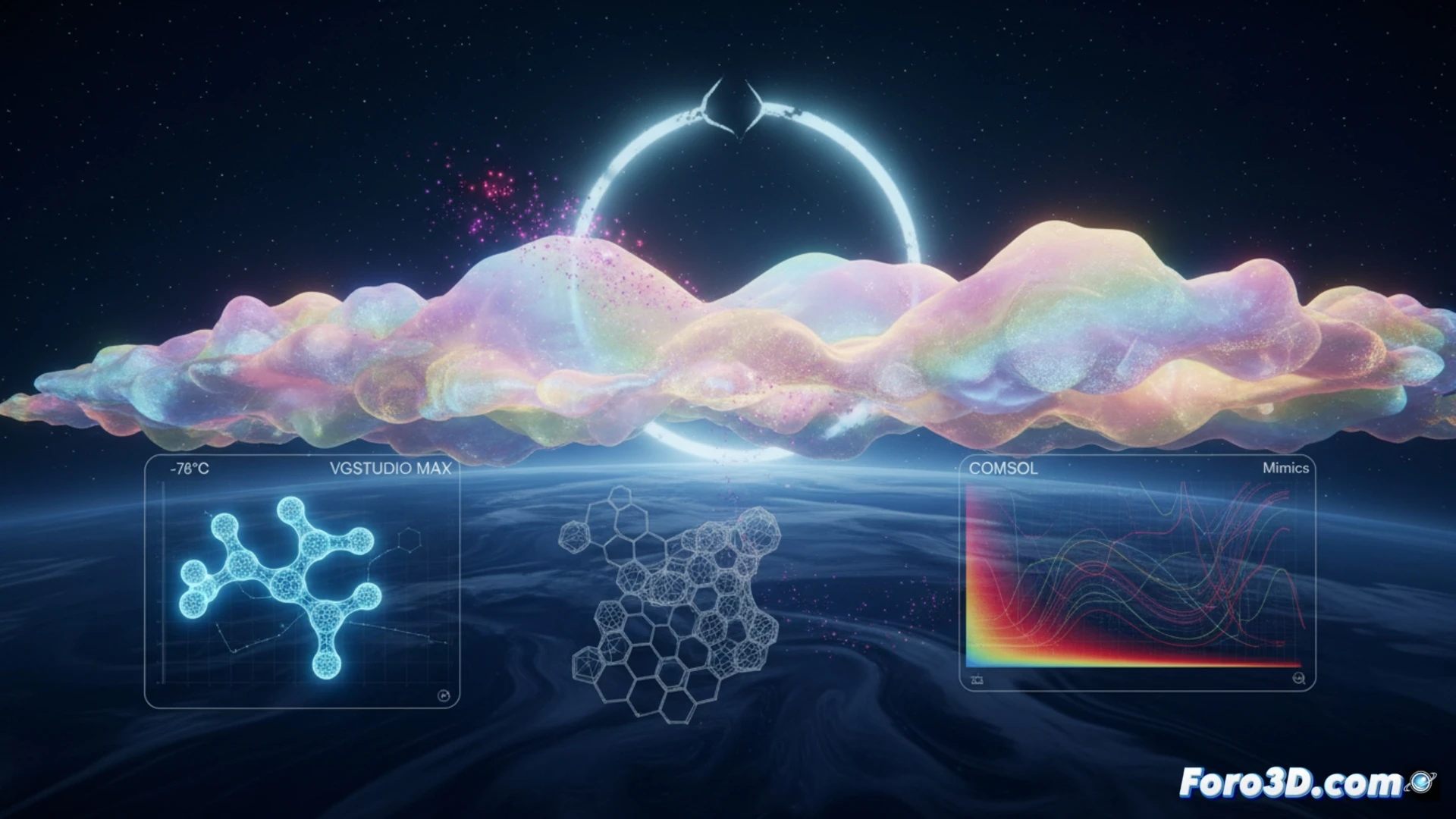
To represent the formation of these clouds at 20 km altitude, the first step is to reconstruct a volumetric model of the stratosphere using VGSTUDIO MAX. Here, temperature and pressure data are processed to generate a cross-section that reveals the extremely cold air layers. On this basis, COMSOL Multiphysics comes into play to simulate bio-electromagnetism and chemical kinetics. The model calculates how ice particles facilitate the conversion of inactive chlorine compounds into reactive radicals, a process visualized as dynamic concentration fields. Finally, Materialise Mimics allows segmenting the regions of highest chemical activity, transforming abstract data into a volumetric risk map that relates altitude, temperature, and ozone concentration in real time.
The Visual Paradox of Beauty and Fragility 🌀
When observing the interactive 3D infographic, the viewer faces a paradox: the mother-of-pearl colors that make these clouds unique are the same indicator of a harmful chemical reaction. Scientific visualization not only documents a phenomenon but forces us to reflect on how technology can make the invisible visible. Thanks to these tools, we can virtually traverse the stratosphere and understand that, sometimes, the most beautiful thing in the sky is also the symptom of a wound in our planetary shield.
How can the chemical interaction of nacreous clouds with chlorine compounds in the stratosphere be modeled in 3D to visualize their impact on the ozone layer on a global scale?
(PS: modeling manta rays is easy, the hard part is making them not look like floating plastic bags)