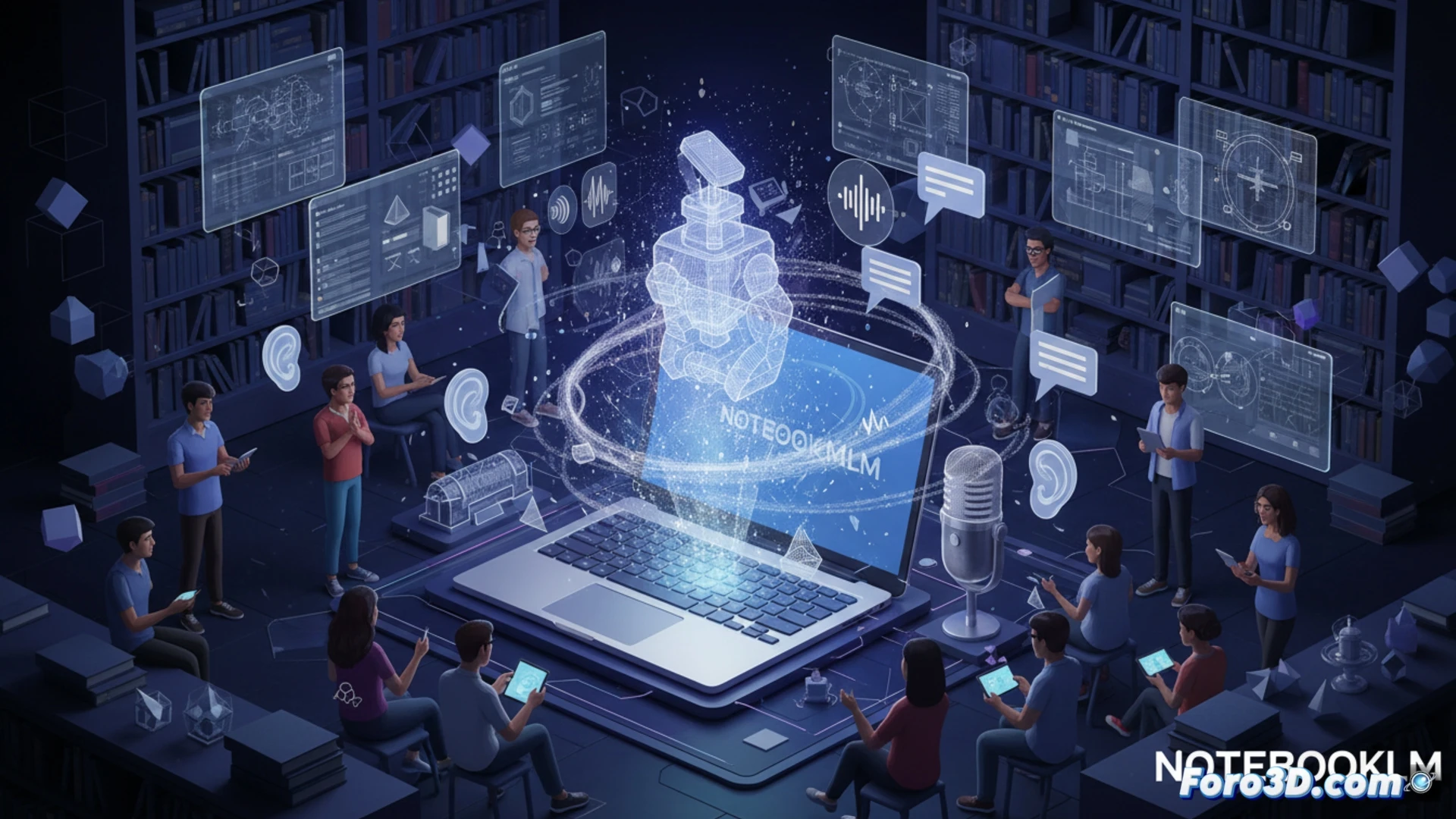
Google's NotebookLM tool bursts into the digital ecosystem with a radical proposal: turning technical documents into AI-generated audio conversations. Two synthetic voices discuss the uploaded content, creating a realistic podcast without human intervention. For the 3D community, this opens a door to democratizing access to complex tutorials, mesh analysis, or software documentation, transforming dense texts into digestible auditory experiences.
Technical implications for creators and platforms 🎧
From a moderation and community management perspective, NotebookLM poses a dual challenge. On one hand, it allows 3D content creators to repurpose written guides or discussion forums as audio material, increasing accessibility for visually impaired users or those who prefer passive learning. On the other hand, platforms will need to evaluate how to integrate this voice synthesis without violating originality policies or copyright. The AI's ability to interpret technical jargon like subdivision surface or retopology will depend on the quality of the source document, requiring technical writers to be more precise in their texts.
The future of audio technical dissemination 🎙️
NotebookLM not only automates narration but redefines how technical information is consumed in the digital society. By removing the barrier of specialized reading, a novice can listen to a debate between two voices about the pros and cons of GPU versus CPU rendering. This could reduce the knowledge gap in online communities but also demands reflection on content veracity: if the original document contains errors, the podcast will replicate them with authority. The tool is a step towards a more audible web, where 3D forums resonate through speakers.
How does the conversion of technical 3D documents into realistic podcasts via NotebookLM affect the way digital industry professionals process and validate complex information in collaborative environments?
(PS: at Foro3D we know that the only AI that doesn't generate controversy is the one that's turned off) 🤖