The Marvel universe introduces us to No-Girl, the identity of Martha Johansson created by Grant Morrison and Ethan Van Sciver. This character is a mutant brain preserved in a floating jar, endowed with telepathy so powerful it can nullify other powers. Beyond being a simple villain or ally, its design poses a piercing question: what happens when consciousness is completely separated from the body. In the era of digital art and visual activism, this representation becomes a potent symbol of the bodily disconnection we experience through screens.
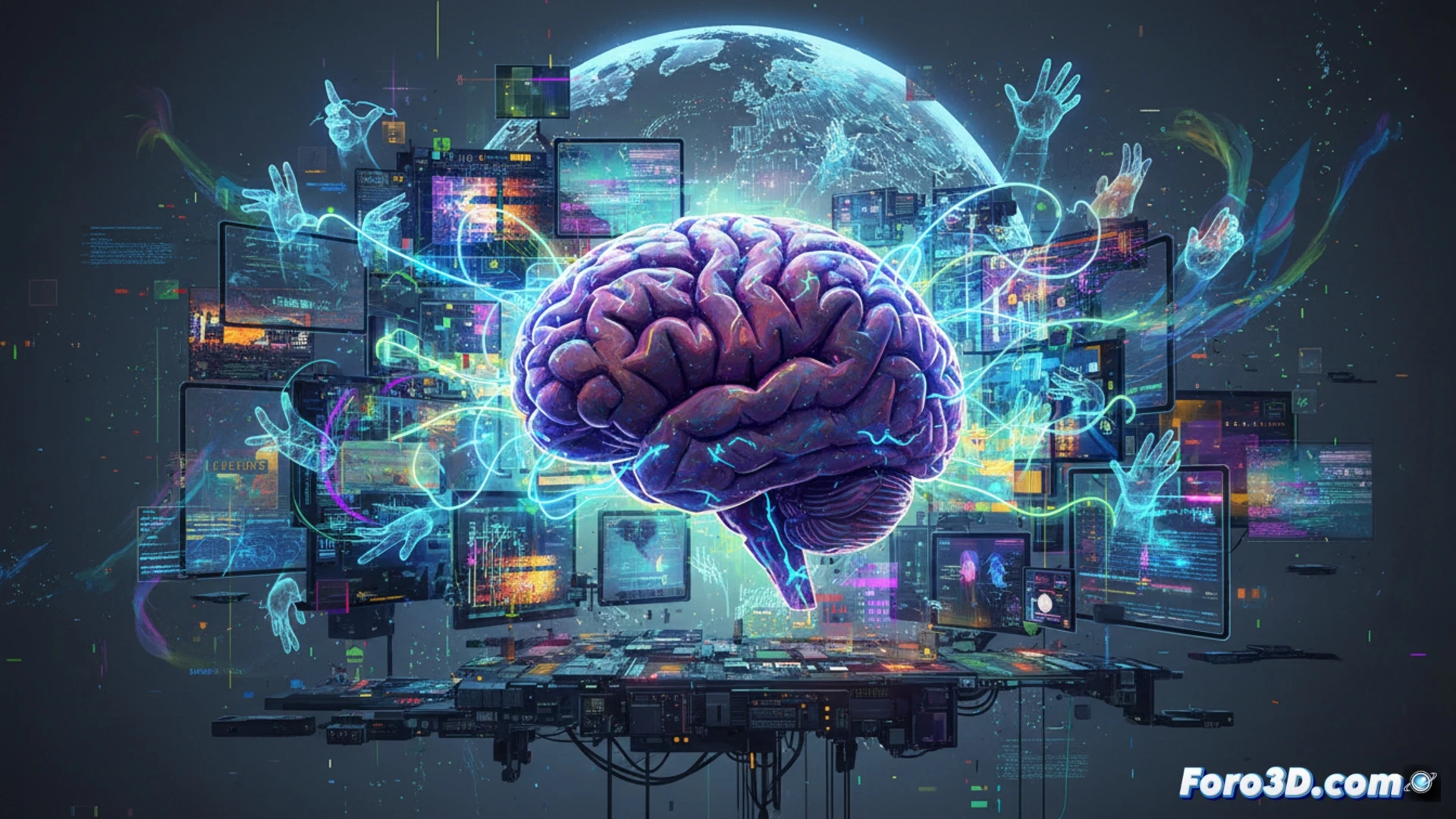
3D Recreation: Modeling a Brain in Suspension 🧠
For a technical writer at Foro3D, No-Girl's design presents a fascinating challenge in modeling and texturing. Recreating a human brain in a glass jar requires mastering volumetric lighting and translucent materials. The brain must appear organic and pulsating, while the suspension fluid needs a shader with subsurface scattering (SSS) to simulate the density of formaldehyde. The cables or electrodes connecting the jar to a mechanical support are crucial details for adding realism. Tools like Blender or ZBrush allow for sculpting the brain's convolutions with anatomical precision, creating a piece ready for digital art exhibitions or interactive narratives in virtual reality.
The Visual Metaphor of Posthuman Activism ✊
No-Girl is a visual metaphor for digital alienation. Her brain, isolated in a jar, reflects our own condition: static bodies in front of screens while our minds travel through social networks and forums. For digital activism, this character represents the struggle for identity when the physical body is nullified or ignored. Recreating this figure in 3D is not just a technical exercise; it is an act of visual protest. By displaying a floating brain in a virtual gallery, the artist denounces how technology can disconnect us from our flesh, turning vulnerability into a powerful cry of resistance.
How can the representation of No-Girl as a floating brain serve as a tool for digital activism to make visible the invisibility and structural ableism in contemporary art
(PS: at Foro3D we believe all art is political, especially when the computer freezes)