The character Night-Raven, created by Steve Parkhouse and David Lloyd, represents a unique figure in 1930s comics: a masked vigilante condemned to an eternal vigil by a poison that causes him constant pain. This premise, laden with social critique about justice and suffering, finds a new channel of expression in 3D modeling. Digital sculpture allows for the reconstruction of his shadowy silhouette and tattered trench coat to enhance his message of resistance.
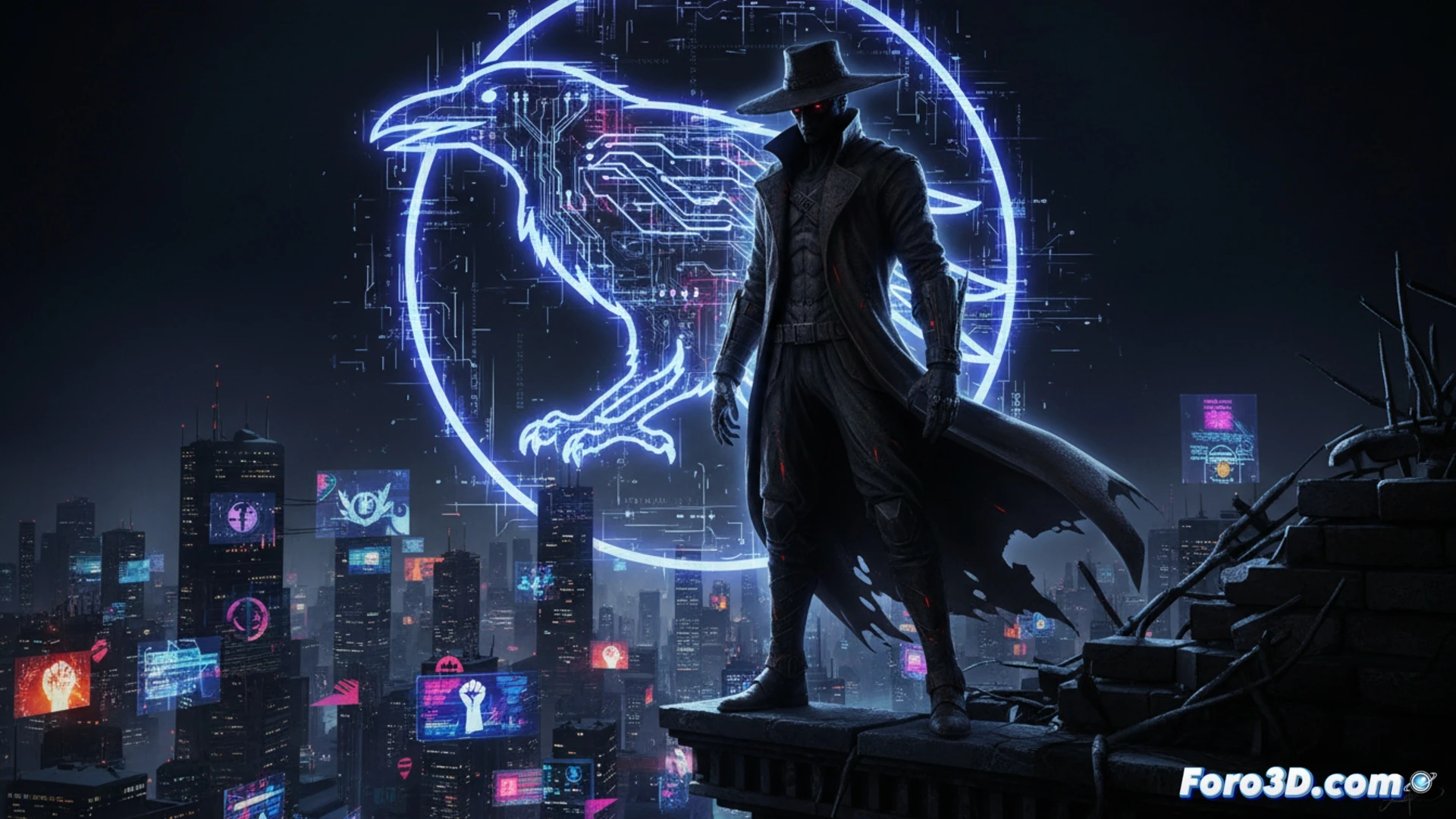
Digital sculpture and stylized rendering to convey perpetual pain 🎭
To capture the essence of Night-Raven in 3D, it is key to employ digital sculpting techniques in software such as ZBrush or Blender, focusing on the anatomy of a body consumed by fatigue. Stylized rendering, with high-contrast lighting and hard shadows, mimics David Lloyd's inking. Texturing must reflect the wear and tear of his clothing and the pallor of his skin, while rigging can simulate clumsy, heavy movements. These technical decisions reinforce the narrative of a being trapped in an unbearable state of alertness, ideal for protest animations.
Immersive experiences: the vigilante as a symbol of digital resistance 🕶️
Virtual reality offers a powerful medium for the viewer to feel Night-Raven's exhaustion. A digital exhibition could place the user in a 1930s alley, seeing the character lurk from the shadows. An interactive short film could explore his pain as a metaphor for state surveillance or the fight against oppression. By combining 3D modeling with immersive environments, this character ceases to be a simple comic and becomes a tool of visual activism that invites reflection on the price of justice.
How can the 3D modeling of an immortal vigilante like Night-Raven enhance the message of digital activism in a context of contemporary social justice?
(PS: if your virtual reality installation doesn't change the world, at least let it not lag)