The Korean studio Nexon Games has revealed technical details of its upcoming open-world RPG, internally known as Codename: Northern Lights. The project aims to redefine winter realism through the intensive use of Unreal Engine 5 and its Niagara particle system. The proposal focuses on generating dynamic snowstorms that affect visibility and gameplay, combining procedural elements with hyper-realistic artistic detail.
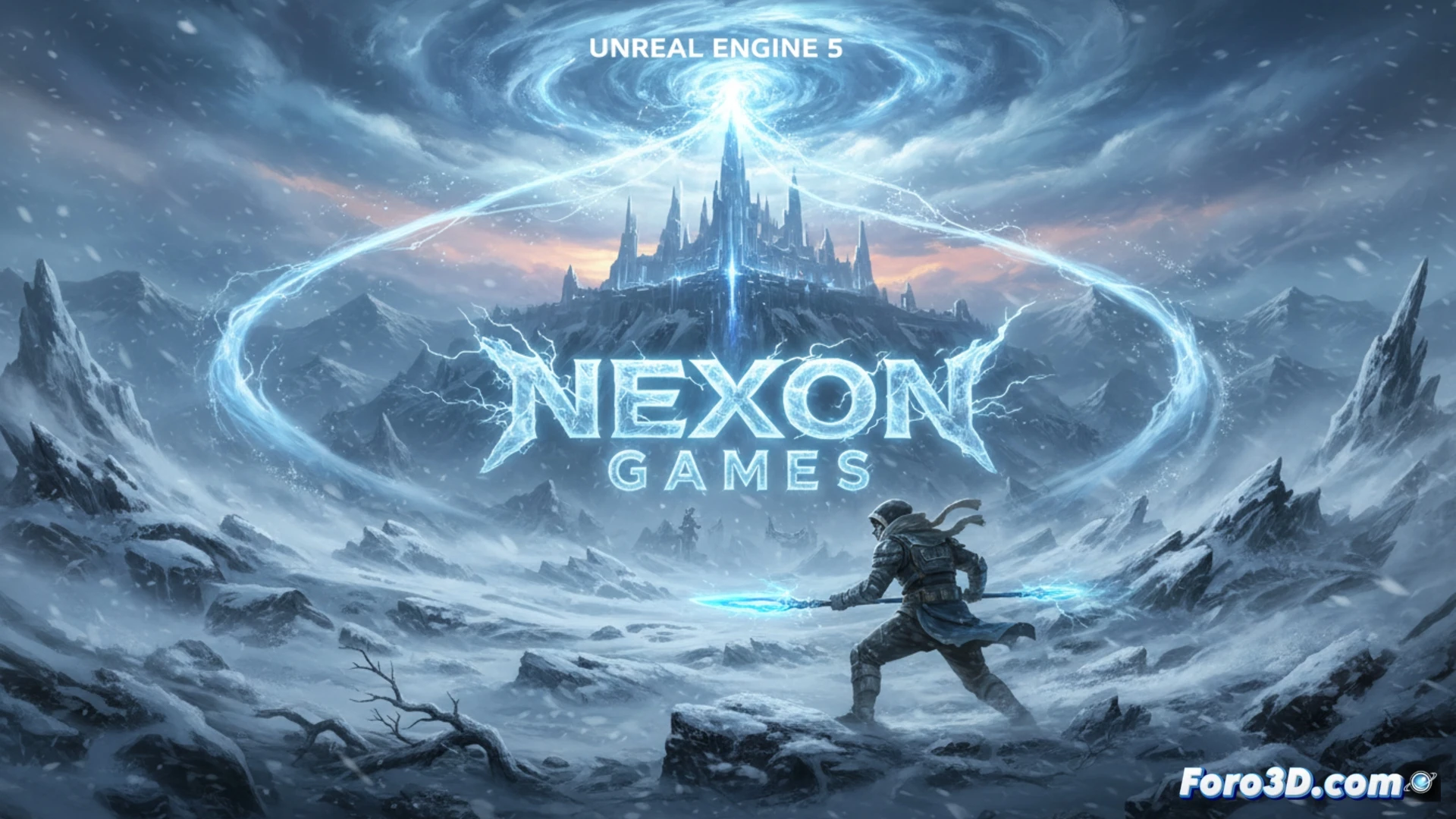
Niagara, Houdini and the technical workflow ❄️
To achieve snowy landscapes that react in real time, the team has implemented Niagara as the core of the weather effects. The snowstorms are not pre-rendered animations, but procedural systems that calculate density, wind direction, and accumulation on the surface. Houdini comes into play for generating large-scale terrain and assets, allowing mountains and valleys to be sculpted with procedural logic that is then exported to the engine. Photoshop is used in the texturing stage, creating moisture masks and snow layers that dynamically blend with Unreal Engine 5's landscape material. The main challenge has been maintaining a stable framerate during the densest storms, optimizing particle LOD and using the Virtual Shadow Maps system to avoid flickering shadows.
The balance between realism and performance ⚙️
Codename: Northern Lights represents a case study on how to manage visual complexity without sacrificing the gameplay experience. Nexon Games has opted for a hybrid approach: the snow on the ground is generated with Houdini and baked into static textures, while the moving snow depends entirely on Niagara in real time. This decision allows the open world to feel alive and changing, but without collapsing the rendering pipeline. For independent developers, the project demonstrates that the key is not in using all available tools, but in knowing when to delegate to the procedural and when to opt for the baked.
How does Nexon Games achieve procedural snow simulation in Unreal Engine 5 so that terrain and physics interact in real time without compromising performance in an open world?
(PS: optimizing for mobile is like trying to fit an elephant into a Mini Cooper)