A study in Nature identifies why CUX2 neurons, essential for cognition, are vulnerable in progressive multiple sclerosis. Their rapid multiplication during development exposes them to DNA damage. To survive, they activate a repair kit with the ATF4 protein, but this mechanism has a limit that accelerates their death and cognitive decline.
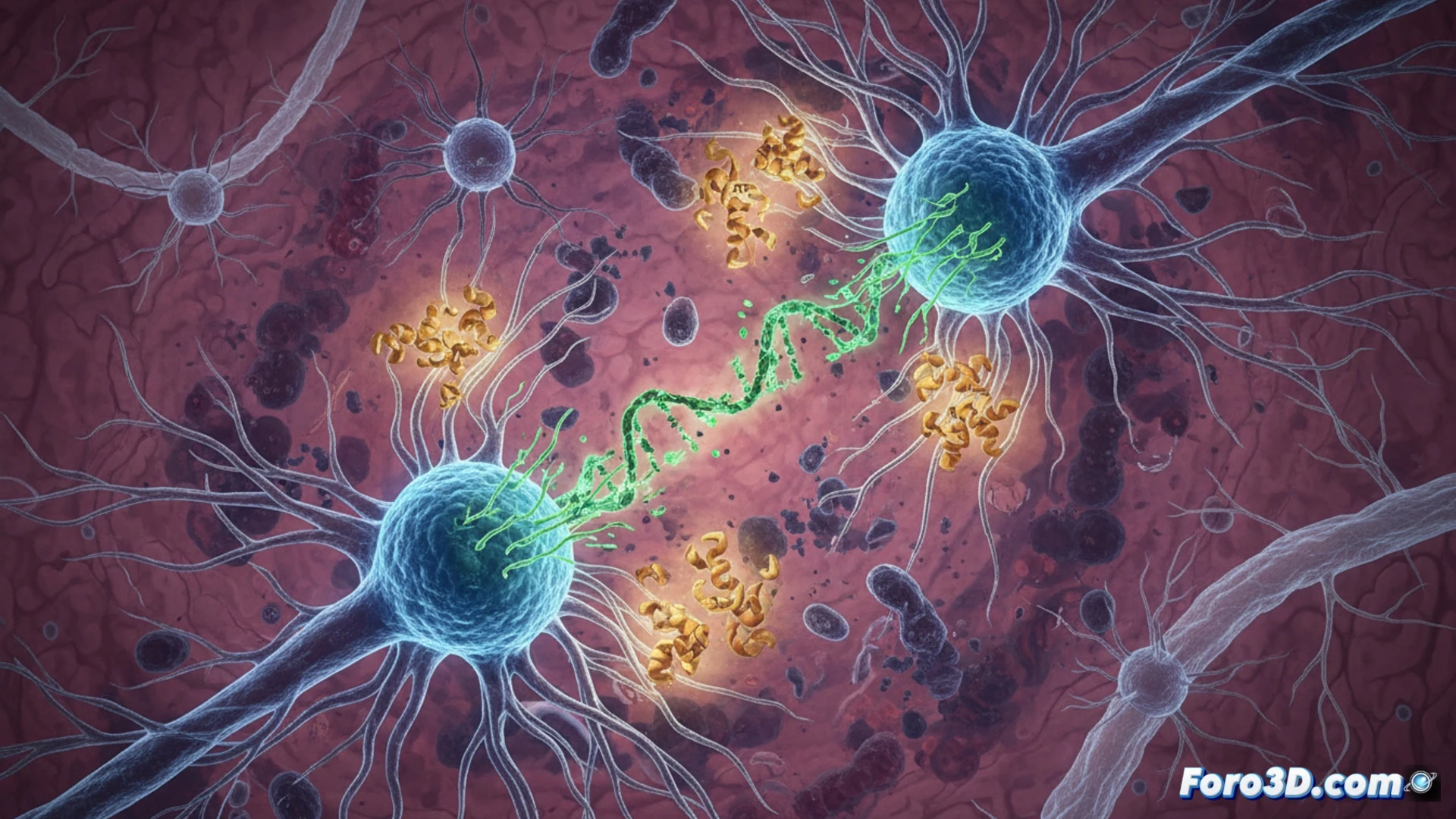
The genetic code and its emergency patch system 🧬
The ATF4 protein acts as a quality control supervisor in the nucleus of CUX2 cells. When DNA breaks due to metabolic stress or inflammation, ATF4 recruits repair enzymes. However, this process consumes a lot of energy and, over time, the cell becomes exhausted. The study suggests that blocking certain steps of this response could protect neurons, an approach similar to patching software without crashing the system.
When your repair kit comes without instructions 🔧
It turns out these neurons have a plan B to fix their DNA breaks, but it seems designed by an intern in a hurry. They activate ATF4 as if it were an antivirus that, instead of eliminating the problem, consumes all the system's RAM. In the end, the neuron dies from exhaustion, not from the initial damage. If this were a mechanic's workshop, they would say the car stops because it has too much oil.