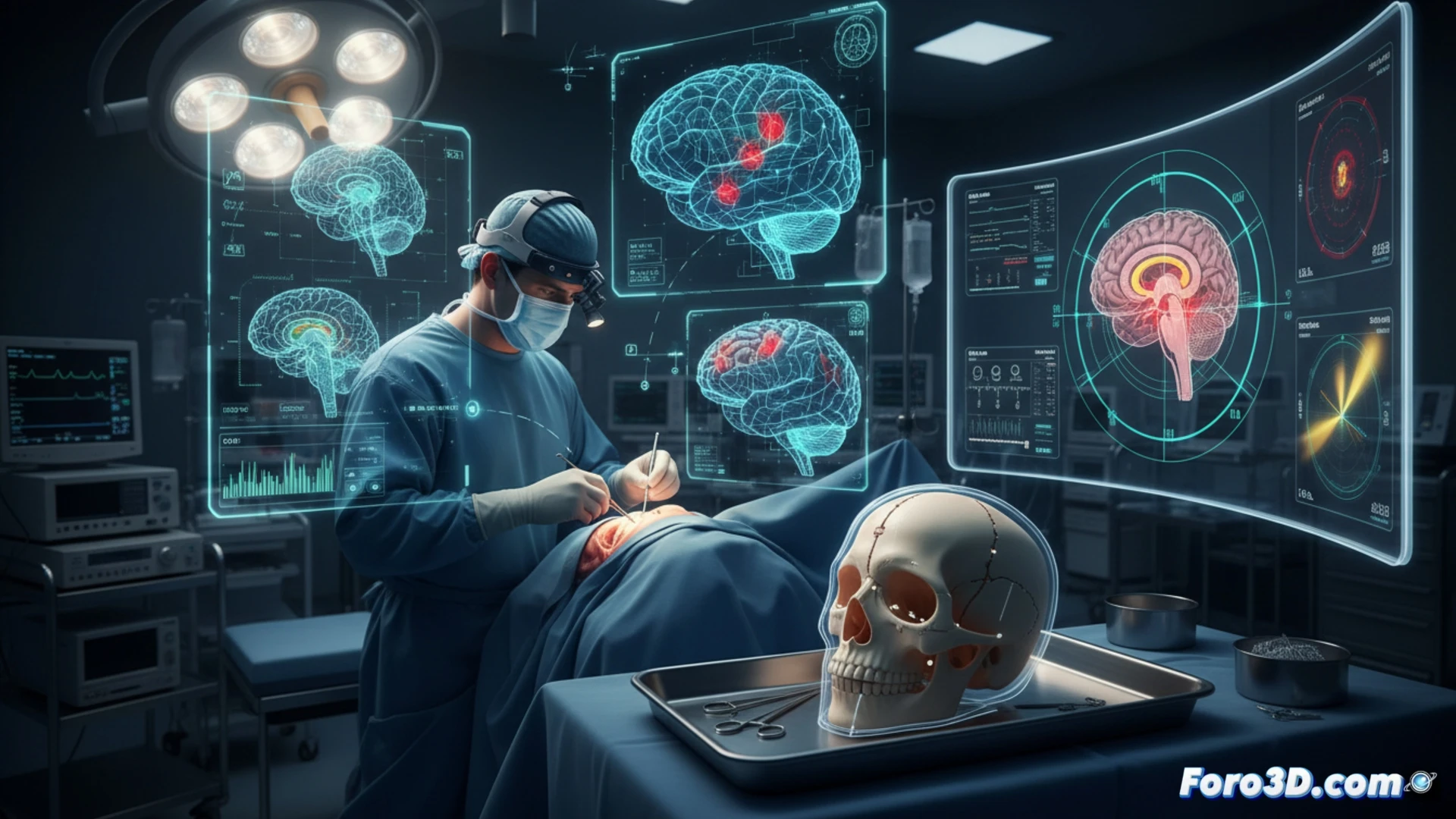
3D technology allows neurologists to visualize complex brain structures with a precision that flat images cannot offer. By converting MRIs into three-dimensional models, planning epilepsy surgeries or locating tumors becomes easier. A practical example is printing a skull to practice a delicate intervention before touching the patient.
Key programs for brain reconstruction 🧠
To generate these models, programs like 3D Slicer are used, an open-source tool that segments tissues and vessels from DICOM files. OsiriX is also used in macOS environments for advanced visualization. For 3D printing, software like Meshmixer allows cleaning and optimizing the mesh. The process requires exporting the model in STL format, ready for a resin or filament printer. The key lies in the millimeter precision of the original data.
When the brain becomes a plastic puzzle 🧩
The neurologist, accustomed to looking at flat screens, suddenly has a plastic brain in their hands. They rotate it, study it, and could even use it as a paperweight. The irony is that, after years of studying anatomy from books, the greatest advance now is printing a replica of the patient to avoid mistakes. Of course, if the printer fails, the diagnosis ends up being a piece of abstract art.