The James Webb Space Telescope has analyzed the composition of Nereid, a moon of Neptune, and the data does not match objects from the Kuiper Belt. This supports the theory that this moon is a local resident, not a visitor. Its elliptical and eccentric orbit, along with its size and brightness exceeding those of other irregular moons, make it a key piece of the Neptunian puzzle. 🔭
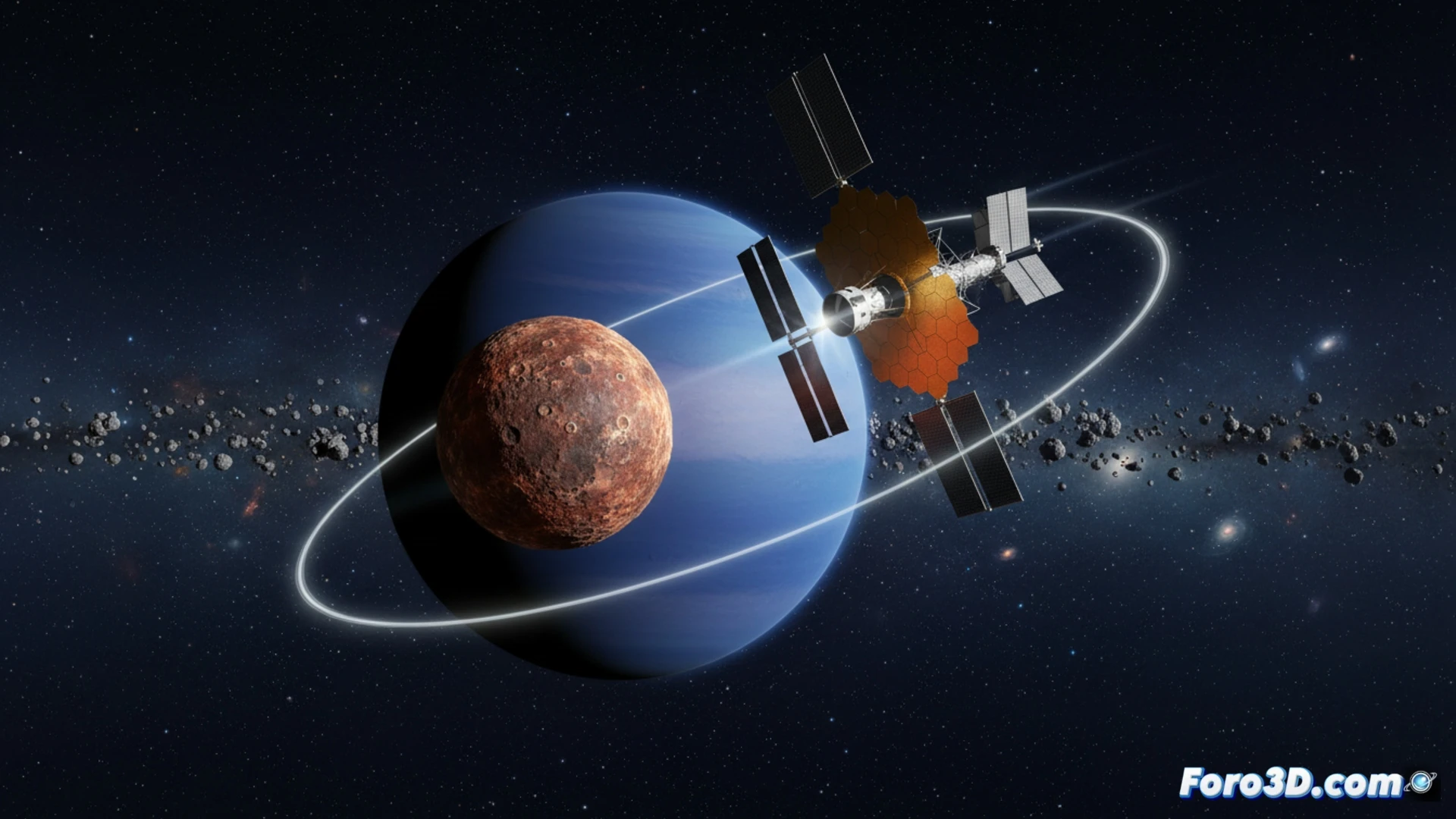
Simulations reveal the controlled chaos after Triton's arrival 🌀
Computer simulations of the capture of Triton, Neptune's largest moon, show that in 20% of cases, an orbit similar to Nereid's could be generated without destroying Triton. This percentage, although not a majority, indicates that Neptune's satellite system could have survived the violent event. Nereid would then be a vestige of that original system, predating the arrival of the icy giant.
When your new moon disrupts the entire neighborhood 🌌
Imagine Triton arriving in Neptune's system like a tenant who doesn't ask permission and starts moving the furniture. Simulations say that in 8 out of 10 cases, everything ends in disaster. But in that remaining 20%, the moon Nereid manages to maintain its orbit, like the neighbor who stays home while an earthquake rages outside. Triton, the newcomer, ends up with the circular orbit and the fame, while Nereid, the original, survives in its eccentric ellipse. Just orbital dynamics things.