NASA has developed a new superalloy called GRX-810, specifically designed for 3D printing. This material withstands extreme temperatures and offers greater durability than current alloys. Its application in engine parts and spacecraft components promises lighter and stronger structures, bringing space exploration closer to a future of safer and more economical travel.
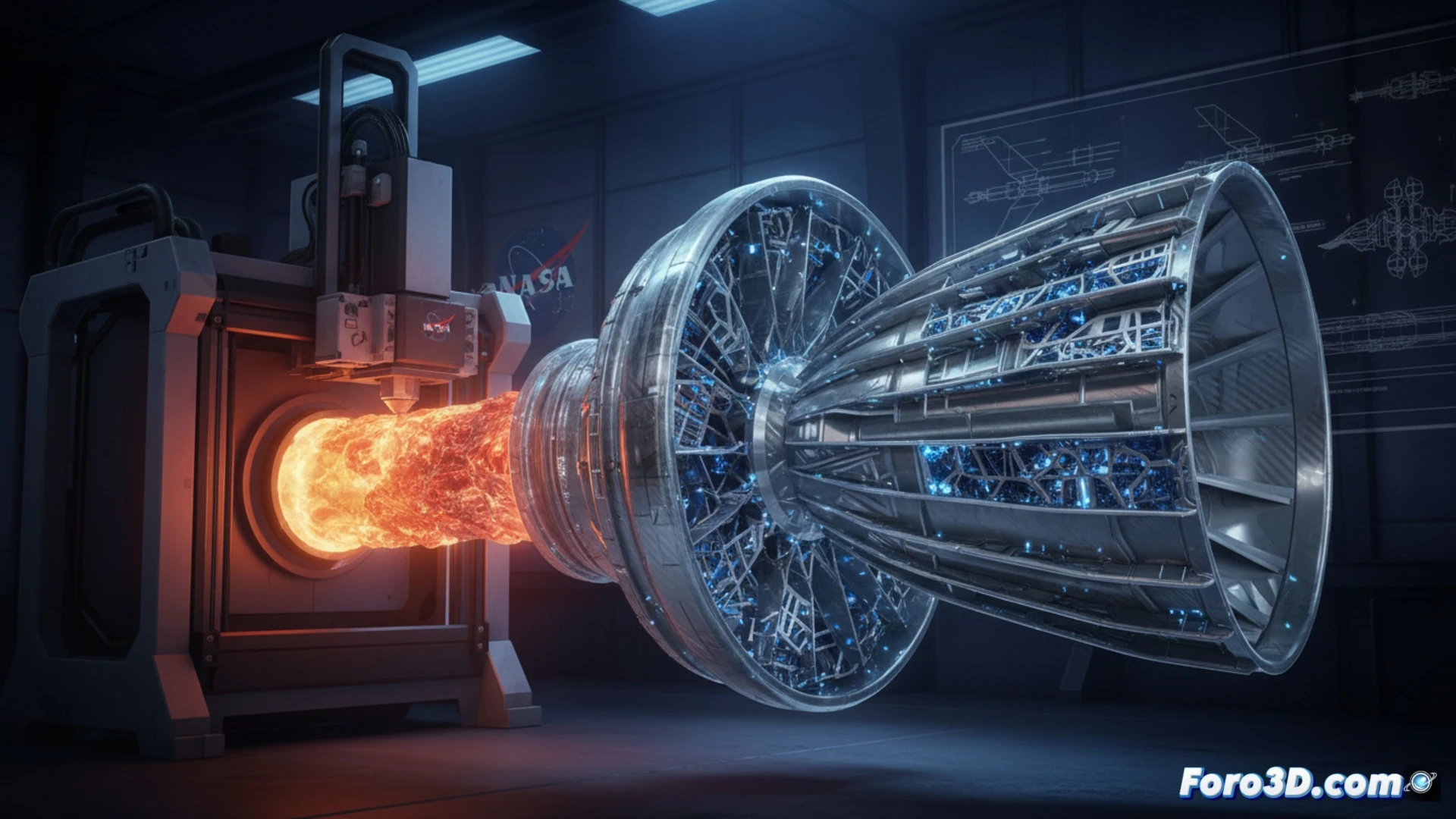
How GRX-810 Improves Additive Manufacturing 🚀
GRX-810 stands out for its ability to withstand temperatures exceeding 1,000 degrees Celsius without deforming. This is achieved through a uniform dispersion of oxides in the metal matrix during the 3D printing process. NASA engineers highlight that this alloy allows for the manufacturing of components with complex geometries that were previously impossible to produce, reducing structural weight and extending the lifespan of turbines and rocket engines.
The Metal That Doesn't Sweat Even in a Solar Furnace 🔥
GRX-810 is so tough it would probably make your non-stick pan cry with envy. While your cookware gives up at 250 degrees, this alloy withstands twice that without flinching. NASA says it will be used for rocket engines, but let's not kid ourselves: deep down, we all hope they end up making indestructible toasters or grills that last longer than a civil servant's patience.