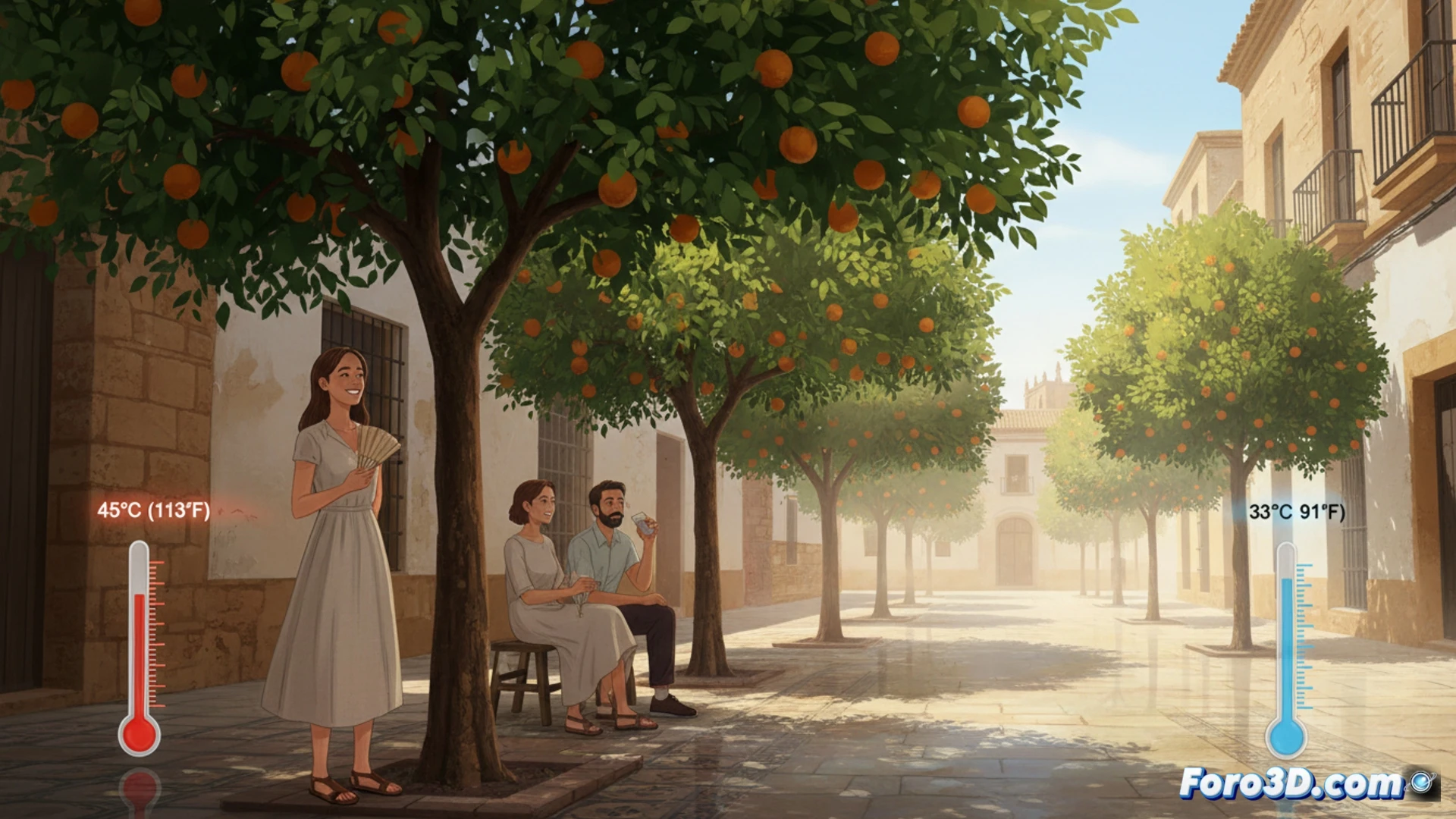
A study from the University of Seville has quantified what many residents already suspected: orange trees not only adorn the streets but also act as natural air conditioners. During extreme heat episodes, these trees can reduce the ambient temperature by up to 12 degrees, combating the heat island effect with their shade and improving the thermal sensation by up to 6 degrees less in radiant temperature.
Data, shade, and particles: green engineering in action 🌿
The study analyzes the behavior of orange trees as living infrastructure. Their dense leaf canopy blocks direct solar radiation, reducing the temperature of asphalt and facades. Additionally, the evapotranspiration of the leaves cools the surrounding air. On a technical level, sensors showed that the average radiant temperature dropped between 4 and 6 °C under these trees. Their ability to retain polluting particles (PM10 and PM2.5) was also confirmed, improving air quality and promoting biodiversity by serving as a refuge for birds and insects.
The orange tree: the quiet neighbor that does more than the City Council 🍊
While some politicians promise cool asphalt and high-tech awnings, it turns out the solution has been planted on sidewalks for centuries. The orange tree, that being that only causes trouble when it leaves the ground sticky with rotten oranges, turns out to be an unpaid climate engineer. Perhaps we should put up a plaque for it, or at least stop pruning it as if it were an angry bonsai.