Grant Morrison and Chris Burnham plunge us into an inferno of ink and flesh with Nameless, a comic where an occultist is recruited to save Earth from an asteroid that turns out to be the prison of a nightmare god. The work is a manual on how to build cosmic horror from visual narrative, using each panel as a punch to the reader's stomach. We analyze how Burnham deconstructs anatomy and space to generate repulsion and fascination, and how these techniques could be applied to 3D previsualization in film.
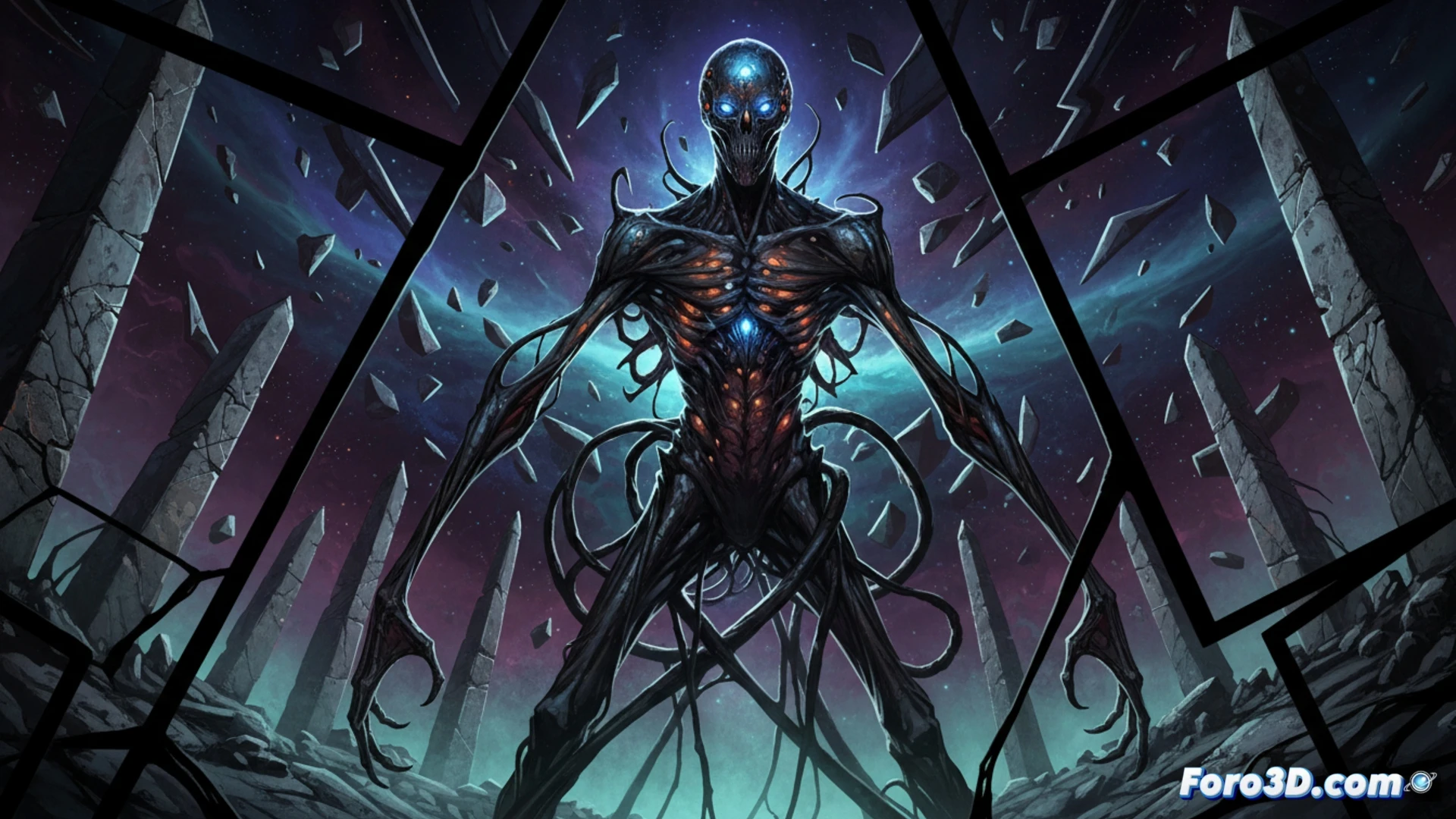
Panel composition and visual rhythm in organic chaos 🎨
Burnham doesn't just draw simple monsters; he designs impossible architectures where perspective breaks and viscera fuse with metal. In Nameless, the rhythm accelerates through asymmetrical panels that break the traditional grid, forcing the eye to jump between fragments of flesh and forbidden geometries. This controlled chaos recalls 3D storyboard techniques where the camera moves through non-Euclidean spaces. To translate this to film, a 3D previsualizer should model those abrupt transitions in scale and texture, using displacement maps to simulate the putrefaction and organic undergrowth that Burnham details with surgical precision. The visceral detail is not decoration; it is the tool that anchors the reader in a crumbling reality.
How concept art can capture Morrison's nightmare 👁️
The key to Nameless lies in the tension between the recognizable and the aberrant. Morrison writes a script that plays with the logic of Lovecraftian horror, but Burnham elevates it by drawing every fragment of viscera with almost photographic clarity, making the impossible seem tangible. In the realm of 3D concept art, this effect would be achieved with hyperrealistic textures of organic matter combined with volumetric lighting that generates long, distorted shadows. The 3D storyboard must not only plan the action, but also the feeling of claustrophobia and vertigo, using camera angles that mimic Burnham's broken perspectives. Thus, cosmic horror ceases to be abstract and becomes an immersive visual experience.
As a translator of the chaotic aesthetic and impossible geometry of Nameless into 3D storyboarding, what composition and texturing techniques allow maintaining the inscrutable feeling of cosmic horror without losing narrative legibility in the sequence shot?
(PS: Previs in film is like storyboarding, but with more possibilities for the director to change their mind.)