Chester Zoo, in northwest England, celebrates a biological milestone with the birth of Womble, a baby aardvark. This event, which occurred on April 3rd, is only the second in the park's 94-year history. The mother, Oni, does not produce enough milk, so keepers assist the calf with supplemental nighttime feeding.
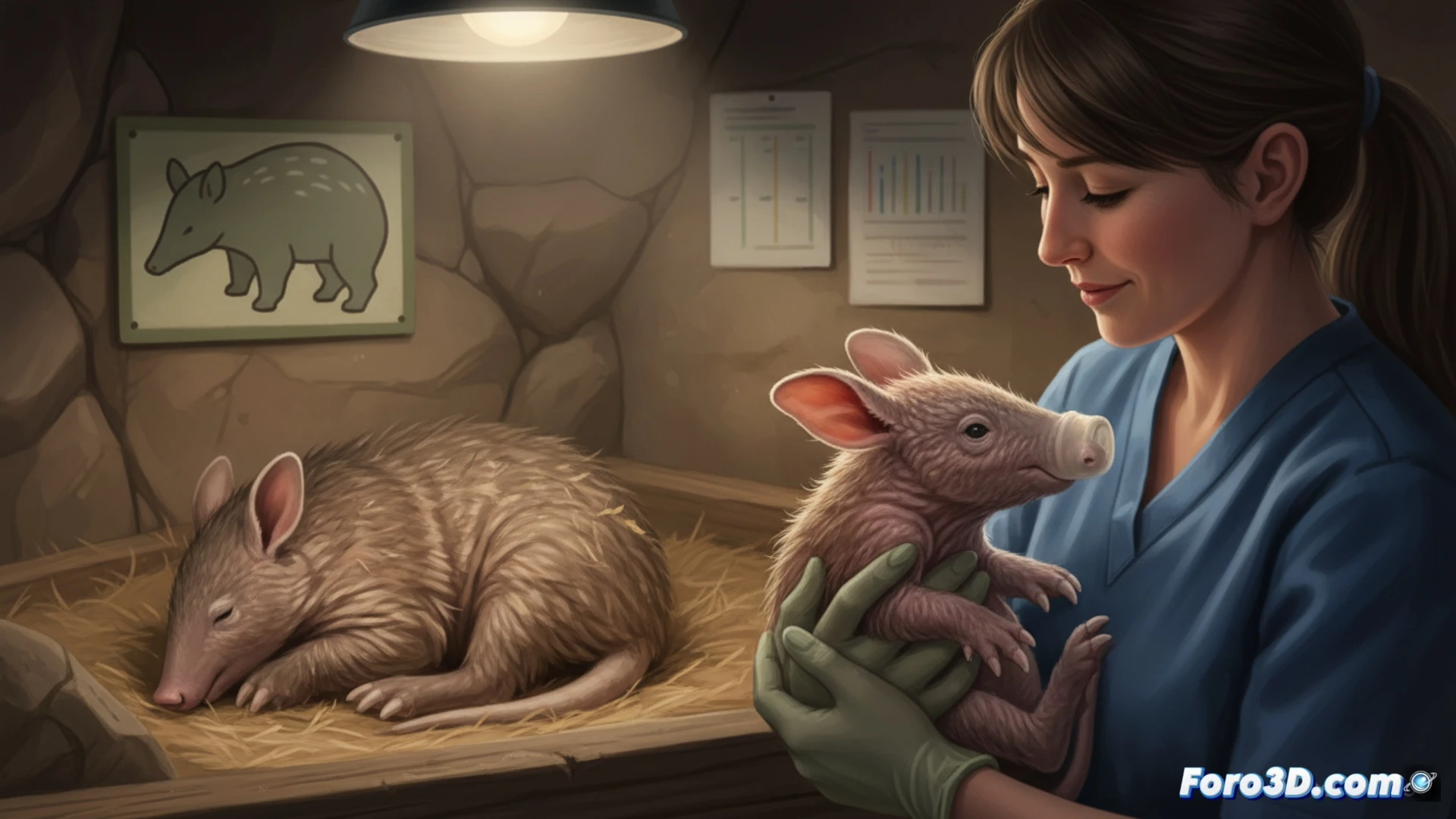
The Technical Challenge of Assisted Nocturnal Rearing 🌙
Womble's survival depends on a supplemental feeding protocol that keepers execute during the night. Since Oni's mother's milk is insufficient, the team uses special bottles with a milk formula adapted to the species. This process requires constant monitoring and precise schedules to avoid maternal rejection. The technique mimics the natural nursing pattern, but with rigorous human control to ensure the calf's development.
Womble, the Piglet Who Eats on a Night Shift Schedule 🍼
While humans sleep, Womble gets a boost with a dawn bottle. It's not that the calf has jet lag; it's that its mother, Oni, decided to go on a partial nursing strike. Now the keepers are the nighttime surrogate parents, with a babysitting shift included. If Womble grows up with night-owl hours, it won't be its fault, but rather a mother who doesn't deliver on milk production.