Agustín Andreu, a 97-year-old philosopher and theologian, has left us. His life was an exercise in coherence: a voluntary exile from academic servility, he developed bold thinking from the margins. His legacy lies not in citation rankings, but in the authenticity of his work. A good man, a master without a chair.
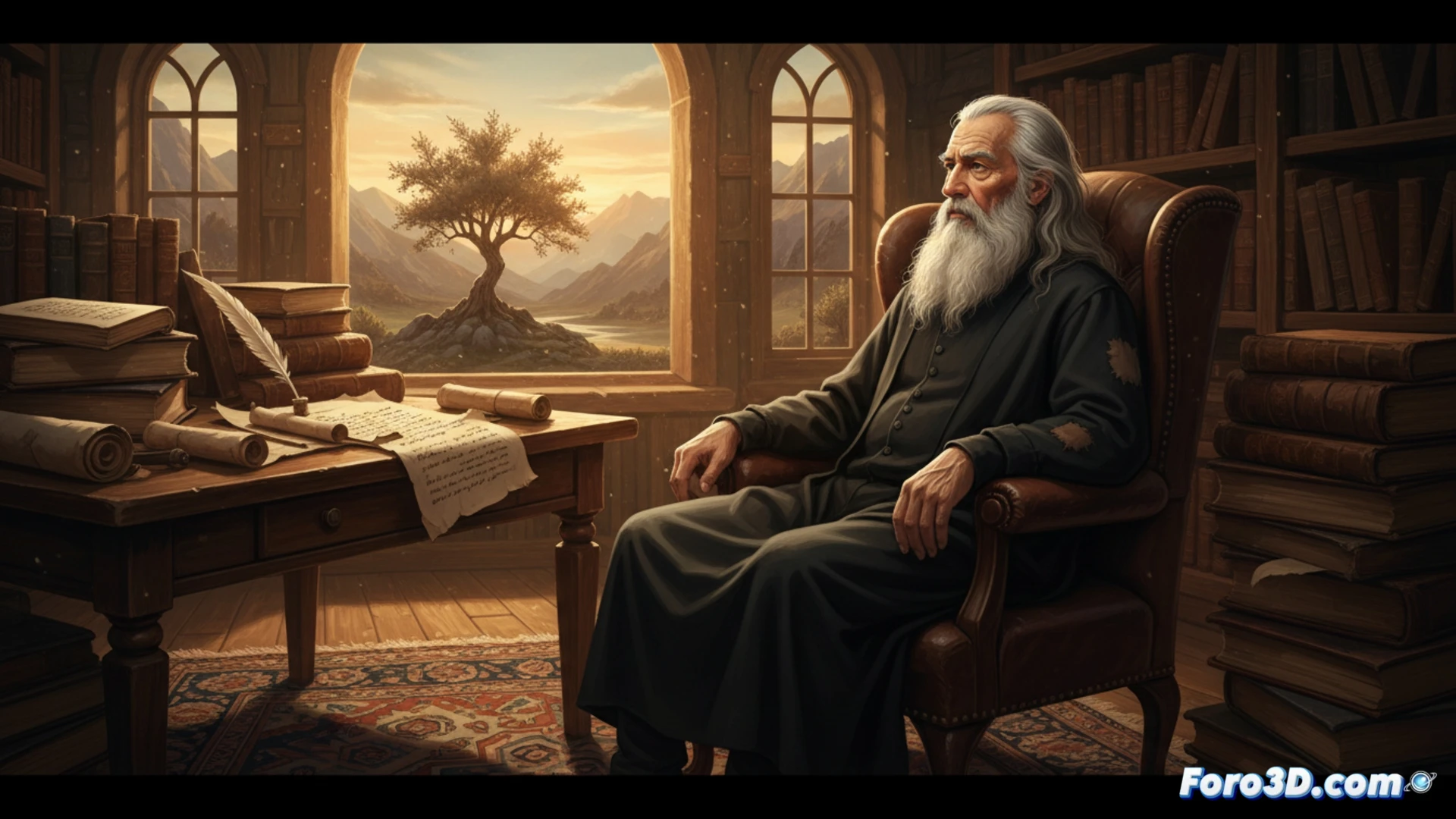
Thought as source code: independence against the academic algorithm 🧠
In a world where research is measured by metrics and standardized papers, Andreu represents pure development: without conditioned funding or pressure to publish. His work is like free software, written from internal necessity, without relying on external APIs. While others optimize their profiles on scientific networks, he preferred the solitude of the workshop. His legacy shows that code quality does not depend on the number of commits, but on the depth of the algorithm.
AI also cries (but doesn't know why) 🤖
Now chatbots will try to process his work. Artificial intelligence will surely reduce it to a three-line summary, classifying him as a marginal 20th-century philosopher. But Andreu would have laughed at that: he knew that true thinking is not trained with datasets. Meanwhile, we, who depend on ChatGPT to write obituaries, should ask ourselves who is freer: the dead philosopher or the algorithm that categorizes him?