The MSI MPG Z890 Carbon WiFi lands on the market as one of the most solid proposals for users looking to get the most out of the new Intel Core Ultra processors. In the context of 3D hardware, this board not only promises native support for high-frequency DDR5 but also integrates a 20+1+1 phase VRM designed to maintain stability during prolonged workloads such as CPU rendering. We analyze whether it truly is the ideal foundation for a professional workflow in Blender, Maya, or Unreal Engine. 🔥
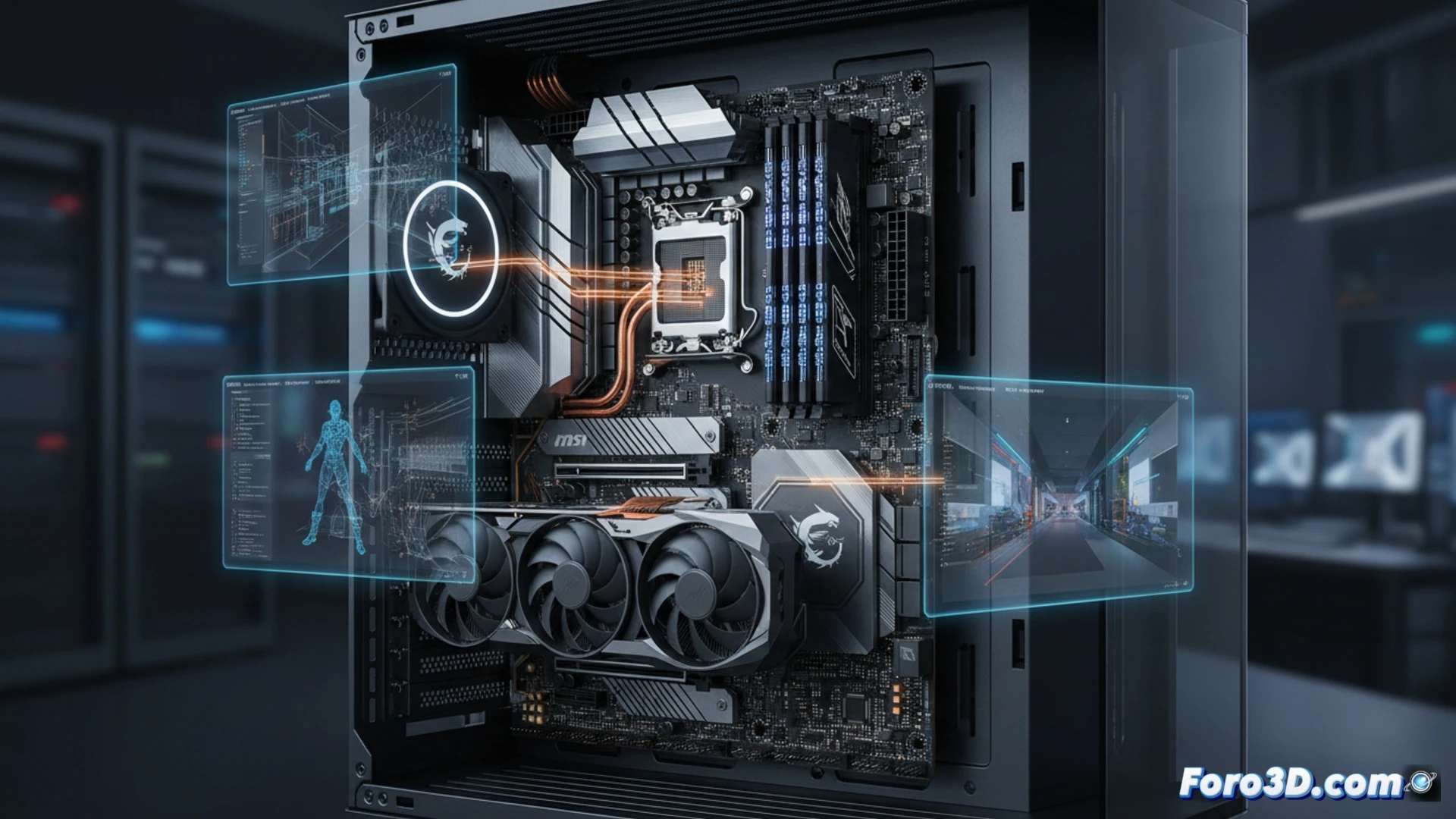
Connectivity and VRM: The core of the workstation ⚡
The connectivity section is one of the strong points of this Z890. It incorporates a Killer 5G LAN chip and WiFi 7, which translates into reduced latency when transferring heavy assets to a NAS or when collaborating remotely on Unreal Engine projects. For 3D professionals, the inclusion of two PCIe 5.0 x16 slots is critical: it allows multi-GPU configurations without bottlenecks, ideal for render engines like Octane or Redshift. The VRM, with 110A per phase, ensures that an Intel Core Ultra 9 285K maintains its boost frequency even during fluid or physics simulations in Houdini, where energy demand is extreme and sustained over time.
DDR5 and thermal management: The true differentiator 🌡️
Unlike previous generations, support for DDR5 memory with CUDIMM profiles allows stable frequencies exceeding 8000 MT/s. In software like Blender, this translates into a notable reduction in loading times for complex scenes and an improvement in handling dense meshes in the viewport. Thermal management, with large surface area heatsinks and a metal backplate, keeps temperatures under control even during rendering sessions that last hours. If you are looking for a reliable foundation for a 3D workstation without resorting to HEDT platforms, this board positions itself as a high-performance option against competitors like the ASUS ROG Strix, offering a better balance between stability and price for the content creator.
What specific advantages does the MSI Z890 Carbon WiFi motherboard offer compared to other options on the market in terms of thermal management and voltage stability for prolonged workloads in 3D rendering with the new Intel processors?
(PS: If your computer smokes when opening Blender, you might need more than a fan and faith)