During the Convergences workshop in Montpellier, it became clear that game engines are redefining animation pipelines. Studios like 2 Minutes, MIAM! Animation, and Dwarf have integrated real-time technologies to drastically reduce rendering times. The promise is tempting: more agile workflows and lower operational costs. However, this transition is not a simple tool change, but a profound restructuring of the creative process that forces a rethink of every stage of development.
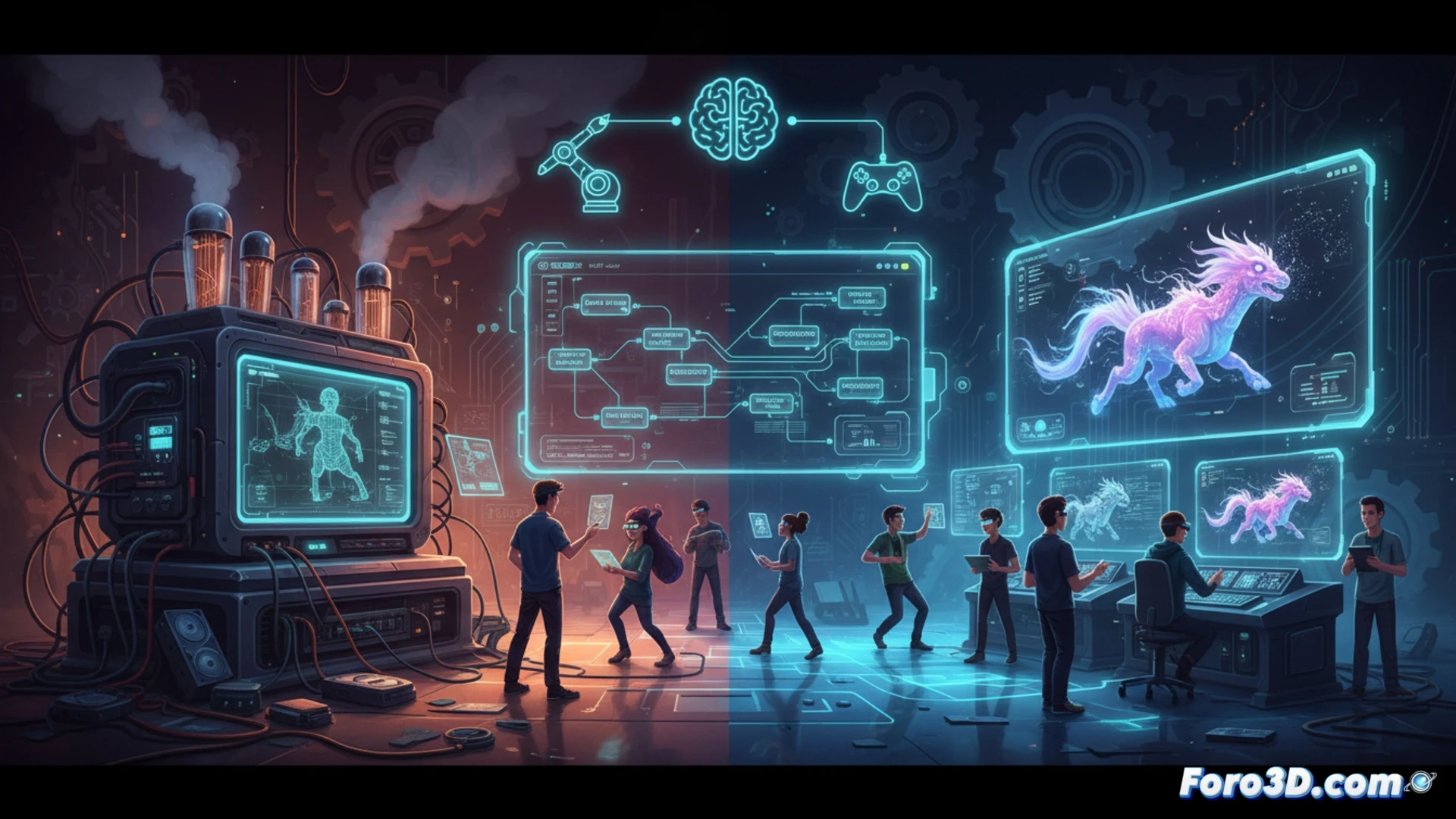
Technical dependency and adaptation of legacy tools 🛠️
The main technical hurdle lies in the dependency on engine publishers like Epic Games or Unity. Unlike offline renderers, these ecosystems are constantly evolving, which can break established pipelines. Furthermore, traditional tools like Maya or Blender are not natively designed for real-time logic. Studios must develop bridge plugins and scripts to maintain data consistency between the DCC and the engine. The lack of specialized technical support for animation from manufacturers aggravates the problem, leaving teams in a limbo of forced updates and unstable workarounds.
The human challenge: training the necessary hybrid 🧠
Beyond technology, the real bottleneck is talent. Hybrid profiles are required who understand both the rigor of rigging and traditional animation as well as the procedural logic of game engines. This means stepping out of comfort zones: a Maya animator must learn about LODs, draw call optimization, and real-time particle systems. Internal training becomes critical, and studios that do not invest in professional retraining risk getting trapped in a technical gap that nullifies any productivity gains.
Is it possible to completely replace traditional rendering in a film production using game engines without sacrificing final visual quality, and what specific technical challenges persist in that process?
(PS: optimizing for mobile is like trying to fit an elephant into a Mini Cooper)