Lightspeed Studios has taken a step forward in the wuxia genre with To Jin Yong, a title that seeks hyperrealism in martial arts. The key to its visual fluidity lies in the implementation of Motion Matching within Unreal Engine 5, a technique that eliminates robotic transitions between animations. This technical approach, combined with photogrammetry scanning and advanced texturing, promises to redefine immersion in close-quarters combat.
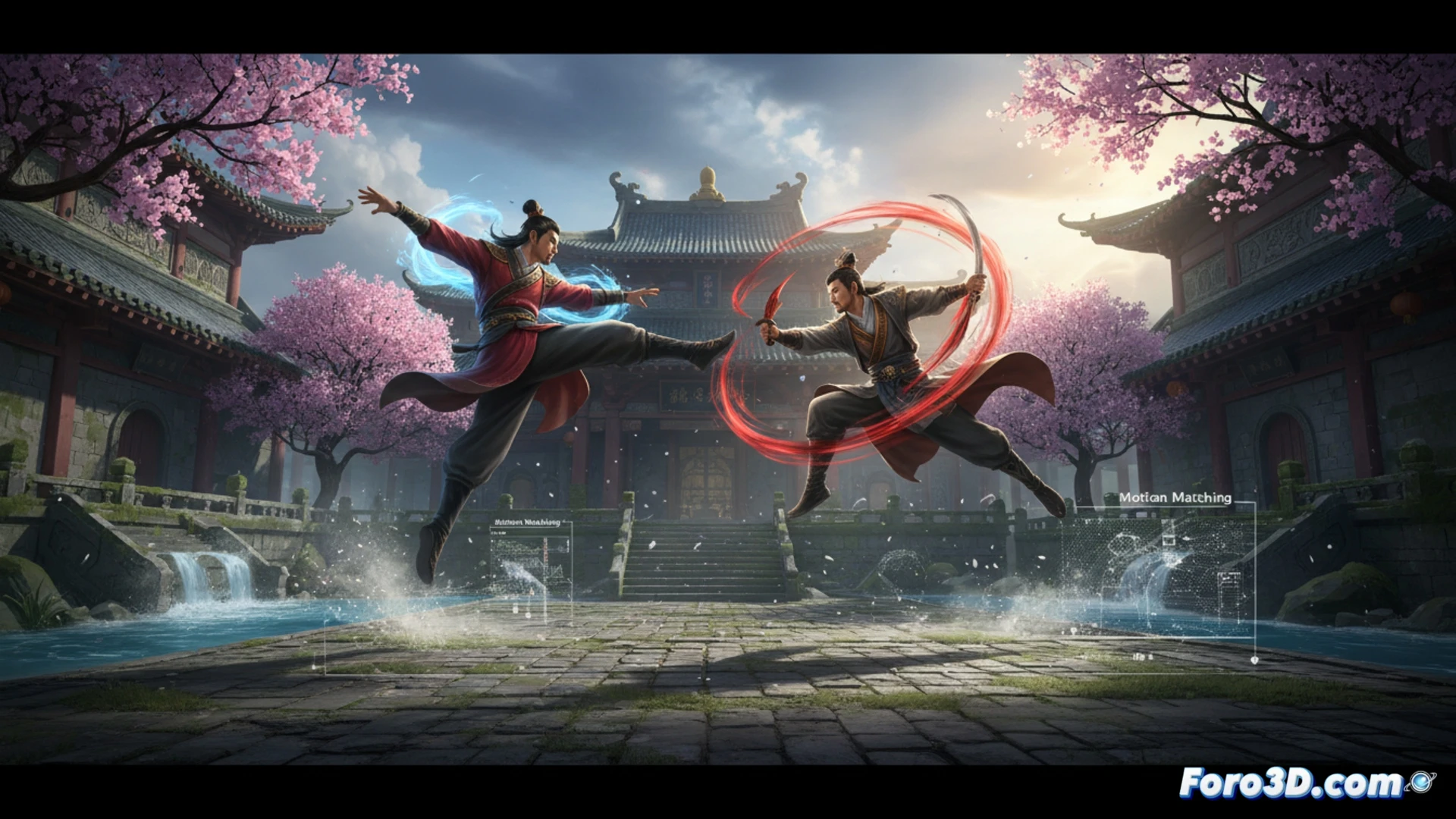
Implementation of Motion Matching and Control Rig in wuxia combat 🥋
The true technical magic of To Jin Yong happens in the animation engine. Lightspeed Studios uses Motion Matching to analyze the character's posture and speed in real time, selecting the most suitable animation clip from a previously captured database. This eliminates traditional blend spaces and offers an organic response to each player input. To achieve this, the team has developed custom rigs using Unreal Control Rig, allowing precise skeletal control that adapts to the extreme postures of kung-fu. Texturing with Adobe Substance adds the necessary realism to the garments, while photogrammetry captures the roughness of temples and forests, creating a believable stage where each combat feels choreographed yet unpredictable.
The challenge of naturalness in procedural animation 🎯
Although Motion Matching offers impressive fluidity, the true challenge for Lightspeed Studios has been maintaining the visual identity of wuxia without falling into the uncanny valley. The combination of photogrammetry for natural environments and procedural animation in Unreal Engine 5 requires a delicate balance: too much precision can break the illusion of a fantastic world. However, by integrating these tools, the studio demonstrates that hyperrealism is not at odds with the poetry of combat, but rather that technical power can serve the most demanding martial narrative.
How have Lightspeed Studios integrated the Motion Matching system with photogrammetry data in Unreal Engine 5 to achieve smooth and realistic transitions in the martial arts choreographies of To Jin Yong, and what specific technical challenges have they faced when synchronizing captured animations with high-resolution scans?
(PS: 90% of development time is polishing, the other 90% is fixing bugs)