A recent laboratory study has revealed an unexpected twist in the fight against mosquitoes: these insects can learn to associate the smell of DEET repellent with food, becoming attracted to it after feeding. For the general public, this finding does not invalidate the product, but rather highlights the importance of applying it correctly and following the instructions to the letter to avoid bites, as its effectiveness can decrease over time if not used properly.
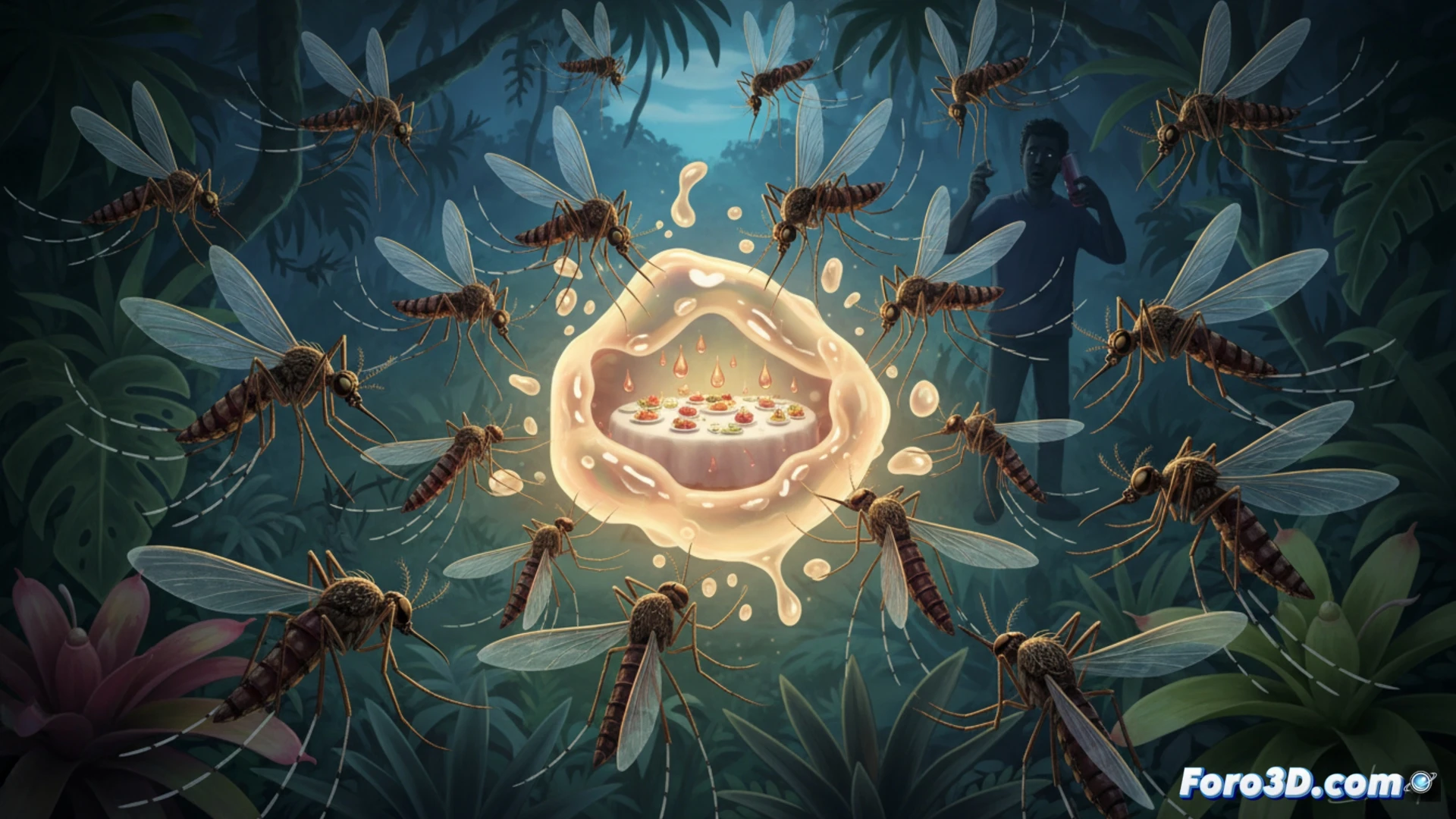
Science and repellents: the neurobiology of learning in mosquitoes 🧠
The study, published in a specialized journal, reveals that mosquitoes possess associative learning mechanisms similar to those of other insects. By repeatedly being exposed to DEET alongside a food source, their central nervous system records the combination, generating a conditioned attraction response. This does not mean the repellent stops working; rather, it indicates that its application must be renewed according to the manufacturer's instructions to maintain the chemical barrier intact and prevent mosquitoes from adapting their behavior.
Gourmet mosquitoes: now DEET looks like an appetizer to them 🍽️
So, according to science, if you spray yourself with DEET and then sit down to dine outdoors, you may end up being the main course with a hint of repellent. After a couple of feasts, mosquitoes no longer associate the smell with danger, but with an open buffet. The moral: don't trust that a single application will save your night, because these bugs are taking molecular cooking classes at your expense.