The examination of bite marks in assault cases has traditionally been a subjective discipline, where the expert's interpretation of a 2D photograph could determine a suspect's guilt. However, the incorporation of 3D digitization technologies is revolutionizing this forensic pipeline. Now, a bite mark on a victim's skin is no longer just a flat image; it becomes a precise, traceable volumetric model that can be analyzed from any angle.
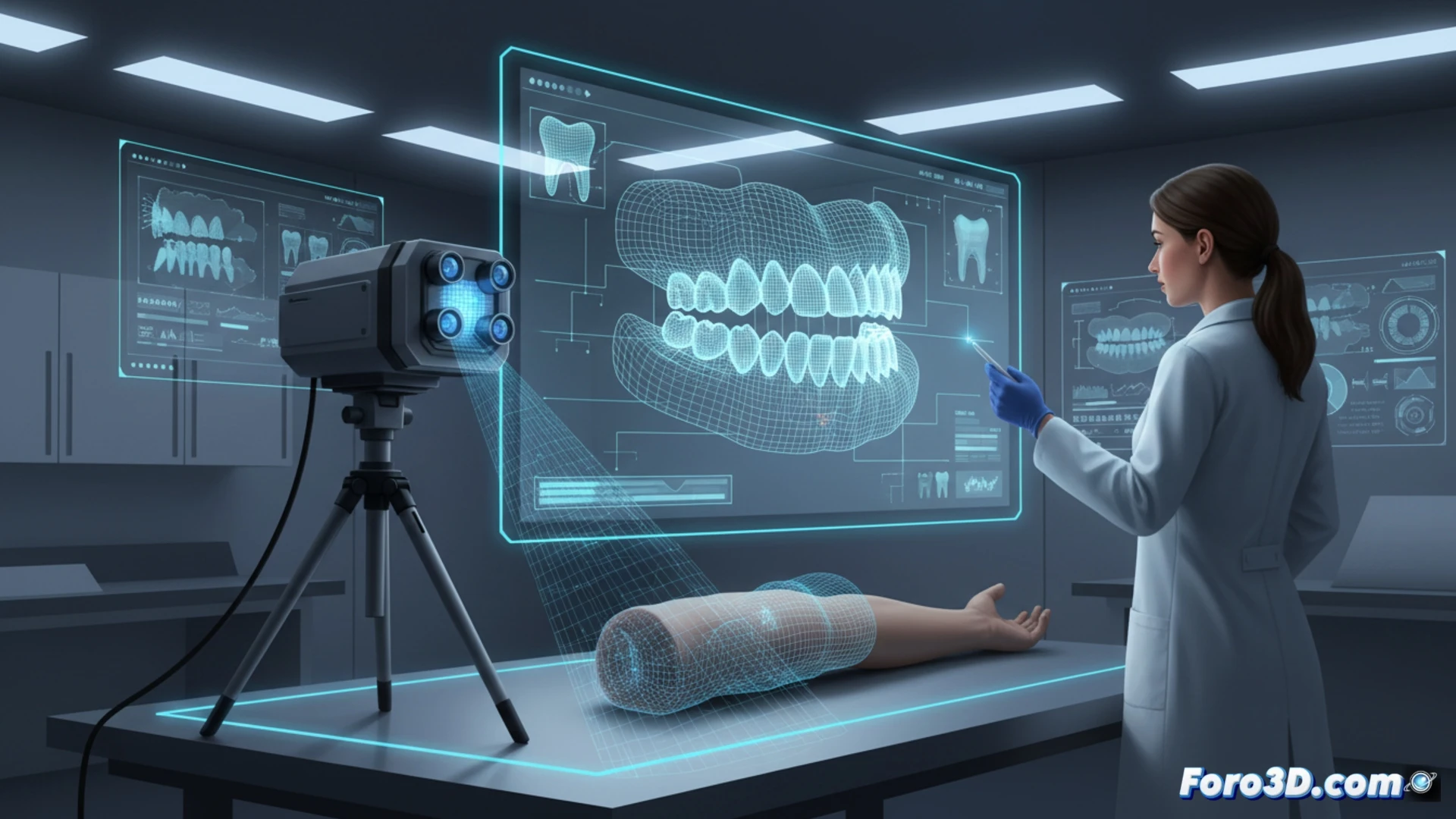
Capture and Comparative Analysis in the Virtual Environment 🦷
The process begins with documenting the injury. Two main techniques are used: high-resolution photogrammetry and structured light 3D scanning. Photogrammetry allows reconstructing the texture and deformation of the skin around the bite mark from multiple shots. Simultaneously, a dental model of the suspect is obtained through intraoral scanning or from plaster models. 3D overlay software aligns both point clouds using best-fit algorithms. The expert not only observes visual matches but calculates metric distances between cusps and incisal edges, eliminating visual biases and providing quantitative data to the evidence.
Objectivity and Traceability as New Expert Standards ⚖️
The great advantage of this pipeline is the complete traceability of the process. Each step, from scanner calibration to the overlay report, is recorded in an immutable digital file. This allows a court to review the original analysis in the same virtual environment, something impossible with old 35mm slides. By digitizing the evidence, the need to physically handle the victim or the defendant's samples is reduced, and a new standard of objectivity is established that strengthens the credibility of forensic science before judges.
How does the 3D digitization of bite marks affect the objectivity and accuracy in identifying the aggressor in a forensic case compared to traditional bite mark analysis methods?
(PS: In the forensic pipeline, the most important thing is not to mix the evidence with the reference models... or you'll end up with a ghost in the scene.)