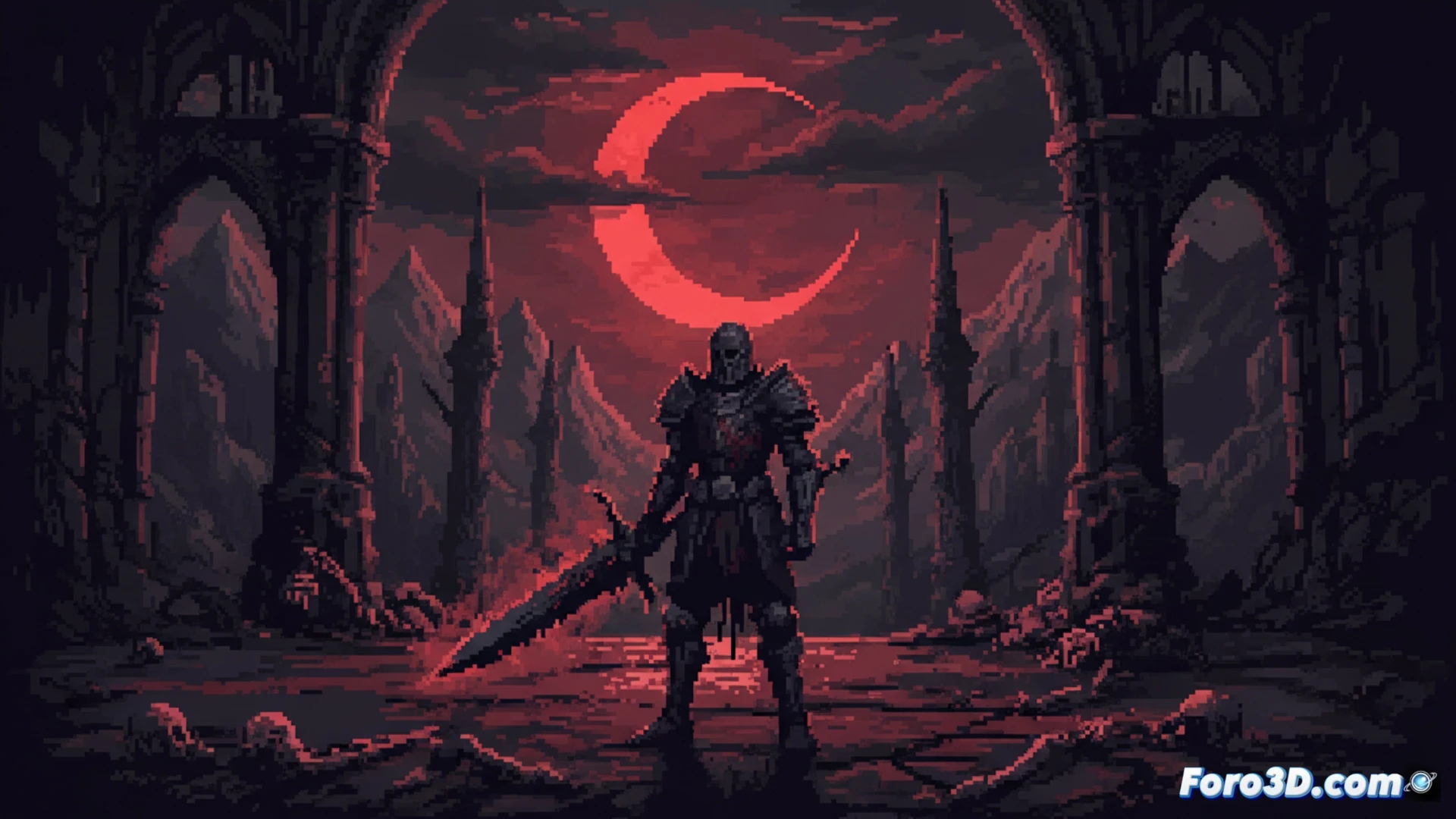
The development of Moonscars, a metroidvania that combines dark action with a unique aesthetic, demonstrates how the technical choice of the Unity engine and artistic discipline can converge to create an unforgettable visual identity. This title stands out not only for its gameplay but for its bold graphical bet: pixel art that evokes the texture and atmosphere of an oil painting, executed with an extremely restricted color palette of reds, grays, blacks, and their shades. We analyze the workflow behind this work, from asset creation to real-time optimization.
Technical Flow: From Aseprite to Unity with Photoshop as a Bridge 🎨
The artistic pipeline of Moonscars relies on three key tools. Aseprite is the workhorse for sprite animation and character creation, where the limited palette forces every pixel to be meaningful, pushing artists to prioritize contrast and silhouette. Subsequently, Adobe Photoshop comes into play for composing larger-scale backgrounds and textures, applying digital brushes that mimic the texture of canvas and the layering of paint. The real challenge is integration into Unity: each asset must be optimized to maintain aesthetic consistency without sacrificing performance. This involves reducing the number of on-screen sprites, using texture atlases, and applying 2D lighting that respects the palette, avoiding smooth gradients that break the pictorial illusion.
Aesthetic Consistency as an Indie Competitive Advantage 🎯
For an independent studio, the decision to limit the palette to reds, grays, and blacks is not a mere restriction but a statement of principles. This strategy unifies all the game's art, from the interface to the enemies, creating an instantly recognizable brand identity. Furthermore, it drastically reduces asset production time, as sprites do not require complex shading or an extensive color gamut. Moonscars demonstrates that in game development, aesthetic consistency, achieved through rigorous technical planning and mastery of tools like Aseprite and Photoshop, can be more impactful than an avalanche of high-definition textures.
How did they manage in Moonscars to maintain visual consistency and expressiveness of characters and environments using a limited color palette in Unity, and what pictorial pixel art techniques did they employ to optimize performance without sacrificing the dark atmosphere of the metroidvania?
(PS: shaders are like mayonnaise: if they break, you start all over again)