Moonscars, developed by Black Mermaid, demonstrates how Unity can enhance a unique graphic style that combines pixel art with oil painting textures. Its color palette, restricted to reds, blacks, and grays, not only defines the game's somber atmosphere but also imposes a technical challenge for developers. This minimalist approach forces the optimization of every sprite and animation within the graphics engine, achieving a visual impact that transcends color limitations. 🎨
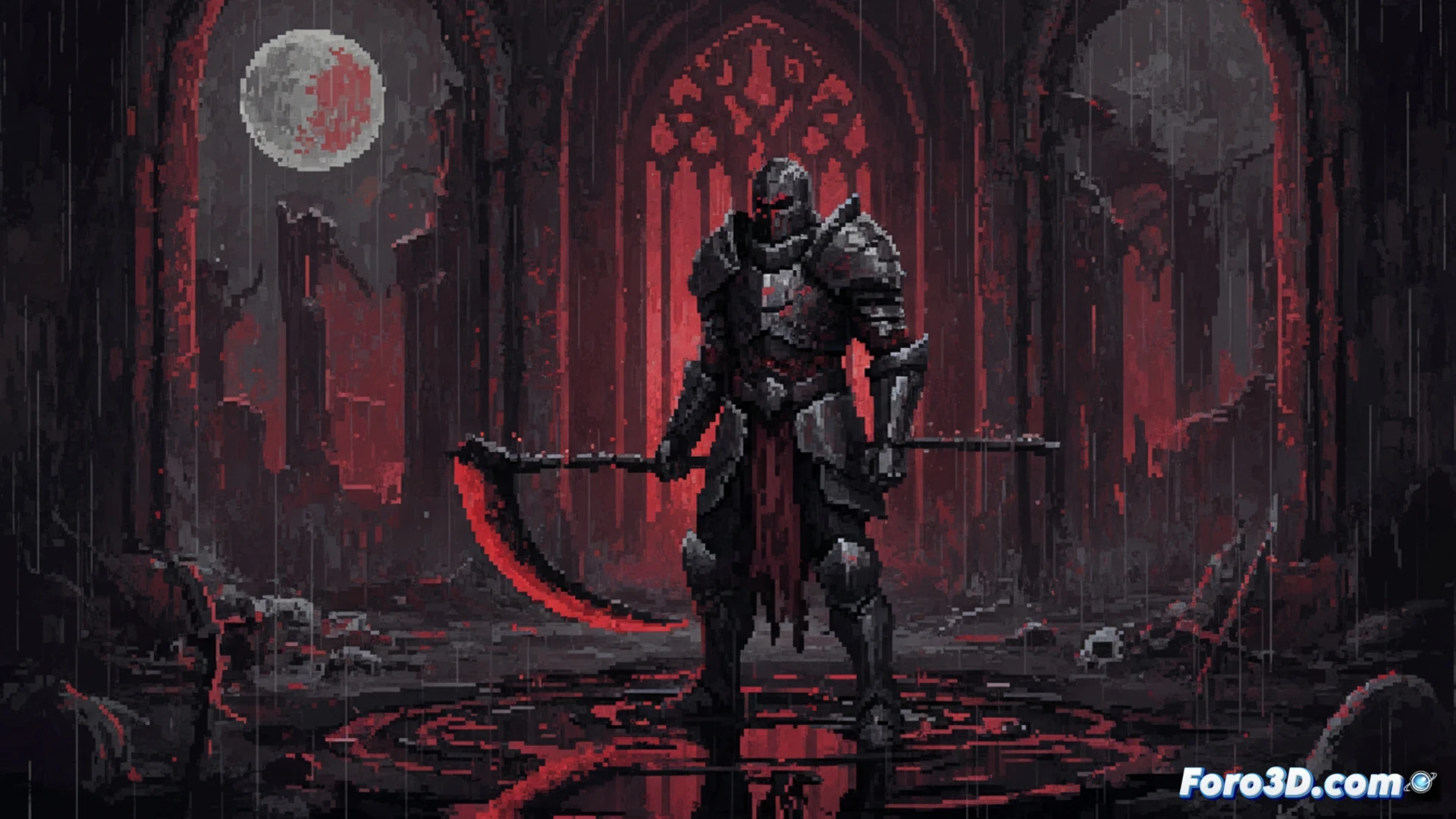
Workflow between Photoshop and Aseprite for optimized sprites 🖌️
The artistic process begins in Photoshop, where conceptual sketches are designed and base textures that emulate thick oil brushstrokes are defined. Then, these assets are exported to Aseprite, the key tool for frame-by-frame animation. In Aseprite, artists reduce the palette to red, black, and gray tones, applying dithering techniques to smooth gradients without increasing the number of colors. Once ready, the sprites are imported into Unity using the Sprite Atlas system, which groups all pieces into a single texture to reduce draw calls. Additionally, animations in mecanim state machines with fast transitions are used, avoiding interpolations that break the pixelated aesthetic. The key is to keep the sprite resolution low (16x16 or 32x32 pixels) and scale them within Unity using Point filter (no smoothing) to preserve the crisp look of pixel art.
How the limited palette defines the visual narrative 🔥
The decision to use only reds, blacks, and grays is not merely aesthetic; it is a narrative tool that Unity manages through post-processing. The engine applies a dark vignette effect and a slight film grain, reinforcing the sense of hopelessness in Moonscars' world. Intense reds are reserved for blood, enemies, and dangers, while grays dominate the scenarios. This chromatic restriction also facilitates real-time dynamic lighting, as the engine only needs to calculate shadows and reflections on these few tones, reducing GPU load and allowing the game to run smoothly even on modest hardware.
How they managed in Moonscars to synchronize Unity's dynamic lighting with the limited palette of oil pixel art without breaking the visual coherence of the style
(PS: game jams are like weddings: everyone is happy, no one sleeps, and you end up crying)